Early Disclosure of Blood‐Based Biomarkers Optimizes Alzheimer's Disease Management and Treatment Initiation: the PLASMAR study
Isabel Estragués‐Gázquez, José Contador, Leidy Dayana Martinez, Aida Fernández‐Lebrero, Gianmarco Iaccarino, Greta Garcia‐Escobar, Rosa Maria Manero‐Borràs, Irene Navalpotro‐Gómez, Oriol Grau‐Rivera, Paula Ortiz‐Romero, Marina De Diego‐Osaba, Helena Blasco‐Forniés

TL;DR
Early access to blood-based Alzheimer's biomarkers leads to faster treatment decisions and fewer follow-ups in a memory clinic.
Contribution
Demonstrates how early disclosure of blood-based biomarker results changes clinical management and treatment initiation in Alzheimer's patients.
Findings
Early disclosure of BBM results increased discharge rates and earlier initiation of AchEIs.
Late disclosure led to more longitudinal cognitive monitoring.
Early disclosure reduced the need for follow-up cognitive assessments.
Abstract
Blood‐based biomarkers (BBMs) offer a cost‐effective, non‐invasive approach for detecting Alzheimer's disease (AD) pathology, but their impact on improving diagnostic certainty and patient management remains unclear. The PLASMAR study is a prospective, single‐center, blinded, randomized controlled trial assessing the effect of early versus delayed BBM adoption on clinical practice in a public hospital memory clinic. This abstract presents an interim analysis on changes in patient management. From February to October 2024, 224 patients with cognitive or behavioral complaints (GDS 2–4) referred to the memory clinic at Hospital del Mar (Barcelona, Spain) were prospectively enrolled. Eligibility criteria are detailed in Table 1. At baseline, blood samples were collected for BBMs, and neurologists assessed diagnostic confidence based on routine clinical evaluation without BBM results.…
Genes, proteins, chemicals, diseases, species, mutations and cell lines named across the full text — each resolved to its canonical identifier and authoritative record.
Click any figure to enlarge with its caption.
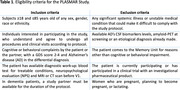 Figure 1
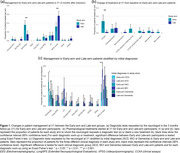 Figure 2
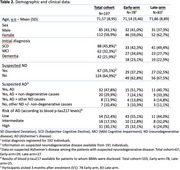 Figure 3
Peer Reviews
No public reviews on file for this paper yet. If you reviewed it on a platform where reviews are public (OpenReview, ICLR, NeurIPS, ICML), you can paste yours below so the community can read it here.
Videos
No videos yet. Explain this paper in a talk, walkthrough, or lecture? Add one.
Taxonomy
TopicsDementia and Cognitive Impairment Research · Alzheimer's disease research and treatments · S100 Proteins and Annexins