Characterization of Unsaponifiable Matter in Unripe Pistacia atlantica Fruits: Evaluation of Antioxidant Activity and α‐Amylase Inhibitory Effect
Mokhtar Benmohamed, Mohamed Harrat, Mohammed Messaoudi, Amar Djemoui, Ahmed Souadia, Barbara Sawicka, Ayomide Victor Atoki, Mohamed Yousif

TL;DR
This study shows that unripe and semiripe Pistacia atlantica fruits from Algeria contain valuable bioactive compounds with strong antioxidant and diabetes-fighting properties.
Contribution
The paper introduces a detailed phytochemical and functional analysis of unsaponifiable matter in unripe Pistacia atlantica fruits from different regions.
Findings
Semiripe fruits from Bousdraya showed the strongest antioxidant activity with an IC50 of 0.49 mg/mL.
Unripe fruits from Sougaa had the highest USM yield (10.45%) and superior carotenoid and sterol concentrations.
Semiripe fruits from Sougaa exhibited the strongest α-amylase inhibition, suggesting potential for diabetes management.
Abstract
This study provides a comprehensive characterization of the unsaponifiable matter (USM) in oils extracted from Pistacia atlantica fruits during prematurity phases (unripe and semiripe stages) from two distinct biogeographical regions in Algeria (Sougaa and Bousdraya). Notably, quantitative analysis revealed substantial variations in bioactive compound concentrations: tocopherols ranged from 3.10 to 17.88 mg αTE/g USM, sterols from 844.45 to 871.36 mg βS/g USM, and carotenoids from 15.22 to 20.76 mg βCE/g USM, demonstrating the significant phytochemical richness of early developmental stages. The USM components were quantified using validated spectrophotometric methods, with parallel evaluation of antioxidant and α‐amylase inhibitory activities. The most remarkable finding was the exceptional antioxidant potency of semiripe fruits from Bousdraya (BRF), showing IC50 = 0.49 mg/mL,…
Genes, proteins, chemicals, diseases, species, mutations and cell lines named across the full text — each resolved to its canonical identifier and authoritative record.
Click any figure to enlarge with its caption.
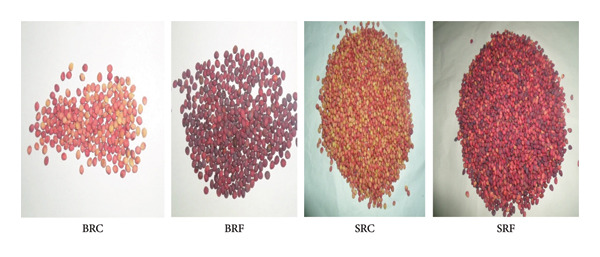 Figure 1
| Localities | Extraction of oil yield (%) | Unsaponifiable matter yield (%) |
|---|---|---|
| BRC∗ | 17.26a | 5.94b |
| SRC∗∗ | 15.35b | 10.45a |
| LSDp0.05 | 0.95 | 0.48 |
| BRF∗∗∗ | 24.62 | 4.07b |
| SRF∗∗∗∗ | 24.78 | 5.36a |
| LSDp0.05 | ns∗∗∗∗∗ | 0.37 |
| Localities | Concentrations of functional compounds in the unsaponifiable fraction | Concentrations of functional compounds in the crude oil | ||||
|---|---|---|---|---|---|---|
| Total carotenoids (mg | Total sterols (mg | Total tocopherols (mg | Carotenoids (mg | Sterols (mg | Tocopherols (mg | |
| BRC∗ | 19.48b∗∗∗∗∗ ± 0.18 | 847.04a ± 51.80 | 8.88b ± 0.09 | 1.16b | 50.31b | 0.53b |
| SRC∗∗ | 20.76a ± 1.46 | 871.36a ± 53.85 | 4.24c ± 0.09 | 2.17a | 91.03a | 0.44c |
| BRF∗∗∗ | 15.22c ± 1.11 | 844.45a ± 23.13 | 17.88a ± 0.98 | 0.62c | 34.37 d | 0.73a |
| SRF∗∗∗∗ | 20.62a ± 0.66 | 865.94 a± 25.46 | 3.10 d ± 0.09 | 1.11b | 46.42cd | 0.17 d |
| LSDp0.05 | 1.10 | 49.72 | 0.51 | 0.07 | 3.11 | 0.03 |
| Specification | DPPH (IC50, mg/mL) |
|---|---|
| BRC∗ | 1.27a∗∗∗∗∗ ± 0.13 |
| SRC∗∗ | 0.97c ± 0.01 |
| BRF∗∗ | 0.49 days ± 0.06 |
| SRF∗∗∗ | 1.06b ± 0.05 |
| LSDp0.05 | 0.06 |
| Vitamin E (std.) | 0.0195 ± 0.0075 |
| Vitamin C (std.) | 0.013 ± 0.005 |
| Localities | (μmol acarbose/g insapo) AACE |
|---|---|
| BRC | 32.75b ± 0.47 |
| SRC | 32.14b ± 0.31 |
| BRF | 33.56a ± 0.17 |
| SRF | 34.58a ± 1.33 |
| LSDp0.05 | 1.86 |
| Specification | Tocopherols (mg/g USM) | Carotenoids (mg/g USM) | Sterols (mg/g USM) | Antioxidant activity (IC50, mg/mL) | α‐Amylase inhibition (AACE, mmol/g) |
|---|---|---|---|---|---|
| Tocopherols (mg/g USM) | 1.00 | −0.79 | −0.94 | −0.92 | +0.01 |
| Carotenoids (mg/g USM) | 1.00 | +0.97 | −0.56 | −0.15 | |
| Sterols (mg/g USM) | +0.97 | 1.00 | −0.46 | −0.07 | |
| Antioxidant activity (IC50, mg/mL) | 1.00 | −0.17 | |||
| α‐Amylase inhibition (AACE, mmol/g USM) | 1.00 |
Peer Reviews
No public reviews on file for this paper yet. If you reviewed it on a platform where reviews are public (OpenReview, ICLR, NeurIPS, ICML), you can paste yours below so the community can read it here.
Videos
No videos yet. Explain this paper in a talk, walkthrough, or lecture? Add one.
Taxonomy
TopicsNuts composition and effects · Edible Oils Quality and Analysis · Antioxidant Activity and Oxidative Stress
1. Introduction
Vegetable oils are among the essential biological sources of dietary fats, providing not only vital energy but also essential lipid compounds for health, particularly unsaturated fatty acids [1, 2]. These oils have garnered growing scientific interest not only for their saponifiable fatty acid content but also for their valuable minor constituents known as the unsaponifiable matter (USM) [3]. This fraction encompasses a wide array of biologically active compounds, the most common of which include plant sterols, tocopherols, carotenoids, polyphenols, and squalene [4]. Although the USM typically constitutes less than 2% of the total oil mass [5], it plays a fundamental role in enhancing the nutritional and functional properties of vegetable oils. This is attributed to its diverse biological activities, such as antioxidants, cholesterol‐lowering, anti‐inflammatory, anticancer, immunomodulatory, antimicrobial, analgesic, and wound‐healing effects [6]. These properties make the unsaponifiable fraction a prime candidate for developing nutraceuticals and functional foods aimed at promoting health and preventing chronic diseases [51, 52].
Tocopherols are considered among the most potent natural antioxidants and serve as a primary source of vitamin E [7]. Meanwhile, plant sterols are known for their ability to inhibit cholesterol absorption in the intestine, thereby contributing to the reduction of low‐density lipoprotein (LDL) cholesterol and the prevention of cardiovascular diseases [8]. Carotenoids, on the other hand, play a crucial role as antioxidants and precursors of vitamin A, while also contributing to the sensory and color attributes of oils [9]. The proportion and composition of these unsaponifiable compounds are influenced by several factors, most notably the plant species, environmental growing conditions, extraction methods, and the phenological ripening stage of the fruits [6, 10, 11, 49].
In this context, Pistacia atlantica is one of the plant species widely distributed across the Mediterranean region [12, 50]. It is a fast‐growing species belonging to the Anacardiaceae family, which grows spontaneously in various soil types [13, 14] and is tolerant to a wide range of climatic conditions [15]. The tree can reach heights of up to 20 m and trunk diameters of up to 1 m. It typically grows either as isolated individuals or in dense groups, even in harsh environments where few other species can thrive [16]. The altitudinal range of Pistacia atlantica extends from one hundred meters above sea level to much higher elevations, such as three thousand meters in eastern Algeria [17]. This species comprises three recognized subspecies: cabulica, kurdica, and mutica [18]. Various parts of Pistacia atlantica, including the fruits, bark, and resin, have been used in traditional medicine for their therapeutic properties. These parts have been employed in the treatment of liver, kidney, and heart diseases and respiratory disorders and wound healing and for a variety of purposes as a tonic, antiseptic, and antihypertensive agent. Additionally, they have shown beneficial effects in managing gastrointestinal and digestive disorders [19].
Although numerous studies have investigated the chemical composition of oils derived from various parts of Pistacia atlantica, particularly from mature fruits [11, 20–24], data regarding the early stages of fruit development remain limited. This gap is significant, as the early ripening phase is a period of intense metabolic activity where the biosynthesis of many valuable secondary metabolites is at its peak, potentially leading to a unique and richer profile of bioactive unsaponifiable compounds compared to the mature stage. This is noteworthy given that this developmental phase is marked by significant physiological transformations, especially in the accumulation of secondary metabolites. Main study objective: to assess the effect of maturity stage (immature vs. semiripe) and geographical origin (Sougaa vs. Bousdraya) of Pistacia atlantica fruits on the concentration and profile of unsaponifiable bioactive compounds (tocopherols, sterols, and carotenoids) and their antioxidant and α‐amylase‐inhibiting activities, in order to identify optimal harvesting conditions for nutraceutical and pharmaceutical applications. Moreover, the study evaluates the biological activity of these compounds as antioxidants and natural inhibitors of α‐amylase, a key enzyme involved in starch degradation and blood glucose regulation. The novelty of this work lies in its focus on the often‐overlooked early developmental stages of the fruit, which may offer a superior and distinct source of these bioactive compounds for exploitation. The importance of this work lies in its contribution to unveiling the health‐promoting and functional potential of oil derived from early‐stage Pistacia atlantica fruits, thereby opening new perspectives for its utilization as a promising natural ingredient in health‐oriented food and pharmaceutical industries. The findings are expected to provide crucial data for optimizing harvest timing to maximize the nutraceutical value of the oil, guiding its potential application in the development of dietary supplements, functional foods for managing oxidative stress and diabetes, and natural pharmaceutical ingredients.
2. Materials and Methods
2.1. Sample Collection
The samples of unripe fruit of P. atlantica were collected in August 2018 from two different parts of Djelfa Province, Algeria; the first region S is Sougaa Bouira, Al Hadab, which is symbolized by SRC, SRF (latitude: 35°10′59.9″N; longitude: 2°55′13.5″E, altitude: 856 m). The second region B is Bousdraya Ain Oussara (BRC, BRF) (latitude: 35°22′2.3″N; longitude: 2°56′27.0″E; altitude: 720 m). Figure 1 shows the image of the samples. The plant material was botanically identified and confirmed by Professor M. Yousfi, Laghouat University, Algeria. The seeds’ part samples were dried in the open air, in the shade, and away from sunlight and moisture for 4 weeks. The samples were ground to a fine powder using an agate mortar and pestle.
Samples of Pistacia atlantica fruits: unripe stage (SRC = Sougaa, unripe; SRF = Sougaa, middle maturity; BRC = Bousdraya, unripe; BRF = Bousdraya, middle maturity).
2.2. Oil Extraction
The oil was extracted following the standard protocol established by the Association of Official Analytical Chemists (AOAC, 2000) [25], using a Soxhlet apparatus and petroleum ether as the solvent. A precisely weighed amount of one hundred grams of each dried sample (for three replicates per sample) was used to conduct the extraction process, and the extraction was conducted for 4–6 h until the solvent became clear, indicating complete extraction. The obtained oil extract was then collected for the subsequent isolation of the USM. The oil yield was expressed as a percentage and calculated based on the weight of the oil obtained after solvent evaporation, using the following formula:
2.3. Unsaponifiable Fraction Preparation
The USM was isolated according to the method described in reference [26]. A weighed portion of the oil was dissolved in 100 mL of ethanolic potassium hydroxide solution (1 N KOH) and refluxed for 1 h with constant stirring. After cooling, 100 mL of distilled water was added, and the unsaponifiable fraction was extracted three times with 100 mL of diethyl ether using liquid–liquid extraction. The combined organic phases were dried with anhydrous Na_2_SO_4_ and filtered, and the solvent was evaporated at 40°C under reduced pressure. The yield of the USM was then calculated.
2.4. Phytochemical Analysis
2.4.1. Tocopherol Determination
Total tocopherols were quantified spectrophotometrically following the method described in reference [27], which is based on the reduction of ferric ions (Fe^3+^) to ferrous ions (Fe^2+^) by tocopherols in the presence of 1,10‐phenanthroline, forming an orange‐colored complex measured at 510 nm. α‐Tocopherol was used as an external standard to generate a calibration curve within the concentration range of 0.012–0.062 mg/mL. Ethanol was used as the extraction solvent. Tocopherol concentrations were calculated using the linear regression equation from the calibration curve and expressed as mg/g of oil.
2.4.2. Sterol Determination
Total sterols were determined using the Liebermann–Burchard spectrophotometric method as described in reference [28]. This method relies on a characteristic colorimetric reaction of 3β‐hydroxysteroids containing a double bond at the five to six position. In an acidic environment, sterols react with β‐acetic anhydride to form a stable complex that exhibits absorbance in the visible range at 550 nm. The Liebermann reagent used for this purpose consists of a mixture of 60 mL acetic anhydride, 10 mL concentrated sulfuric acid, and 30 mL acetic acid. For the assay, 1 mL of each diluted solution was combined with 2 mL of the Liebermann reagent and allowed to stand for 25 min to ensure full color development and stabilization. β‐Sitosterol, dissolved in chloroform, was used as the calibration standard over the concentration range of 0.012–0.062 mg/mL. The sterol content of the samples was quantified using a calibration curve and results were expressed as milligrams per gram of oil (mg/g).
2.4.3. Carotenoid Determination
Total carotenoids were estimated according to the spectrophotometric method described in reference [29], based on the direct absorbance of β‐carotene at 460 nm in chloroform. A calibration curve was prepared using β‐carotene standards (0.012–0.060 mg/mL). The concentration of carotenoids in oil extracts was calculated using the slope of the standard curve and absorbance values, with results expressed as mg/g of oil.
In all quantifications, the following formula was used to calculate concentrations:
where A: absorbance, K: slope of the calibration curve, F: dilution factor, V: volume of solvent (3 mL), and p: mass of oil sample.
2.5. Biological Activity Assays
2.5.1. DPPH Radical Scavenging Activity
The antioxidant activity of the unsaponifiable extracts was evaluated by [30]. In brief, 0.5 mL of the sample, previously diluted in absolute ethanol, was mixed with 0.5 mL of a 250 μM DPPH solution prepared in the same solvent. The reaction mixture was vigorously shaken and left to incubate in the dark at ambient temperature for 30 min. Subsequently, the absorbance was measured at 517 nm against a blank, to assess the sample’s free radical scavenging activity. The DPPH radical inhibition percentage (PI%) was determined using the following equation:
where A 0: absorbance without inhibitor and A: absorbance of the sample with inhibitor.
Dose–response curves were plotted (concentration vs. % inhibition), and IC_50_ values (concentration required to inhibit 50% of DPPH radicals) were determined for each extract.
2.5.2. α‐Amylase Inhibitory Activity
The α‐amylase inhibitory activity was assessed using the colorimetric DNSA method, as described in reference [31]. A standardized protocol was employed to evaluate the α‐amylase inhibitory activity. The reaction mixture consisted of two hundred μL of phosphate buffer (Na_2_HPO_4_/NaH_2_PO_4_, 0.02 M, containing 0.006 M NaCl, pH 6.9), 100 μL of soluble starch solution (1% w/v in water) as the substrate, and 100 μL of diluted phenolic extract. The mixture was incubated at 37°C for 5 min. The enzymatic reaction was then initiated by adding one hundred μL of α‐amylase (EC 3.2.1.1) derived from Aspergillus oryzae (13 units). After a further incubation of 5 min at the same temperature, the reaction was terminated by the addition of 1 mL of DNSA reagent. The mixture was boiled for 5 min in a water bath at 100°C, cooled to room temperature, and diluted with 2 mL of distilled water. Absorbance was measured at 530 nm using a UV–visible spectrophotometer. A control representing 100% enzyme activity was prepared by replacing the plant extract with one hundred μL of buffer. A blank was also prepared for each extract concentration in the absence of the enzyme solution. Acarbose (50 mg, Gluconova) was used as the reference standard.
All measurements were performed in triplicate. The percentage inhibition was calculated using the same PI% equation as above.
The inhibitory capacity was also expressed as AACE (μmol acarbose equivalent per gram of extract), calculated using the following formula:
where PI: inhibition percentage, K: slope of the calibration curve, F: dilution factor, V: volume of solvent, and p: sample mass.
2.6. Statistical Analysis
Statistical analysis was conducted using two‐way analysis of variance (ANOVA) to evaluate the effects of both geographical origin and maturity stage, as well as their interaction, on the parameters studied. When significant differences were detected, a post‐hoc multiple comparison test (LSD or Tukey HSD, as appropriate) was applied to determine specific differences between group means. Letter designations (e.g., “a,” “b,” and “c”) presented in the tables indicate statistically homogeneous groups; values sharing the same letter are not significantly different (p > 0.05), while different letters denote significant differences (p < 0.05).
3. Results and Discussion
3.1. Oil Content
The oil extraction results from Pistacia atlantica fruits revealed a clear influence of both the ripening stage and geographical location on the extraction yield. It was observed that semiripe fruits (RF) exhibited higher oil yields compared to unripe fruits (RC) in both studied regions. In region B, the oil yield increased from 17.26% in unripe fruits (BRC) to 24.62% in semiripe fruits (BRF), while in region S, it rose from 15.35% (SRC) to 24.78% (SRF). This increase reflects the gradual accumulation of lipids during fruit maturation, which is consistent with previous findings [32, 33], indicating that ripening is a key factor in enhancing oil yield.
Notably, unripe fruits record oil yields exceeding 15% in both regions, which is considered high during the early stages of ripening. These values are close to the minimum threshold of 17% established by the Food and Agriculture Organization (FAO) for seeds to be classified as suitable raw material for industrial oil production. In fact, the oil content in unripe fruits reached this threshold in region B and approached it in region S. At the semiripe stage, oil yields significantly exceeded this benchmark, further supporting the potential of these fruits as a promising source for oil production [34].
Moreover, the comparison between the two regions revealed relative differences in yield, with region B showing a slight advantage at the early ripening stage, whereas values were identical at the semiripe stage. This suggests that the geographical effect is more pronounced during the initial phases of fruit development and tends to diminish gradually as ripening progresses. Therefore, selecting the optimal harvest time is a critical factor for maximizing oil productivity, while also considering the environmental characteristics of each location.
3.2. Unsaponifiable Fraction
The USM refers to the lipid components that do not undergo saponification during the process and remain unreactive with alkalis. This fraction contains bioactive compounds such as sterols, tocopherols, carotenoids, terpenic alcohols, and squalene [35]. It is insoluble in water but soluble in organic solvents. USM is particularly rich in policosanols, phytosterols, squalene, and fat‐soluble vitamins, which have demonstrated antihyperlipidemic and antiphotoaging properties [36]. Therefore, it serves as an important chemical marker reflecting the oil’s quality and biochemical composition [37].
The results revealed a clear variation in the yield of the USM depending on both the geographical origin and the ripening stage of the fruits. As shown in Table 1, unripe fruits from the SRC region exhibited the highest yield of USM (10.45%) compared to the semiripe fruits from the same region (SRF: 5.36%). In contrast, lower values were recorded in the BRC and BRF regions (5.94% and 4.07%, respectively). This decline in yield with advancing ripeness may be attributed to physiological changes associated with reduced metabolic activity, degradation of sensitive compounds such as tocopherols and carotenoids, and processes like autoxidation or enzymatic breakdown [38].
The results related to oil extraction efficiency and USM content from Pistacia atlantica fruits collected from two different regions in the Djelfa Province (BRC/SRC and BRF/SRF) and at two different phenological stages (unripe and semiripe) demonstrated a significant influence of both geographical location and ripening stage. In the BRC/SRC region, a statistically significant difference was observed in oil yield, with unripe fruits (BRC) showing higher extraction efficiency, indicating a greater fat content compared to semiripe fruits (SRC). This unusual trend may reflect the influence of local environmental conditions. Regarding the USM, semiripe fruits (SRC) showed significantly higher content (10.45%) than unripe ones (5.94%), suggesting that the accumulation of bioactive compounds (such as sterols and tocopherols) increases with ripening.
In the second region (BRF/SRF), oil yields did not differ significantly between unripe (24.62%) and semiripe fruits (24.78%), indicating that ripening had no impact on oil content in this area. However, the content of USM was significantly higher in semiripe fruits (SRF: 5.36%) compared to unripe ones (BRF: 4.07%) with an LSD of 0.37, confirming a similar trend to that observed in the first region.
Collectively, these results suggest that oil yield may be region‐dependent: a visible decrease with ripening was observed in one region (BRC/SRC), while it remained stable in the other (BRF/SRF). On the other hand, the USM increased with ripening in both regions, indicating that semiripe fruits are richer in bioactive compounds. These regional differences may be due to environmental factors such as soil and climate or genetic variations affecting metabolic accumulation dynamics. These findings emphasize the importance of ripening stage and geographical location as key factors in guiding the targeted use of Pistacia atlantica fruits for high‐value nutritional and functional applications, particularly for the extraction of unsaponifiable compounds with proven biological properties.
3.2.1. Total Tocopherols
Tocopherols, especially α‐tocopherol, are known as potent antioxidant compounds, responsible for protecting unsaturated fatty acids from oxidative damage, thereby contributing to the enhancement of oil stability [39].
The amount of tocopherols in the tested extracts was determined based on the linear standard curve equation of α‐tocopherol, plotted as a function of absorbance against a series of increasing concentrations (y = 21.145×, r ^2^ = 0.999). The values calculated from the equation were expressed in units of (mg α‐tocopherol equivalent/g of oil), as presented in Table 2.
As shown in Table 2, tocopherol levels exhibited the highest degree of variability among the analyzed bioactive compounds, both in the unsaponifiable fraction and in the crude oil, depending on geographical origin and ripening stage. In region B, the semiripe fruits (BRF) demonstrated the highest tocopherol concentration, reaching 17.88 ± 0.98 mg αTE/g USM, significantly surpassing that of the unripe fruits (BRC, 8.88 ± 0.09 mg/g), indicating a positive correlation between ripening and tocopherol accumulation in this region. Conversely, region S showed an inverse pattern, where the tocopherol content decreased from 4.24 ± 0.09 mg/g in unripe fruits (SRC) to 3.10 ± 0.09 mg/g in semiripe fruits (SRF), suggesting that ripening negatively affects tocopherol biosynthesis or stability in this environment.
A similar trend was observed in the crude oil: BRF recorded the highest tocopherol content (0.73 mg/g oil), followed by BRC (0.53 mg/g). In contrast, lower concentrations were measured in region S, with 0.44 mg/g in SRC and only 0.17 mg/g in SRF. These findings highlight that the oil derived from fully ripe fruits in region B represents a particularly rich source of tocopherols. Meanwhile, region S exhibited lower tocopherol levels across both maturity stages, due to environmental constraints affecting metabolic pathways related to tocopherol synthesis and preservation. This variability underscores the importance of considering both geographical and phenological factors in evaluating the nutritional and functional potential of Pistacia atlantica oils.
These findings indicate that tocopherol accumulation does not follow a uniform pattern with ripening but rather is influenced by the local environmental context. While concentrations increase with maturity in region B, they decline in region S, revealing a marked ecological variability in accumulation dynamics. When compared to the study by Guenane et al. [40], tocopherol content was higher in unripe fruits (50.7 mg/100 g oil) than in ripe ones (34.1 mg/100 g oil), a trend that partially aligns with the pattern observed in region S. Conversely, the findings of Labdelli et al. [41] reported an increase in tocopherols with ripening, consistent with the observation in BRF.
3.2.2. Total Carotenoids
Carotenoids are biologically active lipid compounds characterized by their antioxidant activity, in addition to their role as natural pigments and precursors of vitamin A. They contribute to enhancing the oxidative stability of oil and endowing it with additional nutritional and functional properties [42].
The amount of carotenoids in the tested extracts was determined based on the linear standard curve equation of β‐carotene, plotted as a function of absorbance against a series of increasing concentrations (y = 18.367x + 0.0366, R ^2^ = 0.9986). The values calculated from the equation were expressed in units of (mg β‐carotene equivalent/g of oil), as presented in Table 2.
As presented in Table 2, the carotenoid content demonstrated significant variability between the two studied regions (S and B) and across different ripening stages. In the USM, the highest concentrations were recorded in region S, with values of 20.76 ± 1.46 mg βCE/g USM in SRC and 20.62 ± 0.66 mg βCE/g USM in SRF, showing no significant difference between the unripe and semiripe stages. Conversely, region B exhibited comparatively lower carotenoid levels, with 19.48 ± 0.18 mg/g in BRC, decreasing significantly to 15.22 ± 1.11 mg/g in BRF, reflecting a notable decline during ripening at this site.
A similar trend was observed in the crude oil, where SRC again displayed the highest carotenoid content (2.17 mg/g oil), followed by SRF (1.11 mg/g). In contrast, region B showed a marked reduction in carotenoid concentration from 1.16 mg/g in BRC to only 0.62 mg/g in BRF. These findings indicate that region S provides more favorable environmental conditions for carotenoid accumulation in both the unsaponifiable fraction and the crude oil, thereby enhancing the phytochemical value of the oil as a source of antioxidant and pigment‐active compounds. The significant decrease observed in region B, particularly at full ripeness, may suggest a lower carotenoid biosynthesis capacity or increased degradation due to environmental or physiological factors.
These findings emphasize that carotenoids are more abundant in unripe fruits, which may be attributed to their high sensitivity to oxidative, photolytic, and thermal factors accompanying ripening. However, the relative stability of carotenoid content in region S, even in ripe fruits, suggests the presence of local environmental factors that contribute to maintaining the stability or continued synthesis of these compounds. This interpretation is supported by literature reports on carotenoid degradation through oxidation or metabolic transformation during ripening [43, 44].
Compared to previous studies, notably Labdelli et al. [41], the values recorded in this study are significantly higher, especially after unit standardization—highlighting the exceptional bioactive potential of Pistacia atlantica fruits, particularly the unripe ones from Djelfa region, in terms of carotenoid richness. This superiority is partly attributed to the use of an analytical method based on unsaponifiable fraction extraction, which provides greater accuracy in estimating these compounds compared to conventional methods based on direct oil analysis.
These findings underscore that the actual estimation of carotenoids must consider not only their concentration in the USM but also the yield of this fraction, as high concentrations do not necessarily reflect the final content in the oil without efficient extraction. Moreover, the decline observed with ripening, especially in region B, highlights the importance of controlling environmental conditions and harvest timing to preserve the biochemical quality of the fruits.
3.2.3. Total Sterols
Phytosterols are unsaponifiable compounds that play a vital role in the structure of plant cell membranes and are known for their health‐promoting effects, particularly in reducing cholesterol absorption [45]. They are stable constituents in vegetable oils and are used as markers of oil quality and refinement.
The amount of sterols in the tested extracts was determined based on the linear standard curve equation of β‐sitosterol, plotted as a function of absorbance against a series of increasing concentrations (y = 0.4276×, r ^2^ = 0.9983). The values calculated from the equation were expressed in units of mg β‐sitosterol equivalent/g of oil, as shown in Table 2.
The results presented in Table 2 revealed that sterol concentrations in the USM were consistently high across all samples, with slightly higher values recorded in region S compared to region B. In Sougaa, the unripe fruits (SRC) exhibited the highest content (871.36 ± 53.85 mg βS/g USM), followed closely by the semiripe fruits (SRF, 865.94 ± 25.46 mg/g USM), indicating minimal fluctuation during ripening. Similarly, in Bousdraya, sterol content was also high, albeit slightly lower, with values of 847.04 ± 51.80 mg/g in BRC and 844.45 ± 23.13 mg/g in BRF. Statistical analysis confirmed that all samples shared comparably elevated levels of sterols in the unsaponifiable fraction, with no significant differences between localities. In contrast, more pronounced variations were observed in the crude oil. SRC stood out with a markedly higher sterol concentration (91.03 mg βS/g oil), followed by SRF (46.42 mg/g), while BRC and BRF recorded lower values (50.31 and 34.37 mg/g, respectively). These discrepancies suggest that although sterols are concentrated in USM, their distribution in crude oil does not always mirror that of the unsaponifiable fraction. This highlights the critical role of USM yield in accurately assessing the oil’s functional compound content. Overall, the findings underscore the favorable conditions of region S, particularly at the unripe stage, for enhancing phytosterol accumulation—compounds known for their cholesterol‐lowering effects—while also pointing to a higher sensitivity to ripening and potential environmental modulation in region B.
Table 2 presents the concentrations of total carotenoids, total sterols, and total tocopherols in both the crude oil and the unsaponifiable fraction of Pistacia atlantica fruit oil from various localities (BRC, SRC, BRF, and SRF). The data reveal notable differences in compound concentrations across localities and between the crude oil and unsaponifiable fractions.
In conclusion, the results presented in Table 2 highlight the biological significance of the unsaponifiable fraction as a concentrated and rich source of functional bioactive compounds, including carotenoids, sterols, and tocopherols, in comparison to the crude oil. This difference is expected, as the USM naturally contains fat‐soluble vitamins and compounds such as carotenoids, explaining their higher concentrations in this fraction. The SRC locality stood out for its notably high content of carotenoids and sterols, while the BRF samples exhibited elevated levels of tocopherols. These variations reflect the influence of environmental and geographical factors on the phytochemical profile of Pistacia atlantica fruit oil. The statistical values (LSDp0.05) support the observed differences, confirming that they are significant and not due to random variation. These findings emphasize the potential of this oil as a valuable natural source of bioactive compounds and underline the importance of selecting the appropriate geographical origin and ripening stage to maximize its health benefits and industrial applications.
3.3. Biological Activity of Unsaponifiable Compounds
In addition to their chemical and nutritional importance, unsaponifiable compounds in vegetable oils are considered valuable bioactive sources with high biological relevance. They play a significant role in combating oxidative stress and regulating various enzymes associated with metabolic disorders.
In this context, the biological activity of the unsaponifiable fraction extracted from Pistacia atlantica fruits—collected from different geographical regions and ripening stages—was assessed using two key bioassays: the DPPH radical scavenging activity and the inhibitory effect on α‐amylase enzyme**.**
3.3.1. Antioxidant Activity (DPPH Scavenging Activity)
The antioxidant activity was evaluated using the IC_50_ value, which represents the concentration required to inhibit 50% of the DPPH free radicals. Lower IC_50_ values indicate higher antioxidant potency. Table 3 shows the antioxidant activity of the nonsaponifiable fractions from Pistacia atlantica fruit oil, measured by the DPPH radical scavenging assay (IC_50_ values). The IC_50_ value is the sample concentration required to inhibit 50% of the DPPH free radicals. The lower the IC_50_ value, the stronger the antioxidant activity. Vitamin C serves as a reference standard.
The antioxidant potential of the unsaponifiable fractions from Pistacia atlantica fruit oil was evaluated using the DPPH radical scavenging assay, and the results are presented in Table 3. Significant differences (p < 0.05) in IC_50_ values were observed between regions and ripening stages, as confirmed by the LSD test (LSD_0_.05 = 0.06).
The most potent antioxidant activity was recorded in the semiripe sample from the Bousdraya region (BRF), with an IC_50_ value of 0.49 ± 0.06 mg/mL, statistically distinct from all other tested samples. This finding underscores the high efficacy of the oil extract from this location and maturity stage. The highest antioxidant activity, expressed by the lowest IC_50 value, was demonstrated by the BRF fraction, for which the IC_50 was 0.49 ± 0.06 mg/mL. A lower IC_50 value indicates higher activity. This fraction was statistically significantly (letter d) more potent than the other fractions. However, vitamin C (IC_50 = 0.013 ± 0.005 mg/mL) and vitamin E (IC_5 = 0.0195 ± 0.0075 mg/mL)—as pure standards—demonstrated several dozen times higher activity than the best unsaponifiable fraction.
In contrast, the unripe sample from the same region (BRC) exhibited the weakest activity (IC_50_ = 1.27 ± 0.13 mg/mL), confirming a significant enhancement in antioxidant capacity with ripening at this site. This trend suggests the biosynthesis or accumulation of potent antioxidant compounds, particularly tocopherols, during later developmental stages.
On the other hand, in the Sougaa region, the antioxidant activity followed an inverse pattern. The unripe sample (SRC) demonstrated stronger activity (IC_50_ = 0.97 ± 0.01 mg/mL) than the semiripe one (SRF: IC_50_ = 1.06 ± 0.05 mg/mL), indicating a decline in antioxidant potential with fruit maturation. This may reflect oxidative degradation or reduced synthesis of active compounds such as carotenoids, which were found in higher concentrations in SRC.
When comparing geographical origins at the same phenological stage, differences were also evident. At the unripe stage, SRC (Sougaa) showed superior antioxidant activity compared to BRC (Bousdraya), while at the semiripe stage, BRF outperformed SRF. These results clearly illustrate that both ripening stage and environmental conditions (e.g., solar radiation, temperature, and soil composition) significantly affect the bioactivity of the oil.
As anticipated, vitamin C and vitamin E, used as positive controls, showed markedly higher antioxidant activity (IC_50_ = 0.013 ± 0.005 mg/mL and IC_50_ = 0.195 ± 0.0075 mg/mL, respectively), underscoring the comparatively moderate effectiveness of complex plant‐derived fractions relative to pure reference standards.
Overall, these findings demonstrate that the antioxidant activity of Pistacia atlantica USM is influenced by a multifactorial interaction between developmental stage and ecological conditions. The semiripe fruits from Bousdraya (BRF) appear to offer the highest bioactivity, supporting the notion that optimized harvest timing and location are critical for maximizing the functional quality of Pistacia atlantica oil in food and pharmaceutical applications.
3.3.2. α‐Amylase Inhibition
α‐Amylase is a key therapeutic target in the management of type 2 diabetes, as its inhibition reduces the rate of complex carbohydrate hydrolysis, thereby regulating postprandial blood glucose levels [48]. In this study, the inhibitory activity of the samples was expressed as acarbose equivalent units, reported in μmol of acarbose per gram of USM (μmol acarbose/g insapo).
The α‐amylase inhibitory activity of the tested extracts was determined based on the linear standard curve equation of acarbose, plotted as a function of absorbance against a series of increasing concentrations (y = 3.5076×, R ^2^ = 0.9881).
Table 4 shows the α‐amylase enzyme inhibitory activity for nonsaponifiable fractions of Pistacia atlantica fruit oil from various locations. This activity is expressed in acarbose equivalents μmol AACE/g USM, which means that a higher value indicates a stronger inhibitory effect. The letters (“a” and “b”) next to the values indicate statistical differences between means, where the same letters indicate no statistically significant differences and different letters indicate their existence, at a significance level of p < 0.05.
The α‐amylase inhibitory capacity of the USM from Pistacia atlantica oil varied significantly across the different geographic origins. The highest activity was observed in the fractions obtained from the SRF (34.58 ± 1.33 μmol AACE/g USM) and BRF (33.56 ± 0.17 μmol AACE/g USM) sites. These values, assigned with the same statistical letter “a,” indicate a comparable and significantly higher inhibitory effect relative to the other locations.
Conversely, USM fractions from the BRC (32.75 ± 0.47 μmol AACE/g USM) and SRC (32.14 ± 0.31 μmol AACE/g USM) sites displayed lower inhibitory activities. Both were statistically similar to each other (letter “b”) but significantly different from SRF and BRF.
These findings confirm that the nonsaponifiable fraction of Pistacia atlantica oil exerts a measurable α‐amylase inhibitory effect, which is of potential interest for glycemic regulation, as α‐amylase plays a significant role in carbohydrate hydrolysis. Notably, the inhibitory pattern differs from that observed for antioxidant activity, where BRF and SRC had the highest performances. In contrast, for α‐amylase inhibition, BRF retained high activity while SRC ranked among the least active. This suggests that compounds other than the main antioxidant constituents (e.g., tocopherols, carotenoids, and sterols) might be responsible for α‐amylase inhibition. This hypothesis is supported by the Pearson correlation matrix, which revealed no significant correlation between the levels of these bioactive compounds and α‐amylase inhibitory potential.
3.4. Correlation of Antioxidant Activity and α‐Amylase Inhibition With the Content of the Unsaponifiable Fraction Components
Table 5 presents the Pearson correlation matrix (r), which quantifies the strength and direction of the linear relationship between the components of nonsaponifiable fractions (tocopherols, carotenoids, and sterols) and two biological activities: antioxidant activity (IC_50_) and α‐amylase inhibition (AACE) (Table 5).
The correlation analysis between the components of the unsaponifiable fraction and the biological activities of Pistacia atlantica fruit oil revealed significant variations that reflect the influence of chemical composition on bioactivity. A strong negative correlation was observed between tocopherol content and both carotenoids (r = −0.79) and sterols (r = −0.94), indicating that higher concentrations of tocopherols are associated with lower levels of the other two compounds. In contrast, carotenoids and sterols were found to be very strongly positively correlated (r = +0.97), suggesting their simultaneous accumulation in the oil. Regarding antioxidant activity, tocopherols showed a strong negative correlation with IC_50_ values (r = −0.92), confirming their central role in enhancing antioxidant capacity. Meanwhile, carotenoids (r = −0.56) and sterols (r = −0.46) exhibited moderate negative correlations, indicating a less pronounced contribution. As for α‐amylase inhibition, the correlations were very weak and statistically insignificant for tocopherols (r = +0.01), carotenoids (r = −0.15), and sterols (r = −0.07), suggesting that these compounds are not the main contributors to this activity. Instead, the inhibitory effect may be attributed to other constituents present in the unsaponifiable fraction or to synergistic interactions among its components. These findings underscore the physiological importance of tocopherols as potent antioxidants, whereas sterols and carotenoids contribute to a lesser extent, with no clear impact on α‐amylase inhibitory activity.
4. Conclusions
The paper has shown that the unripe fruits of Pistacia atlantica are rich source of bioactive unsaponifiable compounds, such as tocopherols, sterols, and carotenoids, which exhibited significant antioxidants and 8‐amylase inhibitory properties. The findings show that fruit development during the initial stages of fruit growth is an ideal harvesting season to obtain fruit to its full capacity in terms of yielding health‐promoting compounds. These observations are more specifically applicable when it comes to the valorization of P. atlantica oils as natural functional food ingredients with possible nutritional and metabolic health advantages.
The fact that the chemical composition and biological activity of the fruits vary with the geographical origin and maturity period highlights the significance of the environmental and the phenological aspects in establishing the bioactive potential of the fruits. Correlation studies have shown tocopherols to be the primary contributor to antioxidant activity, and the place of carotenoids in the inhibition of α‐amylase is also not much and needs further clarification.
In general, these results are supportive of the applicability of P. atlantica oils in food and pharmaceutical industry, especially natural antioxidants, and enzyme modulators. The scope of future studies should be on the molecular description of active components and full substantiation of biological activity by in vivo and clinical trials, which will eventually lead to their eventual incorporation into nutraceuticals, functional foods, and novel therapeutic formulations.
Conflicts of Interest
The authors declare no conflicts of interest.
Funding
No funding was received for this manuscript.
The reference list from the paper itself. Each links out to its DOI / PubMed record.
- 1Tian M. , Bai Y. , Tian H. , and Zhao X. , The Chemical Composition and health-promoting Benefits of Vegetable Oils—A Review, Molecules. (2023) 28, no. 17, 10.3390/molecules 28176393.PMC 1048990337687222 · doi ↗ · pubmed ↗
- 2Orsavova J. , Misurcova L. , Vavra Ambrozova J. , Vicha R. , and Mlcek J. , Fatty Acids Composition of Vegetable Oils and Its Contribution to Dietary Energy Intake and Dependence of Cardiovascular Mortality on Dietary Intake of Fatty Acids, International Journal of Molecular Sciences. (2015) 16, no. 6, 12871–12890, 10.3390/ijms 160612871, 2-s 2.0-84931274980.26057750 PMC 4490476 · doi ↗ · pubmed ↗
- 3Tavakoli J. , Hajpour Soq K. , Yousefi A. , Estakhr P. , Dalvi M. , and Mousavi Khaneghah A. , Antioxidant Activity of Pistacia atlantica Var Mutica Kernel Oil and It Is Unsaponifiable Matters, J Food Sci Technol. (2019) 56, no. 12, 5336–5345, 10.1007/s 13197-019-04004-0, 2-s 2.0-85070634384.31749481 PMC 6838301 · doi ↗ · pubmed ↗
- 4Poljšak N. , Kreft S. , and Kočevar Glavač N. , Vegetable Butters and Oils in Skin Wound Healing: Scientific Evidence for New Opportunities in Dermatology, Phytotherapy Research. (2020) 34, no. 2, 254–269, 10.1002/ptr.6524.31657094 · doi ↗ · pubmed ↗
- 5Kokalj Ladan M. and Kočevar Glavač N. , Statistical FT-IR Spectroscopy for the Characterization of 17 Vegetable Oils, Molecules. (2022) 27, no. 10, 10.3390/molecules 27103190.PMC 914716535630666 · doi ↗ · pubmed ↗
- 6Schoss K. and Glavač N. K. , Supercritical CO 2 Extraction vs. Hexane Extraction and Cold Pressing: Comparative Analysis of Seed Oils from Six Plant Species, Plants. (2024) 13, no. 23, 10.3390/plants 13233409.PMC 1164474139683202 · doi ↗ · pubmed ↗
- 7Jiang Q. , Natural Forms of Vitamin E: Metabolism, Antioxidant, and Anti-inflammatory Activities and Their Role in Disease Prevention and Therapy, Free Radical Biology and Medicine. (2014) 72, 76–90, 10.1016/j.freeradbiomed.2014.03.035, 2-s 2.0-84899952359.24704972 PMC 4120831 · doi ↗ · pubmed ↗
- 8Cabral C. E. and Klein M. R. S. T. , Phytosterols in the Treatment of Hypercholesterolemia and Prevention of Cardiovascular Diseases, Arquivos Brasileiros de Cardiologia. (2017) 109, no. 5, 475–482, 10.5935/abc.20170158, 2-s 2.0-85038414134.29267628 PMC 5729784 · doi ↗ · pubmed ↗