Regional tau burden emerges following beta‐amyloid chronicity timeline in the Down syndrome population
Max McLachlan, Brecca Bettcher, Andrew K McVea, Matthew D Zammit, Lisette LeMerise, Jeremy P. Rouanet, Julie C Price, Dana L Tudorascu, Charles M Laymon, David B. Keator, Patrick J. Lao, Adam Brickman, Tim D Fryer, Sigan L Hartley, Beau Ances, H. Diana Rosas, Sterling C. Johnson

TL;DR
This study shows that tau accumulation in people with Down syndrome follows a timeline linked to amyloid buildup, with different brain regions affected at different times.
Contribution
The study introduces a standardized model of amyloid progression in Down syndrome to better understand the timeline of tau accumulation.
Findings
NFT regions I and II show increased tau burden earlier than regions III-VI in the Down syndrome population.
The timeline of amyloid chronicity correlates with regional tau accumulation, with distinct windows of significant change.
Dementia is associated with higher tau levels and later amyloid chronicity stages.
Abstract
Previous work in the Down syndrome (DS) population has revealed early and accelerated accumulation of Alzheimer's disease (AD) pathology when compared with neurotypical adults. Temporal models of [11C]PiB PET beta‐amyloid (Aβ) trajectories aligned with the progression of [18F]flortaucipir neurofibrillary tau (NFT) burden through Braak‐associated regions (Zammit 2023). These analyses were extended to a larger DS cohort that includes individuals who underwent Aβ imaging with [18F]florbetapir. This work investigated the temporal relationship between regional NFT burden and a standardized model of Aβ onset in the DS population. 282 participants with DS underwent longitudinal NFT and Aβ PET imaging (Table 1). PiB and florbetapir scans underwent Centiloid (CL) processing using a previously calibrated pipeline. Flortaucipir scans were realigned, summed 80‐100 min, and warped into standard…
Genes, proteins, chemicals, diseases, species, mutations and cell lines named across the full text — each resolved to its canonical identifier and authoritative record.
Click any figure to enlarge with its caption.
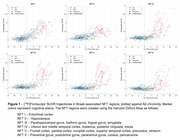 Figure 1
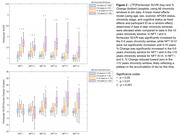 Figure 2
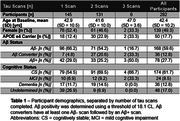 Figure 3
Peer Reviews
No public reviews on file for this paper yet. If you reviewed it on a platform where reviews are public (OpenReview, ICLR, NeurIPS, ICML), you can paste yours below so the community can read it here.
Videos
No videos yet. Explain this paper in a talk, walkthrough, or lecture? Add one.
Taxonomy
TopicsDown syndrome and intellectual disability research · Alzheimer's disease research and treatments · Dementia and Cognitive Impairment Research