Plasma p‐tau changes across the clinical spectrum of Alzheimer's disease: a systematic review and meta‐analysis
Wagner S. Brum, Joseph Therriault, Arthur C. Macedo, Lydia Trudel, Fernando Bittemcourt, Martin Nakouzi, Ilaria Pola, Matthew Wong, Przemyslaw Radoslaw Kac, Ana Paula Bernardes Real, Chloe Witherow, Thomas K Karikari, Alexis Moscoso, Michael Schöll, Andrea L. Benedet

TL;DR
This study finds that plasma p-tau217 levels increase significantly across Alzheimer's disease stages, making it a promising biomarker for diagnosis.
Contribution
The paper provides robust estimates of plasma p-tau changes across Alzheimer's clinical stages using a systematic review and meta-analysis.
Findings
Plasma p-tau217 increases 2.17-fold in cognitively unimpaired Aβ-positive individuals compared to Aβ-negative.
p-tau217 shows a 4.95-fold increase in Aβ-positive dementia compared to Aβ-negative controls.
p-tau217 has a larger dynamic range than other p-tau variants like p-tau181 and p-tau231.
Abstract
Alzheimer's disease (AD) plasma biomarkers have transformed the field due to their scalability and minimal invasiveness, especially when evidence of AD biomarker abnormality is required for novel anti‐amyloid immunotherapies. Among plasma biomarker candidates, phosphorylated tau (p‐tau) variants show most promise for clinical application. While establishing cutoffs is crucial for implementation, understanding continuous‐level changes is critical for accurate interpretation in research and clinical settings. Given the variety of p‐tau biomarkers and emerging assays, robust estimates of continuous‐level plasma p‐tau changes across the clinical spectrum of AD are needed. We screened databases for studies (01‐Jul‐1984 to 09‐Dec‐2024) reporting plasma p‐tau concentrations alongside Aβ‐PET, CSF biomarkers, or neuropathology. Plasma p‐tau fold‐changes across the AD clinical spectrum were…
Genes, proteins, chemicals, diseases, species, mutations and cell lines named across the full text — each resolved to its canonical identifier and authoritative record.
Click any figure to enlarge with its caption.
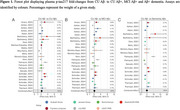 Figure 1
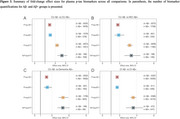 Figure 2
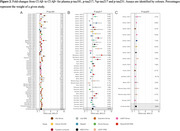 Figure 3
Peer Reviews
No public reviews on file for this paper yet. If you reviewed it on a platform where reviews are public (OpenReview, ICLR, NeurIPS, ICML), you can paste yours below so the community can read it here.
Videos
No videos yet. Explain this paper in a talk, walkthrough, or lecture? Add one.
Taxonomy
TopicsAlzheimer's disease research and treatments · Dementia and Cognitive Impairment Research · Clusterin in disease pathology