Event‐Based Modeling Reveals the Order of Microstructural and Macrostructural Changes Along the Amyloid Positivity Continuum
Shayan Javid, Alyssa H Zhu, Sunanda Somu, Kevin Low, Siddharth Narula, Julio E Villalon‐Reina, Emma J Gleave, Sophia I Thomopoulos, Paul M. Thompson, Neda Jahanshad, Talia M Nir

TL;DR
This study uses event-based modeling to show that microstructural brain changes detected by dMRI occur before macrostructural changes in Alzheimer's disease, offering earlier detection of amyloid positivity.
Contribution
The study introduces event-based modeling to order microstructural and macrostructural brain changes along the amyloid positivity continuum in Alzheimer's disease.
Findings
Cortical microstructure changes precede hippocampal volume and cortical thickness changes in amyloid-positive individuals.
Event-based modeling successfully sequences biomarkers along the amyloid positivity continuum.
Regional analyses identified pericalcarine cortical thickness and temporal dMRI measures as early indicators of amyloid-related abnormalities.
Abstract
Diffusion MRI (dMRI) is sensitive to microstructural brain abnormalities, which may precede standard MRI macrostructural changes in the progression of Alzheimer's disease (AD) and related dementias. dMRI may allow for earlier amyloid beta (Aβ) detection and intervention before significant cognitive decline and help differentiate between Aβ+ and Aβ‐ dementias. Event‐based modeling (EBM) is a probabilistic data‐driven method applicable to cross‐sectional data that can order multimodal biomarkers as they become abnormal in the course of disease progression. We used EBM to examine whether changes in cortical microstructure precede T1‐weighted (T1w) cortical thickness (CTh) and hippocampal volume changes with respect to Aβ status. T1w, dMRI, and Aβ‐PET data were analyzed for 1,033 participants from ADNI3, HABS‐HD, OASIS3, and PREVENT‐AD (age range: 46‐92; Figure 1A). DTI and two more…
Genes, proteins, chemicals, diseases, species, mutations and cell lines named across the full text — each resolved to its canonical identifier and authoritative record.
Click any figure to enlarge with its caption.
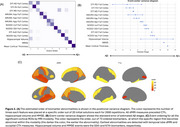 Figure 1
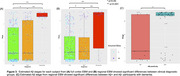 Figure 2
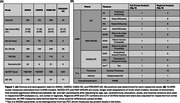 Figure 3
Peer Reviews
No public reviews on file for this paper yet. If you reviewed it on a platform where reviews are public (OpenReview, ICLR, NeurIPS, ICML), you can paste yours below so the community can read it here.
Videos
No videos yet. Explain this paper in a talk, walkthrough, or lecture? Add one.
Taxonomy
TopicsFunctional Brain Connectivity Studies · Dementia and Cognitive Impairment Research · Advanced Neuroimaging Techniques and Applications