Interpreting positive plasma Aβ42/40 results when amyloid PET is negative
Azadeh Feizpour, Pierrick Bourgeat, Vincent Dore, James D. Doecke, Rodrigo Canovas, Simon M. Laws, Tenielle Porter, Kun Huang, Christopher J Fowler, Michael W Weiner, John C. Morris, Tammie L.S. Benzinger, Suzanne E. Schindler, Randall J. Bateman, Larry Ward, Jurgen Fripp

TL;DR
People with normal cognition who have positive plasma Aβ42/40 but negative amyloid PET scans are more likely to develop amyloid buildup in the brain detectable by PET over time.
Contribution
Long-term tracking shows that plasma Aβ42/40 can detect brain amyloid changes before PET scans.
Findings
Plasma+/PET- individuals progress to PET+ at 3.9 times higher risk than Plasma-/PET-.
Plasma+/PET- individuals accumulate brain Aβ 8 times faster than Plasma-/PET-.
Plasma+/PET- progressors become PET+ 2 years earlier than Plasma-/PET- progressors.
Abstract
The agreement between plasma Aβ42/40 and Aβ‐PET is approximately 75%, with a large portion of discrepancies due to positive plasma with negative PET results. Questions remain about whether these reflect brain Aβ changes detectable in plasma before PET‐detectable. We aimed to examine these cases over 11 years to assess the risk and timing of progression to Aβ‐PET positivity. Cognitively unimpaired participants from large‐scale longitudinal studies of AIBL, OASIS, and ADNI underwent baseline Aβ‐PET and plasma Aβ42/40 analysis by IPMS, followed by 1‐7 additional PET scans every 1.5‐3 years. Aβ‐PET was quantified to Centiloid (CL) using the SPM pipeline. Individuals with baseline Aβ‐PET < 20 CL (n = 507) were included, with those < 5 CL classified as PET‐, and 5‐20 CL as PETLow. Plasma ‐/+ was based on the Aβ42/40 Youden's Index threshold (0.119) corresponding to Aβ‐PET status. We used…
Genes, proteins, chemicals, diseases, species, mutations and cell lines named across the full text — each resolved to its canonical identifier and authoritative record.
Click any figure to enlarge with its caption.
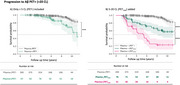 Figure 1
Peer Reviews
No public reviews on file for this paper yet. If you reviewed it on a platform where reviews are public (OpenReview, ICLR, NeurIPS, ICML), you can paste yours below so the community can read it here.
Videos
No videos yet. Explain this paper in a talk, walkthrough, or lecture? Add one.
Taxonomy
TopicsDementia and Cognitive Impairment Research · Alzheimer's disease research and treatments · Intracerebral and Subarachnoid Hemorrhage Research