Elevated p‐Tau217 is Strongly Associated with Longitudinal Neocortical Tau‐PET in Younger Adults: Findings from the A4/LEARN studies and ADNI
Gillian T Coughlan, Hannah M Klinger, Mabel Seto, Colin Birkenbihl, Annie Li, Michelle E. Farrell, Emma G Thibault, Michael J. Properzi, Aaron P. Schultz, Diana L Townsend, Oliver Langford, Jasmeer P. Chhatwal, Hyun‐Sik Yang, Rema Raman, Michael C. Donohue, Keith A. Johnson

TL;DR
Higher levels of p-Tau217 in blood are more strongly linked to tau accumulation in the brain of younger adults, suggesting faster Alzheimer's progression at younger ages.
Contribution
Shows that plasma p-Tau217 is a stronger predictor of tau accumulation in younger adults compared to older adults.
Findings
Age moderates the relationship between p-Tau217 and neocortical tau accumulation, with stronger effects in younger individuals.
Elevated p-Tau217/Aβ42 ratios also show stronger associations with tau accumulation in younger adults.
Interactive effects of age and p-Tau217 remain significant even after adjusting for APOEε4 status.
Abstract
The pathophysiological cascade of Alzheimer's Disease(AD) is characterized by amyloid‐β(Aβ) related secretion of soluble phosphorylated tau (p‐tau), followed by aggregation of tau tangles and subsequent cognitive decline. Previous literature suggests that tau proliferation is more aggressive at younger ages, but the extent to which this is true and can be detected by plasma markers remains unclear. We examined whether age interacts with plasma p‐tau217 and p‐tau217/Aβ42 and to predict rates of regional tau‐PET accumulation in baseline clinical normal adults. Participants were 578 clinically normal individuals (mean age 72.2; 295 APOEε4‐carriers [56%]; mean years of education 16.3) with baseline plasma p‐tau217 and longitudinal tau‐PET from the Anti‐Amyloid Treatment in Asymptomatic Alzheimer's Disease (A4) trial and the companion Longitudinal Evaluation of Amyloid Risk and…
Genes, proteins, chemicals, diseases, species, mutations and cell lines named across the full text — each resolved to its canonical identifier and authoritative record.
Click any figure to enlarge with its caption.
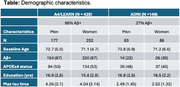 Figure 1
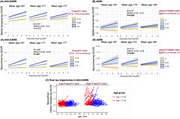 Figure 2
Peer Reviews
No public reviews on file for this paper yet. If you reviewed it on a platform where reviews are public (OpenReview, ICLR, NeurIPS, ICML), you can paste yours below so the community can read it here.
Videos
No videos yet. Explain this paper in a talk, walkthrough, or lecture? Add one.
Taxonomy
TopicsDementia and Cognitive Impairment Research · Alzheimer's disease research and treatments · Functional Brain Connectivity Studies