Biomarkers and proteomics in amyloid PET negative persons with clinical signs of MCI or mild dementia
Richard Mohs, Douglas W. Beauregard, Allan I. Levey, Erik C.B. Johnson, Jessie Nicodemus‐Johnson, Robin Wolz, John Dwyer

TL;DR
This study compares blood biomarkers and proteomics in people with cognitive symptoms but no amyloid in their brains to those without symptoms and with amyloid, finding signs of neurodegeneration in the amyloid-negative group.
Contribution
The study reveals that neurodegeneration occurs in amyloid PET-negative individuals with cognitive symptoms, despite no differences in amyloid or tau biomarkers.
Findings
NfL levels were higher in amyloid PET-negative individuals with cognitive symptoms compared to cognitively normal controls.
Proteomics did not show significant differences between amyloid PET-negative symptomatic individuals and controls.
Amyloid PET-positive individuals showed distinct protein profiles compared to amyloid PET-negative individuals.
Abstract
Screening for clinical trials identifies persons with clinical symptoms of Mild Cognitive Impairment (MCI) or Alzheimer's disease (AD) but no amyloid on PET. We compared blood biomarkers and proteomics in these screen failures with cognitively normal, amyloid PET negative persons and with amyloid PET positive MCI or mild AD patients. We analyzed data from 296 persons with clinical symptoms of MCI or mild AD from the Bio‐Hermes study who were amyloid PET negative (MCI + AD AB‐); we compared them with 313 Bio‐Hermes participants who were cognitively normal and amyloid PET negative (CN AB‐) and with 258 amyloid PET positive persons with clinical MCI or mild AD (MCI + AD AB+). Measures included regional amyloid PET, plasma A‐beta40 and 42, total tau, p‐tau 181, p‐tau 217, NfL, GFAP, a panel of 69 cytokines (Fireplex) and 7596 proteins from the Somalogic panel. Relative to the CN AB‐…
Genes, proteins, chemicals, diseases, species, mutations and cell lines named across the full text — each resolved to its canonical identifier and authoritative record.
Click any figure to enlarge with its caption.
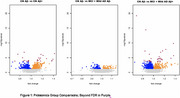 Figure 1
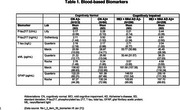 Figure 2
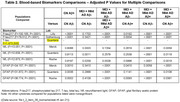 Figure 3
Peer Reviews
No public reviews on file for this paper yet. If you reviewed it on a platform where reviews are public (OpenReview, ICLR, NeurIPS, ICML), you can paste yours below so the community can read it here.
Videos
No videos yet. Explain this paper in a talk, walkthrough, or lecture? Add one.
Taxonomy
TopicsDementia and Cognitive Impairment Research · Alzheimer's disease research and treatments · Cancer-related cognitive impairment studies