Tau Topography Subtypes in Early‐Onset Alzheimer's Disease: Explaining Clinical Heterogeneity and Propagation Patterns
Marlene Lin, Piyush Maiti, Jiaxiuxiu Zhang, Ganna Blazhenets, Salma Rocha, Ranjani Shankar, Alinda Amuiri, Dustin B. Hammers, Ani Eloyan, Kala Kirby, Robert A. Koeppe, Maria C. Carrillo, Brad C. Dickerson, Liana G. Apostolova, Gil D. Rabinovici, Renaud La Joie

TL;DR
This study identifies three distinct tau protein patterns in early-onset Alzheimer's patients, linking them to different clinical symptoms and progression rates.
Contribution
The novel use of tau-PET imaging with SuStaIn clustering reveals distinct tau topography subtypes in early-onset Alzheimer's disease.
Findings
Three tau-PET subtypes were identified with distinct regional patterns and clinical associations.
Subtypes showed differences in clinical decline rates and tau accumulation patterns over time.
SuStaIn clustering accurately maintained subtype consistency across follow-up scans.
Abstract
The clinical heterogeneity of Early‐Onset Alzheimer's Disease (EOAD) is a key factor behind delayed diagnosis within this young(<65yo) group. However, most research has focused on late‐onset amnestic participants and largely underutilized tau‐PET, despite its ability to link neuropathology with clinical outcomes. We aimed to characterize tau‐based subtypes through a robust data‐driven approach in the Longitudinal Early‐onset Alzheimer's Disease Study. Baseline [18F]Flortaucipir‐PET scans from 365 amyloid‐PET‐positive participants with sporadic EOAD were quantified in 10 regions: left and right medial temporal, lateral temporal, occipital, parietal, and frontal. Tau‐PET values were z‐scored against 85 amyloid‐PET‐negative cognitively normal age‐matched controls and fitted into Subtype and Stage Inference (SuStaIn), an unsupervised clustering algorithm that simultaneously models subtypes…
Genes, proteins, chemicals, diseases, species, mutations and cell lines named across the full text — each resolved to its canonical identifier and authoritative record.
Click any figure to enlarge with its caption.
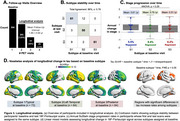 Figure 1
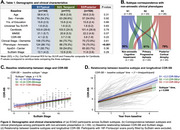 Figure 2
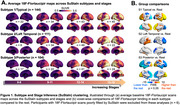 Figure 3
Peer Reviews
No public reviews on file for this paper yet. If you reviewed it on a platform where reviews are public (OpenReview, ICLR, NeurIPS, ICML), you can paste yours below so the community can read it here.
Videos
No videos yet. Explain this paper in a talk, walkthrough, or lecture? Add one.
Taxonomy
TopicsDementia and Cognitive Impairment Research · Alzheimer's disease research and treatments · Functional Brain Connectivity Studies