The Relative Contribution of Amyloid, Tau, Neurodegeneration, and Vascular Disease to Cognition and Cognitive Decline: A Cross‐National Study
Jeremy A. Tanner, Diefei Chen, Min Soo Byun, Ileana De Anda‐Duran, Kacie D Deters, Martine Elbejjani, Evan Fletcher, A. Zarina Kraal, Dong Young Lee, Silvia Mejia‐Arango, Stefanie D Pina‐Escudero, Kwangsik Nho, Talia L. Robinson, C. Elizabeth Shaaban, Adam M. Staffaroni

TL;DR
This study compares how amyloid, tau, neurodegeneration, and vascular disease affect cognition in the US and South Korea.
Contribution
The study identifies the relative influence of ATNV biomarkers on cognition and decline across two national cohorts.
Findings
T and N are most strongly associated with cognition in both US and South Korean populations.
T is most predictive of future cognitive decline in the US but not in South Korea.
A is associated with memory decline in the US cohort.
Abstract
Recent in vivo biomarker advancements have led to biological diagnostic and staging criteria for AD based on amyloid(“A”), tau(“T”), and neurodegeneration(“N”). However, the contribution of comorbid vascular(“V”) pathology and the relative influence of ATNV on cognitive performance and decline remains unclear, though is necessary to guide personalized diagnosis, prognosis, and care. We assessed the relative contribution of neuroimaging‐based ATNV measures to cognition in cross‐national studies. Amyloid PET, tau PET, MRI, cognitive testing, and clinical evaluations were obtained in two prospective cohort studies with similar designs: ADNI3 in the US (n = 508; mean age=71±7, female=55%, education(yrs)=16.5±2.3) and KBASE in South Korea (n = 165; age=73±8, female=64%, education(yrs)=11.0±4.6). Continuous ATNV predictors included A=cortical centiloids, T=meta‐temporal SUVR, N =…
Genes, proteins, chemicals, diseases, species, mutations and cell lines named across the full text — each resolved to its canonical identifier and authoritative record.
Click any figure to enlarge with its caption.
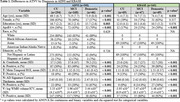 Figure 1
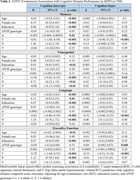 Figure 2
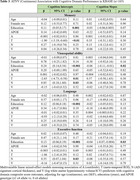 Figure 3
Peer Reviews
No public reviews on file for this paper yet. If you reviewed it on a platform where reviews are public (OpenReview, ICLR, NeurIPS, ICML), you can paste yours below so the community can read it here.
Videos
No videos yet. Explain this paper in a talk, walkthrough, or lecture? Add one.
Taxonomy
TopicsDementia and Cognitive Impairment Research · Alzheimer's disease research and treatments · Intracerebral and Subarachnoid Hemorrhage Research