Tau Spatial Extent Outperforms Tau Load as a Marker of Neocortical Tau Burden: Head‐to‐head evidence from [18F]MK6240 and [18F]FTP PET
Arthur C. Macedo, Nesrine Rahmouni, Firoza Z Lussier, Cécile Tissot, Gleb Bezgin, Joseph Therriault, Stijn Servaes, Seyyed Ali Hosseini, Brandon J Hall, Tevy Chan, Etienne Aumont, Pamela C.L. Ferreira, Bruna Bellaver, Guilherme Povala, Guilherme Bauer‐Negrini, Livia Amaral

TL;DR
This study finds that measuring the spatial spread of tau in the brain better reflects Alzheimer's severity than measuring tau quantity, especially in the neocortex.
Contribution
The study provides head-to-head evidence that tau spatial extent outperforms tau load as a marker of neocortical tau burden in Alzheimer's disease.
Findings
Neocortical tau spatial extent correlates more strongly with AD severity markers than tau load.
Tau spatial extent improves the association between [18F]MK6240 and [18F]FTP in the neocortex.
Neocortical SEOT outperforms SUVR in distinguishing Aβ+ MCI from cognitively unimpaired individuals.
Abstract
The 2024 NIA‐AA criteria propose an Alzheimer's disease (AD) staging system based on medial temporal (MT) and neocortical tau burden. However, the optimal strategy to assess tau burden in these regions, which represent distinct phases of AD pathophysiology, remains unclear. Here, we compared tau load and spatial extent of tauopathy (SEOT) as markers of tau burden in participants scanned with [18F]MK6240 and [18F]FTP. We investigated the relationship between these metrics in MT and neocortical regions‐of‐interest (ROIs) and determined which better correlates with AD severity. A total of 257 cognitively unimpaired (CU) and 124 Aβ+ cognitively impaired participants (mean age 68.2 years; 58% female) from the HEAD study underwent tau‐PET imaging with both [18F]MK6240 and [18F]FTP. Tau load was quantified using regional SUVR, and SEOT was calculated as the proportion of abnormal voxels…
Genes, proteins, chemicals, diseases, species, mutations and cell lines named across the full text — each resolved to its canonical identifier and authoritative record.
Click any figure to enlarge with its caption.
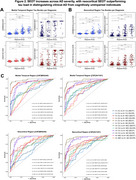 Figure 1
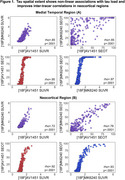 Figure 2
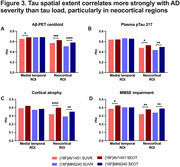 Figure 3
Peer Reviews
No public reviews on file for this paper yet. If you reviewed it on a platform where reviews are public (OpenReview, ICLR, NeurIPS, ICML), you can paste yours below so the community can read it here.
Videos
No videos yet. Explain this paper in a talk, walkthrough, or lecture? Add one.
Taxonomy
TopicsDementia and Cognitive Impairment Research · Functional Brain Connectivity Studies · Alzheimer's disease research and treatments