Racial and Ethnic Differences in White Matter Hyperintensity Burden: The Role of Vascular Risk Factors
Farooq Kamal, Roqaie Moqadam, Cassandra Morrison, Mahsa Dadar

TL;DR
This study explores how vascular risk factors like hypertension and diabetes affect white matter hyperintensity differences in racially and ethnically diverse older adults.
Contribution
The study reveals how vascular risk factors mediate racial and ethnic differences in white matter hyperintensity burden.
Findings
Black older adults had higher baseline WMH burden in multiple brain regions compared to White adults.
Adjusting for vascular risk factors reduced or eliminated WMH differences between Black and White adults.
Hispanics showed significant WMH differences from non-Hispanics only after adjusting for vascular risk factors.
Abstract
A critical pathological marker observed in the aging brain is white matter hyperintensities (WMHs). WMHs are associated with an increased risk of cognitive decline, progression to mild cognitive impairment, and development of dementia. Vascular risk factors such as hypertension, diabetes, and elevated body mass index are well known contributors to WMH burden and independently increase the risk of dementia. These risk factors are disproportionately prevalent in racially diverse populations. However, the role of vascular risk factors in explaining WMH differences is not well understood in racially and ethnically diverse populations. This study examined whether race and ethnicity influence WMH burden and whether vascular risk factors explain these differences. Clinical and MRI data from the National Alzheimer's Coordinating Center (NACC) included 7,132 Whites, 892 Blacks, 283 Asians, 8307…
Genes, proteins, chemicals, diseases, species, mutations and cell lines named across the full text — each resolved to its canonical identifier and authoritative record.
Click any figure to enlarge with its caption.
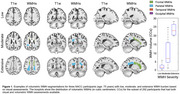 Figure 1
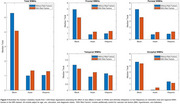 Figure 2
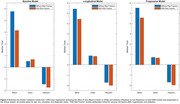 Figure 3
Peer Reviews
No public reviews on file for this paper yet. If you reviewed it on a platform where reviews are public (OpenReview, ICLR, NeurIPS, ICML), you can paste yours below so the community can read it here.
Videos
No videos yet. Explain this paper in a talk, walkthrough, or lecture? Add one.
Taxonomy
TopicsDementia and Cognitive Impairment Research · Neurological Disease Mechanisms and Treatments · Alzheimer's disease research and treatments