Plasma p‐tau217 in individuals with prion and Alzheimer's pathology: diagnostic caveats in rapidly progressive dementias
Poosanu Thanapornsangsuth, Adipa Chongsuksantikul, Watayuth Luechaipanit, Thanaporn Haethaisong, Prawit Oangkhana, Kittithatch Booncharoen, Jedsada Khieukhajee, Yuttachai Likitjaroen, Chayanis Yolsiriwat, Abhinbhen Wasontiwong Saraya

TL;DR
Plasma p-tau217 is not specific to Alzheimer's disease and is also elevated in prion disease, limiting its usefulness in diagnosing rapidly progressive dementias.
Contribution
The study reveals that plasma p-tau217 levels are elevated in prion disease and interact with Alzheimer's pathology, challenging its specificity for AD diagnosis.
Findings
Plasma p-tau217 is elevated in both Alzheimer's disease and prion disease.
An interaction effect reduces plasma p-tau217 levels in individuals with both AD and prion disease.
Plasma p-tau217 shows limited diagnostic accuracy for AD and prion disease in rapidly progressive dementias.
Abstract
Plasma p‐tau217 is widely regarded as a specific biomarker for Alzheimer's disease (AD). However, recent studies have reported substantial elevations in prion disease, suggesting prion‐induced p‐tau release. This study investigates the relationship between plasma p‐tau217 and AD/prion pathology and examines its diagnostic implications in rapidly progressive dementia (RPD), where prion disease is predominant but rapidly progressive AD is also significant. Participants were from three sources: (1) the Thai National Prion Disease Surveillance Center (NPDSC), a prospective registry of suspected prion disease cases (March 2023–December 2024); (2) additional CSF from RT‐QuIC–positive patients across Thailand (March 2022–June 2024); and (3) memory clinic patients with disease duration >2 years from King Chulalongkorn Memorial Hospital and the Neurological Institute of Thailand (2022–October…
Genes, proteins, chemicals, diseases, species, mutations and cell lines named across the full text — each resolved to its canonical identifier and authoritative record.
Click any figure to enlarge with its caption.
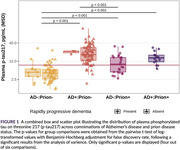 Figure 1
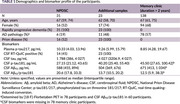 Figure 2
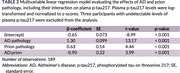 Figure 3
Peer Reviews
No public reviews on file for this paper yet. If you reviewed it on a platform where reviews are public (OpenReview, ICLR, NeurIPS, ICML), you can paste yours below so the community can read it here.
Videos
No videos yet. Explain this paper in a talk, walkthrough, or lecture? Add one.
Taxonomy
TopicsPrion Diseases and Protein Misfolding · Alzheimer's disease research and treatments · Amyotrophic Lateral Sclerosis Research