AI Superresolution: Converting T1‐weighted MRI from 3T to 7T resolution toward enhanced imaging biomarkers for Alzheimer's disease
Malo Gicquel, Gabrielle Flood, Ruoyi Zhao, Anika Wuestefeld, Nicola Spotorno, Olof Strandberg, Yu Xiao, Kalle Åström, Laura E.M. Wisse, Danielle van Westen, David Berron, Oskar Hansson, Jacob W. Vogel

TL;DR
This paper shows how AI can convert lower-resolution MRI scans into higher-resolution images, potentially improving Alzheimer's disease diagnosis and biomarker detection.
Contribution
The novel contribution is using deep learning models to synthesize 7T-resolution MRI images from 3T scans, improving anatomical detail and segmentation accuracy.
Findings
Synthetic 7T images generated from 3T scans showed improved segmentation accuracy of amygdalae compared to original 3T images.
Blinded experts rated GAN-enhanced U-Net images as visually superior to real 7T images.
Downstream classification performance was similar for real and synthetic images, suggesting no loss in utility.
Abstract
High‐resolution (7T) MRI facilitates in vivo imaging of fine anatomical structures selectively affected in Alzheimer's disease (AD), including medial temporal lobe subregions. However, 7T data is challenging to acquire and largely unavailable in clinical settings. Here, we use deep learning to synthesize 7T resolution T1‐weighted MRI images from lower‐resolution (3T) images. Paired 7T and 3T T1‐weighted images were acquired from 178 participants (134 clinically unimpaired, 48 impaired) from the Swedish BioFINDER‐2 study. To synthesize 7T‐resolution images from 3T images, we trained two models: a specialized U‐Net, and a U‐Net mixed with a generative adversarial network (U‐Net‐GAN) on 80% of the data. We evaluated model performance on the remaining 20%, compared to models from the literature (V‐Net, WATNet), using image‐based performance metrics and by surveying five blinded MRI…
Genes, proteins, chemicals, diseases, species, mutations and cell lines named across the full text — each resolved to its canonical identifier and authoritative record.
Click any figure to enlarge with its caption.
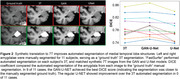 Figure 1
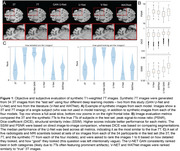 Figure 2
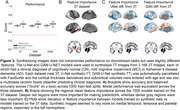 Figure 3
Peer Reviews
No public reviews on file for this paper yet. If you reviewed it on a platform where reviews are public (OpenReview, ICLR, NeurIPS, ICML), you can paste yours below so the community can read it here.
Videos
No videos yet. Explain this paper in a talk, walkthrough, or lecture? Add one.
Taxonomy
TopicsFunctional Brain Connectivity Studies · Dementia and Cognitive Impairment Research · Advanced MRI Techniques and Applications