Tau‐PET overlap index correlates with neuropathology findings in early‐Braak stage
Seokbeen Lim, Jeyeon Lee, Hoon‐Ki Min, Christina M. Moloney, Carly T. Mester, Sujala Ghatamaneni, Matthew L. Senjem, Aivi T. Nguyen, Jonathan Graff‐Radford, Christopher G Schwarz, Jeffrey L. Gunter, Kejal Kantarci, Brad F Boeve, Prashanthi Vemuri, David T. Jones

TL;DR
A new method called the Tau-PET Overlap Index detects early tau protein buildup in the brain, aligning with postmortem pathology findings.
Contribution
The Overlap Index (OI) is shown to detect early-stage tau pathology more effectively than standard SUVr measures.
Findings
OI detected tau pathology in early Braak stages where standard SUVr measures remained negative.
OI-derived regions aligned with high neuropathological NFT burden.
OI demonstrates potential as an in vivo biomarker for early neurofibrillary tangles.
Abstract
The Overlap Index (OI) as previously published (Lee et al., 2022) is a reliable method for detecting tau accumulation using tau‐PET imaging (flortaucipir; AV1451). It identifies voxel‐wise standardized uptake value ratio (SUVr) elevations across serial scans. Although OI showed more sensitivity to tau signal elevation and longitudinal change than standard ROI measures, to our knowledge, the relationship of the tau PET overlap index to neuropathologic findings is still unclear. This study aims to investigate the potential of OI to detect NFTs of the neuropathologic Braak tangle stage, especially the early Braak tangle stage (I–IV). This study included 57 participants from the Mayo Clinic Study of Aging or Mayo Alzheimer's Disease Research Center, all of whom underwent autopsy and at least two serial AV1451 tau‐PET scans and 3T T1‐weighted MRI within an average of 16 months. Tau‐PET SUVr…
Genes, proteins, chemicals, diseases, species, mutations and cell lines named across the full text — each resolved to its canonical identifier and authoritative record.
Click any figure to enlarge with its caption.
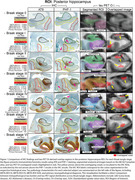 Figure 1
Peer Reviews
No public reviews on file for this paper yet. If you reviewed it on a platform where reviews are public (OpenReview, ICLR, NeurIPS, ICML), you can paste yours below so the community can read it here.
Videos
No videos yet. Explain this paper in a talk, walkthrough, or lecture? Add one.
Taxonomy
TopicsDementia and Cognitive Impairment Research · Neuroscience and Neuropharmacology Research · Traumatic Brain Injury Research