Automated and semi‐automated methods in quantitative and qualitative evaluation of the hippocampus
Bruna Bressan Valentini, Andrei Bieger, Marco Antônio De Bastiani, Guilherme G. Schu Peixoto, Guilherme Povala, Diego Moraes Alves, Fernando Rigon, Artur Martins Coutinho, Laura Willers Souza, Mateus Rozalem Aranha, Marjana Reis Lima Rizzo, Eduardo R. Zimmer

TL;DR
This study compares different methods for evaluating hippocampal volume in Alzheimer's disease using MRI, showing strong correlations between semi-automated and automated techniques.
Contribution
The study evaluates the reproducibility of automated and semi-automated hippocampal volume assessment methods in a Brazilian context.
Findings
Strong correlations were found between semi-automated and automated methods for hippocampal volume assessment.
Excellent internal consistency was observed between the methods using ICC analysis.
No significant differences were found in MTA classification across the evaluated methods.
Abstract
The hippocampus is involved in the pathogenesis of several neurological diseases, including Alzheimer's disease (AD). AD‐related neurodegeneration commonly leads to a reduction in hippocampal volume, which can be assessed with Magnetic Resonance Imaging (MRI). This assessment can be performed using the medial temporal atrophy (MTA) scale and quantitatively through semi‐automatic and automated methods. The latter has been introduced recently but still not widely accessible in Brazil. Reproducibility among these methods is essential for clinical practice and monitoring of patients affected by the disease. In this study, we aimed to evaluate one semi‐automatic and two automated methods. Hippocampal volume was evaluated using one semi‐automatic (SA) and two automated methods. MTA was evaluated visually by a radiologist and with automatic visual ratings of atrophy (AVRA). All evaluations…
Genes, proteins, chemicals, diseases, species, mutations and cell lines named across the full text — each resolved to its canonical identifier and authoritative record.
Click any figure to enlarge with its caption.
 Figure 1
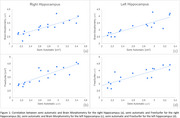 Figure 2
Peer Reviews
No public reviews on file for this paper yet. If you reviewed it on a platform where reviews are public (OpenReview, ICLR, NeurIPS, ICML), you can paste yours below so the community can read it here.
Videos
No videos yet. Explain this paper in a talk, walkthrough, or lecture? Add one.
Taxonomy
TopicsDementia and Cognitive Impairment Research · Functional Brain Connectivity Studies · Memory and Neural Mechanisms