Enrichment of patients with concomitant LATE on the Alzheimer's disease continuum: comparing structural and cognitive trajectories
Nidhi S. Mundada, Xueying Lyu, Niyousha Sadeghpour, Christopher D. Brown, Emily McGrew, Long Xie, Paul A. Yushkevich, Sandhitsu R. Das, David A. Wolk

TL;DR
This study identifies patients with Alzheimer's disease and LATE by analyzing hippocampal volume and cognitive decline patterns.
Contribution
A novel method using hippocampal volume quartiles identifies mixed AD/LATE cases, revealing distinct atrophy and cognitive profiles.
Findings
Patients with low hippocampal volume and amyloid positivity show LATE-like atrophy patterns and cognitive decline.
AD+LATE cases exhibit faster cognitive decline and distinct anterior hippocampal and amygdala atrophy compared to AD-only.
Lower memory and language scores in LATE-only and AD+LATE groups persist even after adjusting for tau levels.
Abstract
Overlap in clinical presentations, absence of well‐validated in‐vivo biomarkers for Limbic‐predominant age‐related TDP‐43 encephalopathy (LATE), and frequent co‐occurrence with AD, complicates identifying mixed AD/LATE cases. Autopsy studies suggest greater hippocampal atrophy in AD patients with concomitant LATE. We aimed to identify patients along the AD continuum enriched for LATE by defining the lower quartile of hippocampal volume (HV) as a biomarker for possible LATE and explore atrophy patterns and cognitive profiles. 164 cognitively impaired participants from ADNI with T1‐MRI and amyloid‐ and tau‐PET within 365 days were grouped based on HV quartiles (adjusted for age/intracranial volume) and amyloid status into suspected 1) AD‐only (HV>50th‐percentile, amyloid‐positive), 2) LATE‐only (HV<25th‐percentile, amyloid‐negative), 3) AD+LATE (HV<25th‐percentile, amyloid‐positive). We…
Genes, proteins, chemicals, diseases, species, mutations and cell lines named across the full text — each resolved to its canonical identifier and authoritative record.
Click any figure to enlarge with its caption.
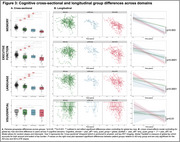 Figure 1
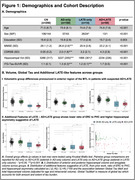 Figure 2
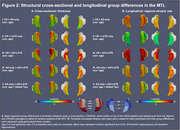 Figure 3
Peer Reviews
No public reviews on file for this paper yet. If you reviewed it on a platform where reviews are public (OpenReview, ICLR, NeurIPS, ICML), you can paste yours below so the community can read it here.
Videos
No videos yet. Explain this paper in a talk, walkthrough, or lecture? Add one.
Taxonomy
TopicsDementia and Cognitive Impairment Research · Epilepsy research and treatment · Functional Brain Connectivity Studies