Impact of a single nucleotide polymorphism in the excitatory amino acid transporter 2 (EAAT2) on Alzheimer's disease progression
Mariana Radaelli Schmaedek, Christian Limberger, Gabriel Colissi Martins, Gabriel Lermen Hoffmeister, Ramon Bertoldi de Souza, Roberta dos Santos de Oliveira, Marco Antônio De Bastiani, Eduardo R. Zimmer

TL;DR
This study explores how a genetic variation in EAAT2, a brain transporter, affects Alzheimer's disease progression, finding that carriers show early brain changes and faster decline after diagnosis.
Contribution
The study identifies a novel EAAT2 SNP (rs72638198) linked to early metabolic and structural brain changes in Alzheimer's disease progression.
Findings
EAAT2 SNP carriers showed brain hypermetabolism and increased hippocampal volume in preclinical stages.
Carriers had lower CSF Aβ42 levels, suggesting early amyloid pathology.
After conversion to cognitive impairment, carriers experienced faster hippocampal volume loss and worse memory test scores.
Abstract
The complex interplay between brain metabolism and Alzheimer's disease (AD) highlights the vulnerability of neuronal energy pathways and the importance of neuron‐to‐astrocyte metabolic cooperation. Astrocytic glutamate uptake via the excitatory amino acid transporter 2 (EAAT2) stimulates glycolysis, facilitating the conversion of glucose to lactate, and serving as an energy substrate for neurons. This process is called the “astrocyte‐neuron lactate shuttle” (ANLS). The potential contribution of ANLS dysfunction in AD progression remains uncertain. Here, we investigate how carrying a single nucleotide polymorphism (SNP) of the glutamate transporter EAAT2 impacts individuals before and after AD clinical conversion. We evaluated 493 cognitively unimpaired (CU) and impaired (CI) individuals from ADNI, with available FDG‐PET, MRI, CSF biomarkers, and EAAT2 genotyping (rs72638198). This…
Genes, proteins, chemicals, diseases, species, mutations and cell lines named across the full text — each resolved to its canonical identifier and authoritative record.
Click any figure to enlarge with its caption.
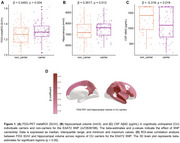 Figure 1
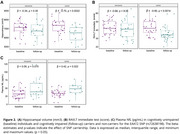 Figure 2
Peer Reviews
No public reviews on file for this paper yet. If you reviewed it on a platform where reviews are public (OpenReview, ICLR, NeurIPS, ICML), you can paste yours below so the community can read it here.
Videos
No videos yet. Explain this paper in a talk, walkthrough, or lecture? Add one.
Taxonomy
TopicsAmino Acid Enzymes and Metabolism · Neuroscience and Neuropharmacology Research · Alzheimer's disease research and treatments