APOE ε4 Modulates Beta‐Amyloid Clearance via Cerebrospinal Fluid Dynamics: Insights from Nonhuman Primate and Clinical Studies
Jeongchul Kim, Megan E. Lipford, Richard A. Barcus, Hongyu Yuan, Qing Lyu, Jeremy Patton Hudson, Sam N. Lockhart, Timothy M. Hughes, Courtney L. Sutphen, Brett M. Frye, Kiran K. Solingapuram Sai, Marc D. Rudolph, Carol A. Shively, Thomas C. Register, Michelle M Mielke

TL;DR
This study shows how the APOE ε4 gene affects how cerebrospinal fluid clears amyloid in the brain, using both nonhuman primates and human patients.
Contribution
The study reveals distinct amyloid clearance mechanisms in APOE ε4 carriers versus non-carriers through CSF flow dynamics in both NHP and clinical populations.
Findings
APOE ε4 carriers showed reduced CSF flow and higher amyloid burden, suggesting impaired clearance.
Non-carriers exhibited increased CSF flow in response to amyloid accumulation, indicating compensatory mechanisms.
CSF flow in specific cisterns correlated with amyloid PET SUVR in corresponding brain regions.
Abstract
Efficient cerebrospinal fluid (CSF) circulation plays a critical role in clearing metabolic waste, including beta‐amyloid (Aβ), a key biomarker of AD. Impaired CSF dynamics may contribute to amyloid accumulation and disease progression. To elucidate clearance mechanisms, we investigated the relationship between subarachnoid CSF flow dynamics—measured via phase‐contrast magnetic resonance imaging (PC‐MRI)—and amyloid burden in both a nonhuman primate (NHP) aging cohort and the Wake Forest ADRC clinical cohort. CSF flow dynamics were quantified across the cardiac cycle in the pontine cistern, cerebellomedullary cistern, cerebral aqueduct, and spinal canal (Figure 1). The NHP study included 16 female vervet monkeys (ages 10–27 years), assessing CSF flow in relation to age and CSF biomarkers. The clinical study analyzed 47 participants (31 cognitively normal, 14 with mild cognitive…
Genes, proteins, chemicals, diseases, species, mutations and cell lines named across the full text — each resolved to its canonical identifier and authoritative record.
Click any figure to enlarge with its caption.
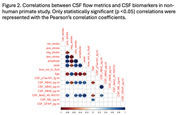 Figure 1
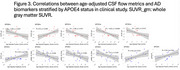 Figure 2
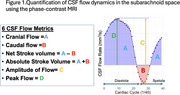 Figure 3
Peer Reviews
No public reviews on file for this paper yet. If you reviewed it on a platform where reviews are public (OpenReview, ICLR, NeurIPS, ICML), you can paste yours below so the community can read it here.
Videos
No videos yet. Explain this paper in a talk, walkthrough, or lecture? Add one.
Taxonomy
TopicsCerebrospinal fluid and hydrocephalus · Alzheimer's disease research and treatments · Dementia and Cognitive Impairment Research