Assessing the effect of eicosapentaenoic acid (EPA) on CSF levels of matrix metalloproteinases and their inhibitors
Samantha L. Shapiro, Carol A. Van Hulle, Aimee K Johnson, Hannah Zylstra, Kate Cronin, Aleshia Cole, Elena Beckman, Allison C Eierman, Richard J. Chappell, Sanjay Asthana, Carey E. Gleason, Henrik Zetterberg, Sterling C. Johnson, Anthony P Auger, Cynthia M. Carlsson

TL;DR
This study found that high-dose EPA increased certain brain-related enzymes in spinal fluid, contrary to previous findings in other tissues.
Contribution
The study is the first to show increased CSF MMP-2, MMP-9, and TIMP-2 levels in humans after long-term EPA treatment.
Findings
High-dose EPA significantly increased CSF levels of MMP-2 and MMP-9 compared to placebo.
TIMP-2 levels also increased significantly in the EPA-treated group.
APOE4 status may modify the effect of EPA on these biomarkers.
Abstract
Matrix metalloproteinases (MMPs) are a group of enzymes with roles in mediating extracellular matrix integrity and inflammation, and degrading beta amyloid fibrils. Studies have demonstrated that MMPs in atherosclerotic plaques can be downregulated by omega‐3 fatty acid eicosapentaenoic acid (EPA), but there has been little research looking at the effect of EPA on MMP levels in CSF. In this study, we evaluated the effect of an FDA approved high dose EPA supplement on CSF levels of MMP‐2 and MMP‐9, and MMP inhibitors TIMP‐1 and TIMP‐2. Cognitively healthy VA‐eligible veterans (ages 50‐76) were enrolled in the Brain Amyloid and Vascular Effects of Eicosapentaenoic Acid Study (BRAVE, NCT02719327), a randomized, placebo‐controlled, double‐blind, parallel‐group clinical trial with subject N = 128, randomized in a 1:1 ratio to receive either 4g icosapent ethyl (Vascepa® IPE) or a placebo…
Genes, proteins, chemicals, diseases, species, mutations and cell lines named across the full text — each resolved to its canonical identifier and authoritative record.
Click any figure to enlarge with its caption.
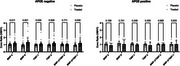 Figure 1
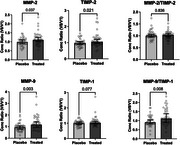 Figure 2
Peer Reviews
No public reviews on file for this paper yet. If you reviewed it on a platform where reviews are public (OpenReview, ICLR, NeurIPS, ICML), you can paste yours below so the community can read it here.
Videos
No videos yet. Explain this paper in a talk, walkthrough, or lecture? Add one.
Taxonomy
TopicsFatty Acid Research and Health · Protease and Inhibitor Mechanisms · Alzheimer's disease research and treatments