Early Tau and Amyloid Co‐Pathology Linked to Basal Forebrain Atrophy in Cognitively Unimpaired Older Individuals
Ying Xia, Matthew Dean, Vincent Dore, Natasha Krishnadas, Pierrick Bourgeat, Paul Maruff, Colin L Masters, Victor L. Villemagne, Jurgen Fripp, Christopher C. Rowe, Elizabeth J Coulson

TL;DR
This study finds that the basal forebrain shrinks when both amyloid and tau pathologies are present in older individuals without cognitive issues.
Contribution
The study reveals that Ch4 atrophy is linked to co-occurring amyloid and tau pathologies, not either alone, in cognitively unimpaired older adults.
Findings
Ch4 volume is associated with amyloid levels in cognitively unimpaired individuals with mesial-temporal tau pathology.
Tau pathology mediates a significant portion of the effect of amyloid on Ch4 volume.
Ch4 is not vulnerable to mesial-temporal tau pathology alone without amyloid pathology.
Abstract
The cholinergic basal forebrain (BF) system, particularly the nucleus basalis of Meynert (Ch4), is selectively vulnerable to early pathological changes in Alzheimer's disease (AD). However, the onset and mechanisms of Ch4 atrophy in relation to AD pathologies are not well understood. This study investigated the relationships between Ch4 volume and amyloid‐β (Aβ) and tau pathologies in cognitively unimpaired (CU) older individuals, where early‐stage pathology enables a better characterisation of Ch4 degeneration development. The cross‐sectional study included 335 CU individuals (74.1 ± 6.3 years old, 56.7% female) from the Australian Imaging, Biomarkers and Lifestyle (AIBL) study who underwent PET imaging for Aβ (18F‐NAV4694) and tau (18F‐MK6240) and MRI during the same visit. Tau burden was quantified in the mesial‐temporal (ME) region using CapAIBL and expressed in CenTauR (CTR).…
Genes, proteins, chemicals, diseases, species, mutations and cell lines named across the full text — each resolved to its canonical identifier and authoritative record.
Click any figure to enlarge with its caption.
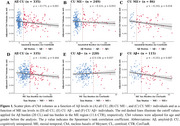 Figure 1
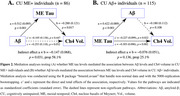 Figure 2
Peer Reviews
No public reviews on file for this paper yet. If you reviewed it on a platform where reviews are public (OpenReview, ICLR, NeurIPS, ICML), you can paste yours below so the community can read it here.
Videos
No videos yet. Explain this paper in a talk, walkthrough, or lecture? Add one.
Taxonomy
TopicsDementia and Cognitive Impairment Research · Alzheimer's disease research and treatments · Memory and Neural Mechanisms