Spatial cognition as an early cognitive Marker for Alzheimer's disease: evidence from NavegApp, an innovative serious game for cognitive assessment
Juan Pablo Sanchez, Diego Camilo Díaz, Stella Maris Valencia, David Fernando Aguillón Niño, Mauricio Garcia‐Barrera, Daniel C. Aguirre‐Acevedo, Natalia Trujillo Orrego

TL;DR
NavegApp, a digital serious game, shows promise as a tool for detecting early signs of Alzheimer's disease by assessing spatial cognition.
Contribution
The study evaluates NavegApp's construct validity and diagnostic accuracy for detecting Alzheimer's disease across different stages.
Findings
NavegApp's spatial cognition metrics showed strong discriminative capacity for symptomatic PSEN1-E280A carriers (AUC-ROC = 0.94–0.97).
Diagnostic performance for early preclinical detection was limited (AUC-ROC = 0.66).
The tool showed acceptable accuracy in distinguishing sporadic MCI from healthy controls (AUC-ROC = 0.77).
Abstract
Limited access to diagnostic technologies in low and middle‐income countries hinders the early detection of Alzheimer's Disease (AD). Advances in digital neuropsychology have enabled the development of tools like NavegApp, a serious game‐based platform that evaluates allocentric navigation, mental rotation, and visuospatial memory—domains affected during the preclinical and prodromal stages of AD. While previous studies have confirmed NavegApp's usability and content validity, further evidence of its construct validity and diagnostic accuracy is required to support its potential implementation in primary care settings. The analysis of cognitive changes during these early disease stages, particularly in individuals carrying causative mutations for early‐onset familial AD, is essential to advance the clinical utility of innovative digital cognitive markers. Therefore, the main objective…
Genes, proteins, chemicals, diseases, species, mutations and cell lines named across the full text — each resolved to its canonical identifier and authoritative record.
Click any figure to enlarge with its caption.
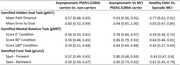 Figure 1
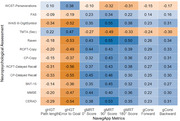 Figure 2
Peer Reviews
No public reviews on file for this paper yet. If you reviewed it on a platform where reviews are public (OpenReview, ICLR, NeurIPS, ICML), you can paste yours below so the community can read it here.
Videos
No videos yet. Explain this paper in a talk, walkthrough, or lecture? Add one.
Taxonomy
TopicsDementia and Cognitive Impairment Research · Memory and Neural Mechanisms · Spatial Cognition and Navigation