Evaluating Plasma Ptau‐217 Sensitivity in Detecting Individual Differences in Early‐stage Tau Aggregation in Cognitively Unimpaired Older Adults
Leah S Varghese, Lisa M. Taylor, Elizabeth A. Thomas, Michael A Yassa, Jenna N. Adams

TL;DR
This study shows that plasma ptau-217 can detect early tau accumulation in the brain when using a more sensitive analysis method, especially in individuals without amyloid-beta pathology.
Contribution
The study introduces a more sensitive voxel-based method to detect early-stage tau aggregation, revealing stronger correlations with plasma ptau-217 than traditional ROI-based approaches.
Findings
In Aβ- individuals, plasma ptau-217 correlated strongly with suprathreshold tau-PET in the entorhinal cortex.
The supra-threshold method detected tau-PET in later-stage MTL regions like amygdala and PHC only in Aβ+ individuals.
Plasma ptau-217 is a useful biomarker for early tau accumulation when paired with a sensitive analysis method.
Abstract
Plasma ptau‐217 is a promising biomarker for detecting Alzheimer's pathology. However, previous studies show no or weak correlations between plasma ptau‐217 and tau‐PET in cognitively unimpaired (CU) individuals. This is possibly due to limitations in the mean SUVR‐based ROI analysis, which lacks sensitivity to subtle, focal individual differences in early‐stage tau aggregation. We utilized a supra‐threshold voxel‐based approach to re‐examine the relationship between plasma ptau‐217 and early‐stage tau aggregation in the medial temporal lobe (MTL) as a function of amyloid‐beta (Aβ) status in CU older adults. We analyzed 142 CU older adults (95 Aβ‐/47 Aβ+) from ADNI with plasma ptau‐217 (Janssen assay) and 18F‐Flortaucipir‐PET data. SUVR thresholds (1.1, 1.2, 1.3, 1.4) were applied to tau‐PET data to calculate the percentage of suprathreshold voxels in entorhinal cortex (EC),…
Genes, proteins, chemicals, diseases, species, mutations and cell lines named across the full text — each resolved to its canonical identifier and authoritative record.
Click any figure to enlarge with its caption.
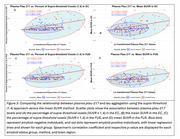 Figure 1
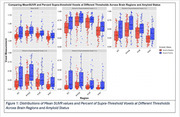 Figure 2
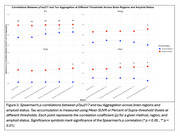 Figure 3
Peer Reviews
No public reviews on file for this paper yet. If you reviewed it on a platform where reviews are public (OpenReview, ICLR, NeurIPS, ICML), you can paste yours below so the community can read it here.
Videos
No videos yet. Explain this paper in a talk, walkthrough, or lecture? Add one.
Taxonomy
TopicsDementia and Cognitive Impairment Research · Alzheimer's disease research and treatments · Memory and Neural Mechanisms