Inflammation‐related proteomic changes in response to amyloid and tau pathologies
Ilaria Pola, Nicholas J. Ashton, Marco Antônio De Bastiani, Luiza Santos Machado, Guilherme Povala, Wagner S. Brum, Nesrine Rahmouni, Kübra Tan, Marisa N. Denkinger, Stijn Servaes, Joseph Therriault, Tharick A Pascoal, Kaj Blennow, Henrik Zetterberg, Eduardo R. Zimmer

TL;DR
This study identifies inflammation-related proteins in the brain and blood that change with amyloid and tau buildup in Alzheimer's disease.
Contribution
The study characterizes immune-related proteins in CSF and plasma associated with Aβ and tau pathologies in Alzheimer's disease.
Findings
Some proteins strongly correlate with Aβ levels independently of tau, while others correlate with tau independently of Aβ.
Validation in ADNI and BBDP cohorts confirmed the associations between proteins and Aβ/tau PET levels.
LOESS curves show how specific proteins change along the disease progression timeline.
Abstract
Emerging evidence underscores the importance of neuroinflammation in the progression of Alzheimer's disease (AD) pathophysiology. Recent studies indicate the involvement of inflammatory mechanisms in amyloid‐β (Aβ) and tau deposition in the brain. Due to the complexity of the immune responses and the intricate interplay between the peripheral and the central nervous systems, identifying biomarkers that reflect the brain inflammatory changes in AD has been challenging. With this study, we sought to characterize immune‐related proteins in cerebrospinal fluid (CSF) and plasma, in relation to Aβ and tau PET. Participants from the Translational Biomarker for Aging and Dementia Cohort (TRIAD) incorporating within the AD spectrum, and with available Aβ PET ([18F]AZD4694) and tau PET ([18F]MK6240), had plasma (n = 376) and CSF (n = 277) samples analyzed with the NULISA technology (Alamar…
Genes, proteins, chemicals, diseases, species, mutations and cell lines named across the full text — each resolved to its canonical identifier and authoritative record.
Click any figure to enlarge with its caption.
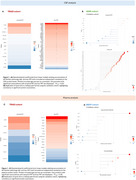 Figure 1
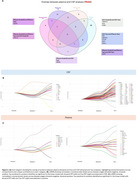 Figure 2
Peer Reviews
No public reviews on file for this paper yet. If you reviewed it on a platform where reviews are public (OpenReview, ICLR, NeurIPS, ICML), you can paste yours below so the community can read it here.
Videos
No videos yet. Explain this paper in a talk, walkthrough, or lecture? Add one.
Taxonomy
TopicsAlzheimer's disease research and treatments · Tryptophan and brain disorders · Dementia and Cognitive Impairment Research