APOE4 status, sleep disturbances and neuromodulatory subcortical systems in Alzheimer's disease
Adrià Tort‐Merino, Agnès Pérez‐Millan, Diana Esteller, Miquel Massons, Guadalupe Fernandez‐Villullas, Bea Bosch, Magdalena Castellví, Axel Rigol, Anna Antonell, Mircea Balasa, Albert Lladó, Raquel Sánchez‐Valle, Gerard Piñol‐Ripoll, Neus Falgàs Martínez

TL;DR
This study finds that APOE4 carriers with Alzheimer's disease experience worse sleep and brain changes compared to non-carriers.
Contribution
The study links APOE4 status to sleep fragmentation and subcortical brain integrity in Alzheimer's patients.
Findings
APOE4 carriers showed higher sleep fragmentation and reduced total sleep time.
APOE4 carriers had lower integrity in several neuromodulatory nuclei, including the hypothalamus.
APOE4 carriers experienced greater verbal learning decline over one year.
Abstract
Sleep alterations are common in Alzheimer's disease (AD) and may be related to the early degeneration of the neuromodulatory subcortical systems (NNS). The Apolipoprotein E‐ϵ4 (APOE4) allele is the major genetic risk factor of sporadic AD and has been associated with a faster rate of cognitive decline. Our aim was to study objective measures of sleep fragmentation and the NNS nuclei integrity in a sample of AD patients according to their APOE4 status. We included 54 patients with a biomarker‐based diagnosis of AD, classified as APOE4 non‐carriers (n = 25) and carriers (n = 29). Participants underwent clinical and neuropsychological evaluation, CSF extraction, blood sampling, 2‐week actigraphy (Motion Wath 8 device; CamNTech), and magnetic resonance imaging to measure NNS integrity. Analysis of variance (ANOVA) adjusted by age were used to compare the actigraphy measures and the NNS…
Genes, proteins, chemicals, diseases, species, mutations and cell lines named across the full text — each resolved to its canonical identifier and authoritative record.
Click any figure to enlarge with its caption.
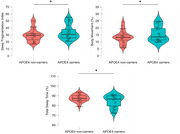 Figure 1
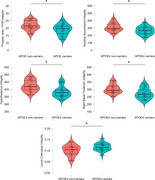 Figure 2
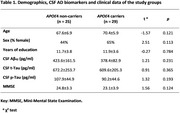 Figure 3
Peer Reviews
No public reviews on file for this paper yet. If you reviewed it on a platform where reviews are public (OpenReview, ICLR, NeurIPS, ICML), you can paste yours below so the community can read it here.
Videos
No videos yet. Explain this paper in a talk, walkthrough, or lecture? Add one.
Taxonomy
TopicsSleep and related disorders · Sleep and Wakefulness Research · Dementia and Cognitive Impairment Research