Plasma glial fibrillary acidic protein correlates with APOE4‐associated Alzheimer's pathological changes
Yalin Zhu, Laihong Zhang, Mingxing Jiang, Anqi Li, Jie Yang, Lili Fang, Jieyin li, Guoyu Lan, Guojun Bu, Tengfei Guo

TL;DR
This study shows that higher plasma GFAP levels are linked to more severe Alzheimer's pathology in people with the APOE4 gene variant.
Contribution
The study reveals a novel connection between plasma GFAP levels and APOE4-associated AD pathology, including amyloid-beta, tau accumulation, and cognitive decline.
Findings
Higher plasma GFAP levels in APOE4 carriers correlate with increased p-tau and Aβ accumulation.
Elevated GFAP is associated with reduced cortical thickness and worse cognitive scores in APOE4 carriers.
GFAP levels may serve as a biomarker for astrocytic activation linked to AD progression in APOE4 individuals.
Abstract
Apolipoprotein E (APOE) is a well‐established genetic risk factor for Alzheimer's disease (AD). Plasma glial fibrillary acidic protein (GFAP) is a key biomarker of neuroinflammation. However, the association of plasma GFAP with the relationship between APOE and AD pathology has not yet been thoroughly investigated. Therefore, this study aims to explore the association of plasma GFAP levels with APOE genotypes, amyloid‐β (Aβ) accumulation, tau pathology, cortical thickness, and cognitive decline. The study involved 706 participants from the GHABS and ADNI cohorts, with measurements of plasma GFAP, phosphorylated tau markers (p‐tau181 and p‐tau217 for both cohorts, and p‐tau231 available only for GHABS), Aβ‐PET and tau‐PET imaging. A subset of 336 individuals from the ADNI had follow‐up structural MRI scans and cognitive assessments. We investigated the interaction of plasma GFAP and…
Genes, proteins, chemicals, diseases, species, mutations and cell lines named across the full text — each resolved to its canonical identifier and authoritative record.
Click any figure to enlarge with its caption.
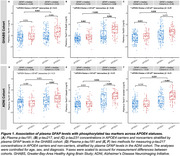 Figure 1
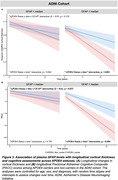 Figure 2
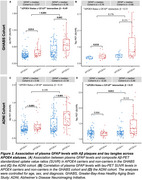 Figure 3
Peer Reviews
No public reviews on file for this paper yet. If you reviewed it on a platform where reviews are public (OpenReview, ICLR, NeurIPS, ICML), you can paste yours below so the community can read it here.
Videos
No videos yet. Explain this paper in a talk, walkthrough, or lecture? Add one.
Taxonomy
TopicsAlzheimer's disease research and treatments · Dementia and Cognitive Impairment Research · Neurological Disease Mechanisms and Treatments