Longitudinal progression and harmonization of tau‐PET tracers
Guilherme Bauer‐Negrini, Pamela C.L. Ferreira, Guilherme Povala, Bruna Bellaver, Firoza Z Lussier, Livia Amaral, Dana L Tudorascu, Quentin Finn, Nesrine Rahmouni, Joseph Therriault, Stijn Servaes, Jenna Stevenson, Arthur C. Macedo, Joseph C. Masdeu, David N. Soleimani‐Meigooni

TL;DR
This study evaluates how well a new harmonization method tracks Alzheimer's disease progression using different tau-PET tracers over time.
Contribution
The study introduces and validates the longitudinal performance of the Uniτ scale for harmonizing tau-PET tracers in Alzheimer's disease.
Findings
The Meta-Temporal ROI showed consistent annual increases in tau-PET uptake across all cohorts, especially in cognitively impaired individuals.
Uniτ harmonization preserved the longitudinal characteristics of Flortaucipir and MK6240 without altering their progression patterns.
MK6240 detected greater progression in cognitively unimpaired individuals compared to Flortaucipir.
Abstract
Tau‐PET tracers have been used to monitor the progression of Alzheimer's disease (AD). However, different tracers present distinct patterns of binding throughout the brain, challenging the harmonization of their findings. Leveraging the HEAD Study, the largest head‐to‐head study of tau‐PET tracers, we recently developed the Uniτ scale, which cross‐sectionally harmonizes Flortaucipir and MK6240 onto a universal tau‐PET measurement. Here, we provide a preliminary evaluation of the Uniτ scale's longitudinal performance in HEAD and two independent cohorts. We assessed 422 individuals across the AD spectrum with longitudinal tau‐PET from three cohorts: HEAD [13 cognitively unimpaired (CU), 9 cognitively impaired (CI) individuals, scanned head‐to‐head with Flortaucipir and MK6240], ADNI [74 CU, 208 CI, tracer: Flortaucipir], and TRIAD [72 CU, 46 CI, tracer: MK6240]. Standardized uptake…
Genes, proteins, chemicals, diseases, species, mutations and cell lines named across the full text — each resolved to its canonical identifier and authoritative record.
Click any figure to enlarge with its caption.
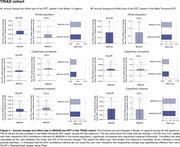 Figure 1
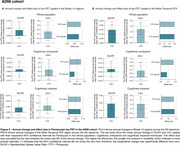 Figure 2
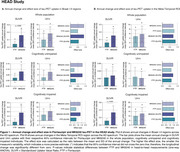 Figure 3
Peer Reviews
No public reviews on file for this paper yet. If you reviewed it on a platform where reviews are public (OpenReview, ICLR, NeurIPS, ICML), you can paste yours below so the community can read it here.
Videos
No videos yet. Explain this paper in a talk, walkthrough, or lecture? Add one.
Taxonomy
TopicsDementia and Cognitive Impairment Research · Alzheimer's disease research and treatments · Functional Brain Connectivity Studies