Aberrant intrinsic functional network connectivity in Early‐Onset Alzheimer's Disease
Yuta Katsumi, Ryan Eckbo, Michael Brickhouse, Ani Eloyan, Renaud La Joie, Kelly N. Nudelman, Tatiana M. Foroud, Jeffrey L. Dage, Maria C. Carrillo, Gil D. Rabinovici, Liana G. Apostolova, Alexandra Touroutoglou, Brad C. Dickerson

TL;DR
Early-onset Alzheimer's disrupts brain network connectivity, leading to stronger connections in key regions and worse cognitive decline.
Contribution
This study identifies hyperconnectivity in specific brain networks in early-onset Alzheimer's using a large patient sample.
Findings
EOAD patients showed abnormally stronger connectivity in EOAD signature regions compared to controls.
Stronger functional connectivity was linked to worse cognitive impairment and greater cortical atrophy.
Hyperconnectivity was most prominent in the default mode and frontoparietal networks.
Abstract
Neurodegeneration in sporadic early‐onset Alzheimer's disease (EOAD) at the stage of MCI and mild dementia is characterized by atrophy most prominently in posterior temporoparietal cortical areas. These “EOAD signature” regions (Touroutoglou et al., 2023) spatially correspond to key nodes of several canonical large‐scale functional networks, including the default mode, frontoparietal, language, and dorsal attention networks. While current evidence points to abnormal functional connectivity in EOAD compared with healthy controls, prior studies employed small samples and have yielded mixed results. Here, we analyzed a large sample of sporadic EOAD patients from the Longitudinal Early‐Onset Alzheimer's Disease Study (LEADS) to test the central hypothesis that EOAD disrupts the functional integrity of several brain networks. We also hypothesized that AD‐related connectivity alteration would…
Genes, proteins, chemicals, diseases, species, mutations and cell lines named across the full text — each resolved to its canonical identifier and authoritative record.
Click any figure to enlarge with its caption.
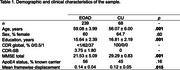 Figure 1
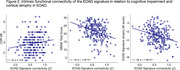 Figure 2
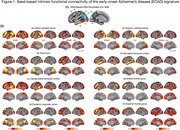 Figure 3
Peer Reviews
No public reviews on file for this paper yet. If you reviewed it on a platform where reviews are public (OpenReview, ICLR, NeurIPS, ICML), you can paste yours below so the community can read it here.
Videos
No videos yet. Explain this paper in a talk, walkthrough, or lecture? Add one.
Taxonomy
TopicsFunctional Brain Connectivity Studies · Dementia and Cognitive Impairment Research · Mental Health Research Topics