ApoE Genotyping and 12‐Month Longitudinal Tracking of p‐Tau217 Using Fingerstick Collection in a Population‐Based Cohort
Laia Montoliu‐Gaya, Hanna Huber, Josep Blazquez, Luisa Sophie Braun‐Wohlfahrt, Jakub Vávra, Berta Calm, Cañada Laia, Amanda Cano, Sergi Valero, Victoria Fernández, Kaj Blennow, Henrik Zetterberg, Mercè Boada, Nicholas Ashton, Xavier Morató Arús

TL;DR
This study shows that fingerstick blood samples can accurately track Alzheimer's biomarkers over time and determine ApoE genotype, offering a simpler and more accessible diagnostic method.
Contribution
The study demonstrates that fingerstick sampling is a reliable, decentralized method for longitudinal p-tau217 monitoring and ApoE genotyping in Alzheimer's research.
Findings
Fingerstick-derived p-tau217 levels correlated significantly with venous plasma samples at multiple time points.
ApoE genotyping from fingerstick samples matched results from whole blood analysis.
p-tau217 levels from fingerstick samples accurately discriminated patients based on CSF Aβ status.
Abstract
Implementing recently approved disease‐modifying treatments for Alzheimer's disease (AD) requires healthcare systems to adapt rapidly. ApoE genotyping and determination of phosphorylated tau at Thr217 (p‐tau217) levels are essential for accurate patient selection and treatment response monitoring, respectively. Simplified, decentralized access to these biomarkers could reduce patient burden and healthcare resource consumption. Here, we evaluated the performance of fingerstick sampling for ApoE genotyping and longitudinal plasma p‐tau217 quantification. Participants were evaluated at the Memory Unit of Ace Alzheimer Center Barcelona and provided longitudinal dried plasma spots (DPS) from on‐site fingerstick collection at baseline (V0), 6 months (V6), and 12 months (V12). Capillary DPS cards were shipped to Gothenburg, Sweden, within seven days, without temperature control or cooling,…
Genes, proteins, chemicals, diseases, species, mutations and cell lines named across the full text — each resolved to its canonical identifier and authoritative record.
Click any figure to enlarge with its caption.
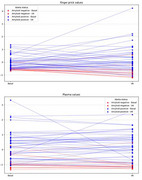 Figure 1
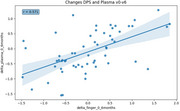 Figure 2
Peer Reviews
No public reviews on file for this paper yet. If you reviewed it on a platform where reviews are public (OpenReview, ICLR, NeurIPS, ICML), you can paste yours below so the community can read it here.
Videos
No videos yet. Explain this paper in a talk, walkthrough, or lecture? Add one.
Taxonomy
TopicsAlzheimer's disease research and treatments · Dementia and Cognitive Impairment Research · Cholinesterase and Neurodegenerative Diseases