A dual‐pathway hypothesis to explain free water white matter spatial distribution related to vascular risk factors
Pauline Maillard, Alexa S Beiser, Claudia L Satizabal, Johannes Weickenmeier, Sudha Seshadri, Charles Decarli

TL;DR
This study proposes a new hypothesis explaining how high blood pressure and other vascular risk factors cause early white matter brain injury through two separate pathways.
Contribution
A novel dual-pathway biomechanical hypothesis linking vascular risk factors to white matter injury via ventricular enlargement and small vessel damage.
Findings
Hypertension, diabetes, and smoking significantly affect free water in white matter across all distances from the ventricles.
Ventricular volume mediates the effect of hypertension on free water, especially in middle white matter regions.
Ventricular enlargement and small vessel injury from vascular risk factors together increase free water in cerebral white matter.
Abstract
DTI‐derived free water (FW) is a marker for early cerebral white matter (WM) injury, occurring before white matter hyperintensities (WMH). Both increased FW and WMH are associated with aging, hypertension, and raised arterial stiffness. Enlarged ventricles and arteriosclerosis are common features associated with these processes. Recent work1 finds enlarged ventricular volume is associated with periventricular WMH and hypothesizes ependymal leakage as the pathophysiological initiator. We have similarly posited that arterial stiffness leads to endothelial leakage in cerebral WM small vessels2. The goal of the present study is to propose a biomechanical hypothesis explaining how high blood pressure promotes WM injury through a dual‐pathway mechanism (Figure 1). Our study includes 3303 Framingham Heart Study participants (age range: 26‐95; 52% women) with imaging data. WM FW, ventricular…
Genes, proteins, chemicals, diseases, species, mutations and cell lines named across the full text — each resolved to its canonical identifier and authoritative record.
Click any figure to enlarge with its caption.
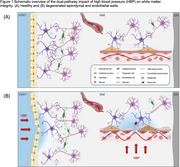 Figure 1
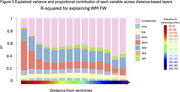 Figure 2
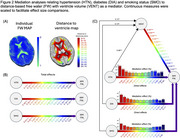 Figure 3
Peer Reviews
No public reviews on file for this paper yet. If you reviewed it on a platform where reviews are public (OpenReview, ICLR, NeurIPS, ICML), you can paste yours below so the community can read it here.
Videos
No videos yet. Explain this paper in a talk, walkthrough, or lecture? Add one.
Taxonomy
TopicsDementia and Cognitive Impairment Research · Cerebrospinal fluid and hydrocephalus · Neonatal and fetal brain pathology