Sex‐Differences in Association between Plasma GFAP and Cognition in Cognitively Unimpaired Community Dwelling Older Adults
Chelsea Reichert Plaska, Tovia Jacobs, Davide Bruno, Katherine Brundage, Sang Han Lee, Jaime Ramos Cejudo, Ricardo S. Osorio, Bruno P Imbimbo, Nicholas J. Ashton, Henrik Zetterberg, Kaj Blennow

TL;DR
This study finds that women have higher levels of a brain marker linked to inflammation, which is associated with faster cognitive decline and Alzheimer's risk factors.
Contribution
The study reveals sex-specific associations between plasma GFAP levels and cognitive decline in older adults without cognitive impairment.
Findings
Females had significantly higher plasma GFAP levels compared to males.
Higher GFAP levels in females were linked to faster cognitive decline and lower Aβ42/40 ratios over time.
These associations were not observed in males.
Abstract
Women are at greater risk of developing sporadic Alzheimer's disease (AD). While their longer lifespans contribute to AD‐risk, this factor does not fully explain the observed sex differences. Increased glial activation and neuroinflammation associated with female‐sex may play a role. Glial fibrillary acidic protein (GFAP), a marker of astrocyte activation and neuroinflammation, has been linked to AD‐ risk. In preclinical and prodromal AD, higher brain GFAP levels are associated with cognitive decline, Aβ deposition, tau spread, and neurodegeneration associated with AD. Studies have reported that plasma GFAP levels are higher in women compared to men, but few have thoroughly examined this influence. This prompted us to examine sex‐differences in plasma GFAP in cognitively unimpaired older adults and its relationship to cognitive performance and other plasma AD biomarkers, both at…
Genes, proteins, chemicals, diseases, species, mutations and cell lines named across the full text — each resolved to its canonical identifier and authoritative record.
Click any figure to enlarge with its caption.
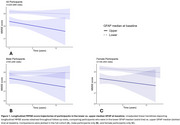 Figure 1
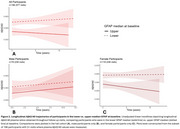 Figure 2
Peer Reviews
No public reviews on file for this paper yet. If you reviewed it on a platform where reviews are public (OpenReview, ICLR, NeurIPS, ICML), you can paste yours below so the community can read it here.
Videos
No videos yet. Explain this paper in a talk, walkthrough, or lecture? Add one.
Taxonomy
TopicsAlzheimer's disease research and treatments · Dementia and Cognitive Impairment Research · Neuroinflammation and Neurodegeneration Mechanisms