FDG‐PET Outperforms MRI in Monitoring Early Neurodegenerative Changes Tied to Neurofibrillary Tangle Pathology: An Imaging‐Pathology Study
Orfeas Vourkas, Linda Zhang, Alberto Rabano, Pascual Sanchez‐Juan, Jesús Silva‐Rodríguez, Michel J. Grothe

TL;DR
FDG-PET scans detect early brain changes in Alzheimer's better than MRI, showing metabolic changes precede visible structural loss.
Contribution
This study directly compares FDG-PET and MRI in detecting early neurodegeneration linked to Alzheimer's pathology using post-mortem validation.
Findings
FDG-PET hypometabolism shows significant changes in early Alzheimer's stages, while MRI detects changes only in advanced stages.
FDG-PET detects neurodegenerative changes related to neurofibrillary tangles earlier than MRI detects gray matter atrophy.
Effect sizes for FDG-PET associations with pathology stages are larger and detectable earlier than for MRI.
Abstract
Neurofibrillary tangle pathology (NFTp) in Alzheimer's disease (AD) is closely related to neurodegeneration, which can be measured in vivo using structural MRI or FDG‐PET. While several studies have assessed this correlation using in vivo markers of NFTp (i.e., tau PET), very few studies to date have compared MRI and FDG‐PET with respect to neuropathological assessments of NFTp. Here, we aimed to assess the relative sensitivities of FDG‐PET‐measured hypometabolism and MRI‐measured gray matter (GM) atrophy, to early and advanced stages of NFTp, as assessed by post‐mortem neuropathological examination. We studied 88 individuals from the Alzheimer's Disease Neuroimaging Initiative (ADNI) autopsy cohort who had Braak NFTp staging performed at autopsy and had FDG‐PET and structural T1‐MRI scans acquired before death (imaging‐to‐death interval: 3.4±2.3 years). Associations of Braak stages…
Genes, proteins, chemicals, diseases, species, mutations and cell lines named across the full text — each resolved to its canonical identifier and authoritative record.
Click any figure to enlarge with its caption.
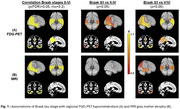 Figure 1
Peer Reviews
No public reviews on file for this paper yet. If you reviewed it on a platform where reviews are public (OpenReview, ICLR, NeurIPS, ICML), you can paste yours below so the community can read it here.
Videos
No videos yet. Explain this paper in a talk, walkthrough, or lecture? Add one.
Taxonomy
TopicsDementia and Cognitive Impairment Research · Alzheimer's disease research and treatments · Advanced Neuroimaging Techniques and Applications