Quantitation of PET spatial extent as a potential adjunct to visual interpretation of [18F]flortaucipir imaging
Emma M. Coomans, Bastaan van Tol, Colin Groot, Ruben Smith, Sebastian Palmqvist, Erik Stomrud, Michael Pontecorvo, Sergey Shcherbinin, Ian A. Kennedy, Vikas Kotari, Wiesje M. van der Flier, Yolande A.L. Pijnenburg, Niklas Mattsson‐Carlgren, Oskar Hansson

TL;DR
This study introduces a new metric called TAU-SPEX to quantify the spatial extent of tau PET positivity, which could improve Alzheimer's diagnosis and prognosis.
Contribution
The novel contribution is the development and validation of TAU-SPEX as a quantitative adjunct to visual interpretation of [18F]flortaucipir PET imaging.
Findings
TAU-SPEX outperformed SUVr in differentiating visually tau-positive scans across all cohorts.
TAU-SPEX showed higher concordance with visual reads (κ=0.81-0.90) compared to SUVr (κ=0.64-0.82).
TAU-SPEX correlated more closely with cognitive performance than SUVr (ΔAIC = -43.2).
Abstract
The US Food and Drug Administration and the European Medicines Agency recently approved a visual read method for the Tau‐PET radiotracer [18F]flortaucipir to support the clinical diagnosis of Alzheimer's disease. However, among visually Tau‐PET‐positive scans large variation exists in the number of voxels with elevated Tau‐PET signal. Here, we propose a metric quantifying the spatial extent of Tau‐PET‐positivity (hereafter referred to as “TAU‐SPEX”) and evaluate its potential to be used as an adjunct to Tau‐PET visual read (VR) in clinic. [18F]flortaucipir data from 1,635 participants (aged 71.9±8.2 years, 49.7% females, 42.1% cognitively unimpaired, 25.2% mild cognitively impaired, and 32.7% dementia) from four cohorts were visually read following approved guidelines. We calculated TAU‐SPEX as the percentage of gray matter voxels exceeding the tau‐positive threshold (Figure 1). The…
Genes, proteins, chemicals, diseases, species, mutations and cell lines named across the full text — each resolved to its canonical identifier and authoritative record.
Click any figure to enlarge with its caption.
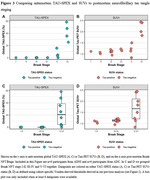 Figure 1
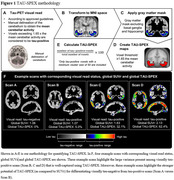 Figure 2
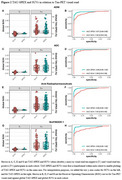 Figure 3
Peer Reviews
No public reviews on file for this paper yet. If you reviewed it on a platform where reviews are public (OpenReview, ICLR, NeurIPS, ICML), you can paste yours below so the community can read it here.
Videos
No videos yet. Explain this paper in a talk, walkthrough, or lecture? Add one.
Taxonomy
TopicsDementia and Cognitive Impairment Research · Advanced MRI Techniques and Applications · Medical Imaging Techniques and Applications