Utility of the Swedish Anticholinergic Burden Scale in a memory clinic setting: a comparison with the Anticholinergic Cognitive Burden scale
Tanja Rube, Elisabet Londos, Per Johansson

TL;DR
This study compares two scales for measuring anticholinergic burden in older individuals at a memory clinic, finding that the Swedish scale identifies more high-risk drug use.
Contribution
The study introduces and validates the Swedish Anticholinergic Burden Scale (Swe-ABS) in a memory clinic setting.
Findings
The Swe-ABS identified a higher proportion of individuals with high anticholinergic burden compared to the ACB scale.
Younger individuals (<75 years) had higher anticholinergic scores than older individuals (≥75 years).
Many drugs used in the clinic were not listed in the Swe-ABS, suggesting potential for scale improvement.
Abstract
Anticholinergic burden is associated with cognitive impairment, especially in older individuals with neurodegenerative disorders such as Alzheimer’s disease. The objective of the study was to explore the use of drugs displaying anticholinergic properties and examine the utility of the newly developed Swedish Anticholinergic Burden Scale (Swe-ABS) in a memory clinic setting. A descriptive cross-sectional study, involving individuals ≥ 50 years of age attending a memory clinic in southern Sweden between September 2017 and September 2021. In total, 657 individuals, mean age 72.4 ± 9.0 years, 375 (57.1%) males, were included. The study population used 4805 medications at an average of 7.3 ± 4.3 per individual. A total of 448 (68.2%) participants used drugs with any anticholinergic effects identified with the Swe-ABS of whom 179 (27.2%) had a high anticholinergic burden (i.e., Swe-ABS ≥ 3).…
Genes, proteins, chemicals, diseases, species, mutations and cell lines named across the full text — each resolved to its canonical identifier and authoritative record.
Click any figure to enlarge with its caption.
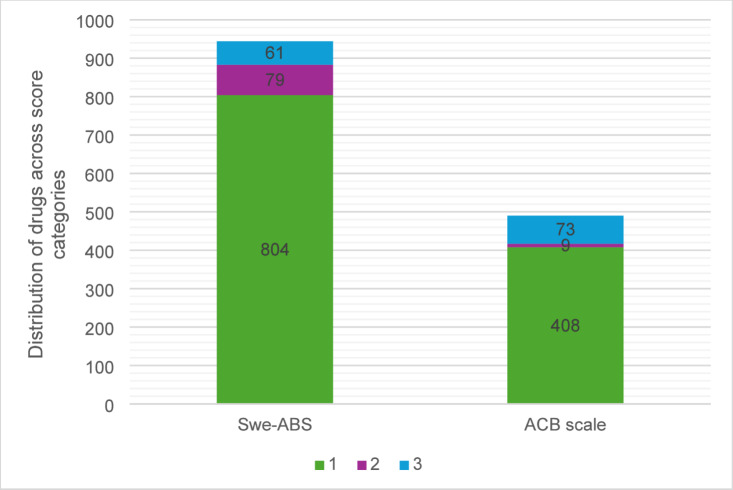 Figure 1
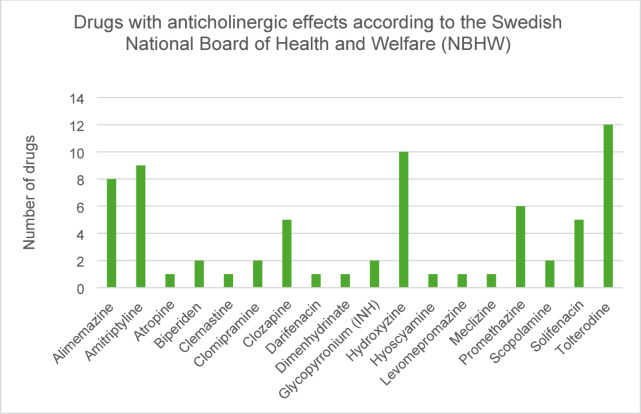 Figure 2
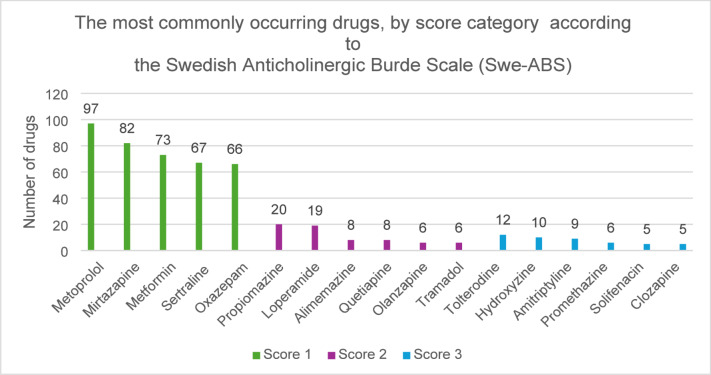 Figure 3
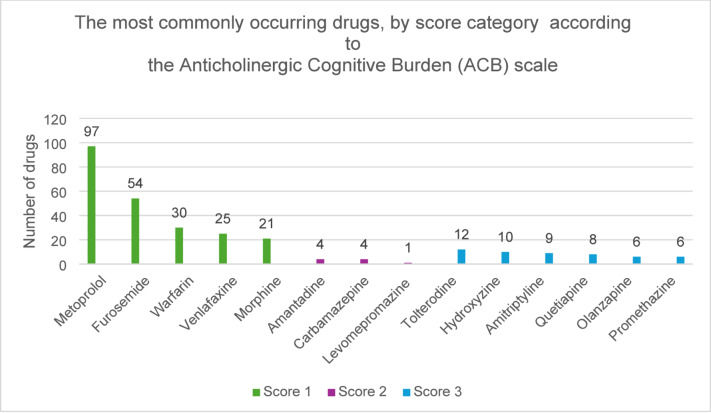 Figure 4
Peer Reviews
No public reviews on file for this paper yet. If you reviewed it on a platform where reviews are public (OpenReview, ICLR, NeurIPS, ICML), you can paste yours below so the community can read it here.
Videos
No videos yet. Explain this paper in a talk, walkthrough, or lecture? Add one.
Taxonomy
TopicsPharmaceutical Practices and Patient Outcomes · Dementia and Cognitive Impairment Research · Receptor Mechanisms and Signaling