Similar growth potentials of cyanobacteria and algae explain their coexistence in desert soils
Khin Maw Kyi, Elad Levintal, Nina A Kamennaya

TL;DR
Cyanobacteria and algae coexist in desert soils because they have similar growth rates when water is available, despite differences in their carbon content.
Contribution
The study reveals that similar growth potentials, not just resilience, explain the coexistence of cyanobacteria and algae in desert soils.
Findings
Cyanobacteria have 2.5-3.0 times higher biovolume-specific CO2 fixation rates than algae.
Cyanobacteria's higher carbon content balances their growth rate, resulting in similar doubling times to algae.
This similarity in growth rates allows cyanobacteria and algae to coexist during rare water events in deserts.
Abstract
In deserts that cover one-third of the Earth’s terrain, soil cyanobacteria and algae are key carbon dioxide (CO2) fixers because few other plants can tolerate intense solar radiation, prolonged desiccation, and extreme temperature shifts. Extensively studied resilience of cyanobacteria and algae to environmental stresses explains their survival in deserts rather than their ubiquitous coexistence. To coexist, prokaryotic cyanobacteria and eukaryotic algae need to grow at similar rates on rare occasions when vital water becomes available. To test that, we incubated illuminated soil samples collected in the Negev desert after rainfall and dewfall events with14CO2 and microdissected cyanobacteria and algae separately from the soil to determine group-specific CO2 fixation potentials. We found that the mean biovolume-specific C-fixation rates of cyanobacteria were 2.5-3.0 times higher than…
Genes, proteins, chemicals, diseases, species, mutations and cell lines named across the full text — each resolved to its canonical identifier and authoritative record.
Click any figure to enlarge with its caption.
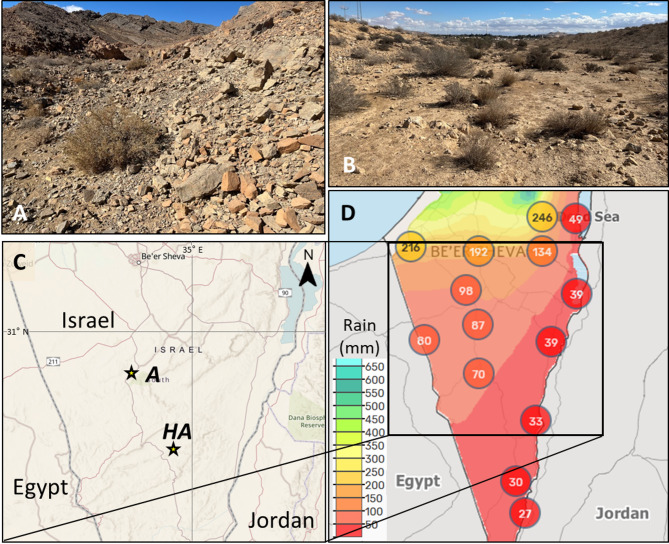 Figure 1
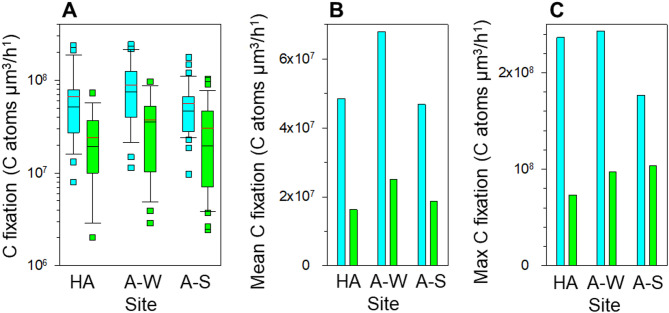 Figure 2
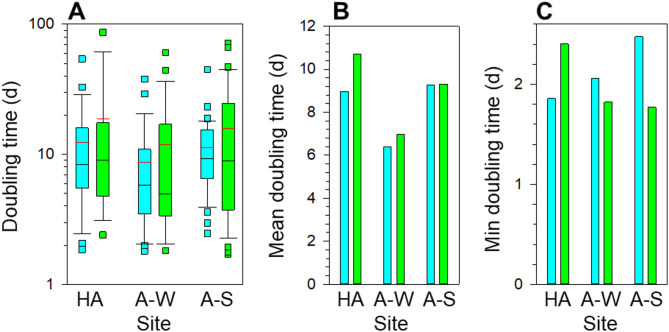 Figure 3
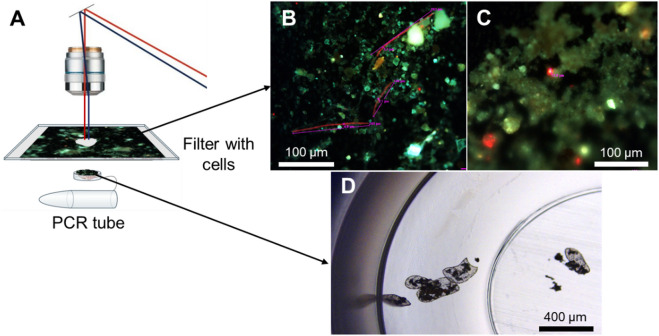 Figure 4
Peer Reviews
No public reviews on file for this paper yet. If you reviewed it on a platform where reviews are public (OpenReview, ICLR, NeurIPS, ICML), you can paste yours below so the community can read it here.
Videos
No videos yet. Explain this paper in a talk, walkthrough, or lecture? Add one.
Taxonomy
TopicsBiocrusts and Microbial Ecology · Polar Research and Ecology · Microbial Community Ecology and Physiology