Triploid Atlantic salmon are physiologically disadvantaged at larger body sizes
Malthe Hvas, André Morin, Tom J. Hansen

TL;DR
Triploid Atlantic salmon face physiological challenges at larger sizes, making them more vulnerable to stress and environmental extremes.
Contribution
The study identifies physiological disadvantages of triploid salmon at larger body sizes, linking them to welfare issues in aquaculture.
Findings
Triploid salmon had higher standard metabolic rates and lower aerobic scopes.
Triploids showed reduced hypoxia and thermal stress tolerance.
Lower gill lamellar density suggests reduced oxygen uptake efficiency in triploids.
Abstract
Triploid Atlantic salmon are sterile and used in aquaculture to prevent escapees from breeding in the wild. Meanwhile, triploids suffer poor animal welfare in the latter marine growth phase. Previous experiments have mainly tested smaller fish, and physiological differences between triploids and diploids tended to be subtle or non-existing. We therefore hypothesized that triploidy first becomes a disadvantage at larger body sizes where scaling constraints become more magnified in triploids owing to them having larger cells with lower surface to volume ratios. We measured metabolic rates, stress responses, hypoxia tolerance, and critical thermal maximum in big (≈3 kg) triploid and diploid Atlantic salmon. Additionally, we assessed gill histology metrics. Big triploids had higher standard metabolic rates, lower aerobic scopes, and reduced tolerances to hypoxia and thermal stress. Oxygen…
Genes, proteins, chemicals, diseases, species, mutations and cell lines named across the full text — each resolved to its canonical identifier and authoritative record.
Click any figure to enlarge with its caption.
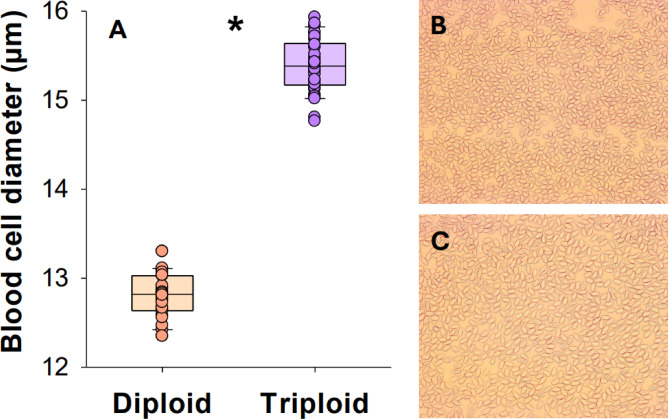 Figure 1
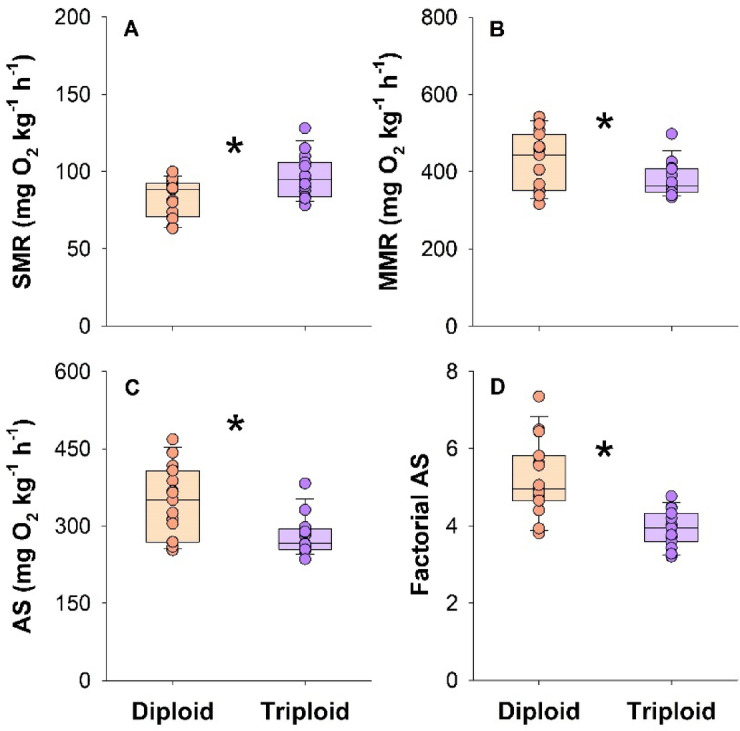 Figure 2
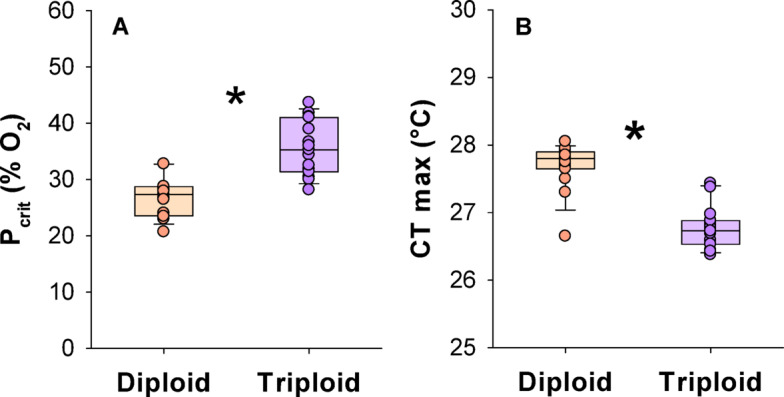 Figure 3
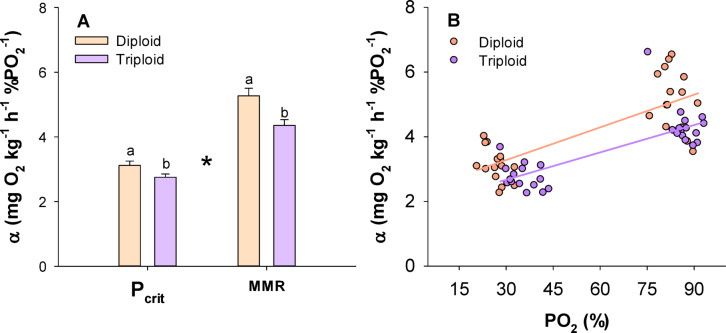 Figure 4
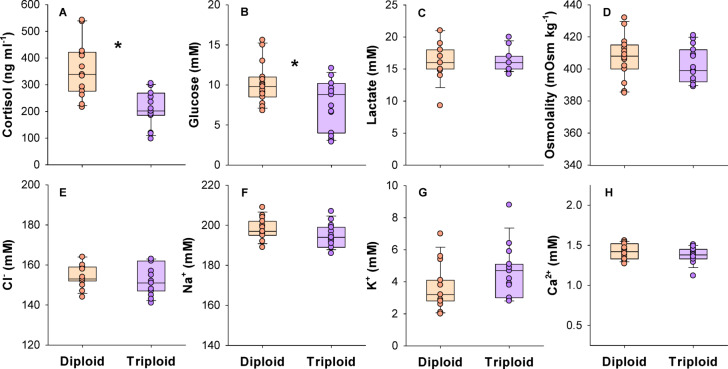 Figure 5
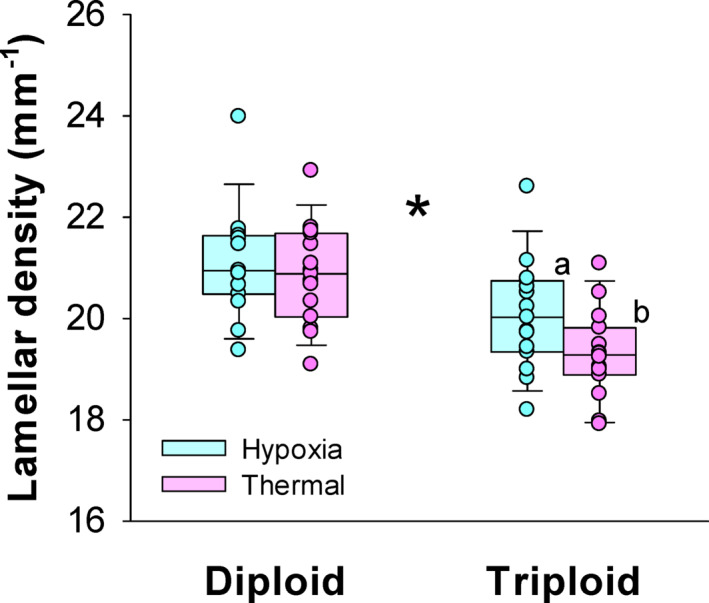 Figure 6
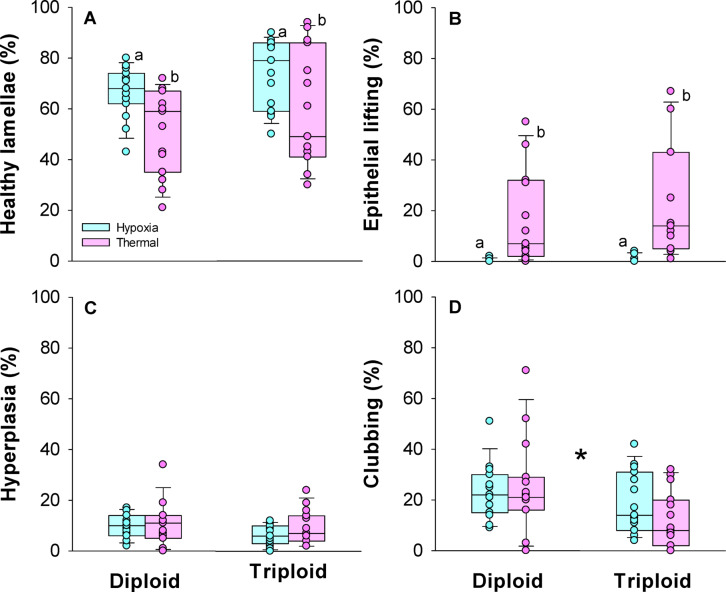 Figure 7
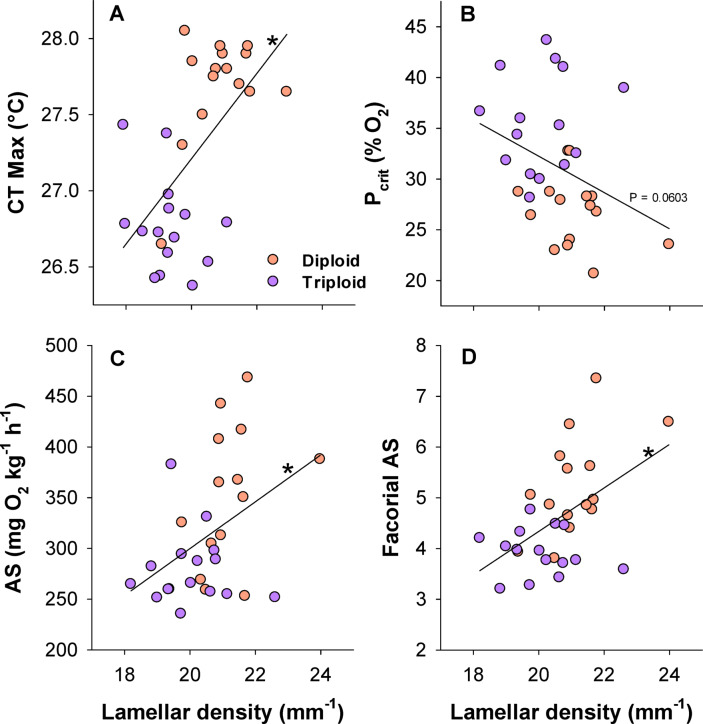 Figure 8
Peer Reviews
No public reviews on file for this paper yet. If you reviewed it on a platform where reviews are public (OpenReview, ICLR, NeurIPS, ICML), you can paste yours below so the community can read it here.
Videos
No videos yet. Explain this paper in a talk, walkthrough, or lecture? Add one.
Taxonomy
TopicsReproductive biology and impacts on aquatic species · Physiological and biochemical adaptations · Aquaculture Nutrition and Growth