Automatic measurements of volar tilt and radial inclination of the distal radius on 3D models: validation against manual methods
Emilia Gryska, Katleen Libberecht, Johan Andersson, Charlotte Stor Swinkels, Peter Axelsson, Anders Björkman

TL;DR
This paper introduces a new 3D algorithm to measure wrist bone alignment, which is more accurate and reliable than traditional 2D methods.
Contribution
The novel contribution is an open-source algorithm for automatic 3D measurements of distal radius alignment with strong agreement to manual methods.
Findings
Automatic 3D measurements showed small mean differences compared to manual 2D measurements (e.g., 2.0° for volar tilt in malunited radii).
Strong agreement was found between automatic and manual 3D measurements.
Landmark deviations averaged 2.5° for longitudinal axis differences.
Abstract
Assessing distal radius malunions traditionally relies on measuring volar tilt and radial inclination in 2D radiographs. Reliability of these parameters is limited by projection errors and landmark ambiguity. Using 3D models allows more precise quantification of these parameters. This study validated an algorithm for measuring volar tilt and radial inclination on 3D virtual models of malunited and healthy radii. The algorithm establishes a 3D coordinate system and anatomical landmarks replicating conventional 2D definitions to maintain clinical compatibility. Automatic 3D measurements on models from 16 participants were compared with manual measurements on 2D radiographs (by three surgeons in consensus) and on 3D models (by two independent raters). Agreement was assessed using Bland–Altman analysis, and landmark discrepancies were quantified. Mean differences between automatic 3D and…
Genes, proteins, chemicals, diseases, species, mutations and cell lines named across the full text — each resolved to its canonical identifier and authoritative record.
Click any figure to enlarge with its caption.
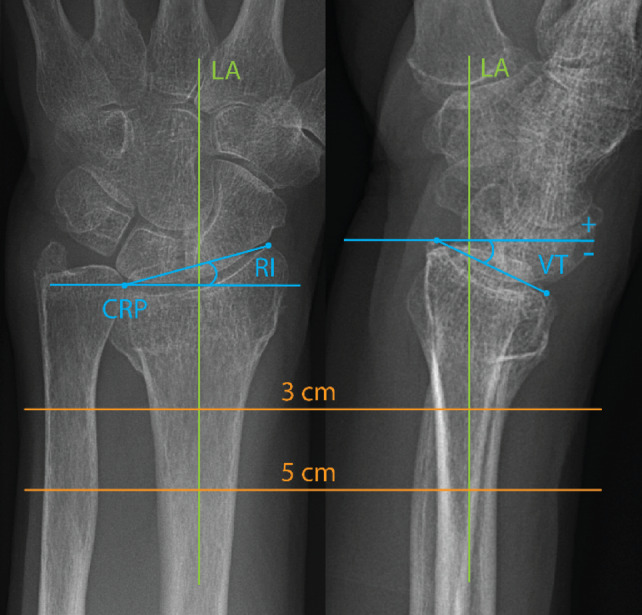 Figure 1
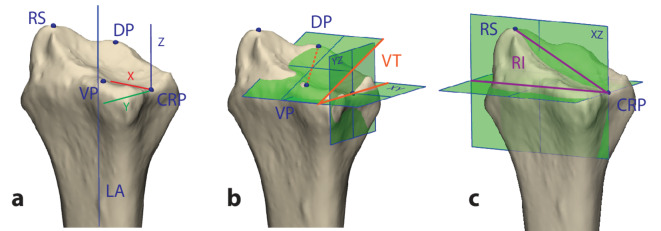 Figure 2
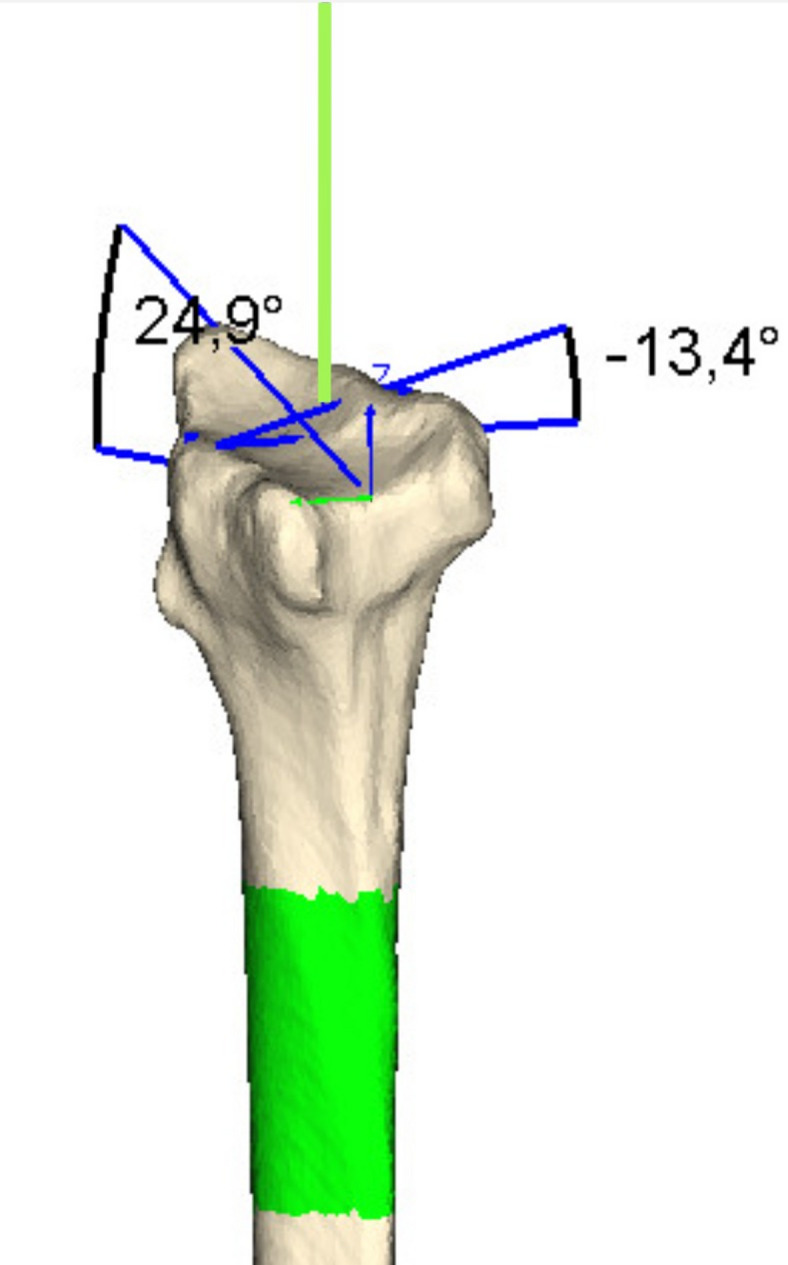 Figure 3
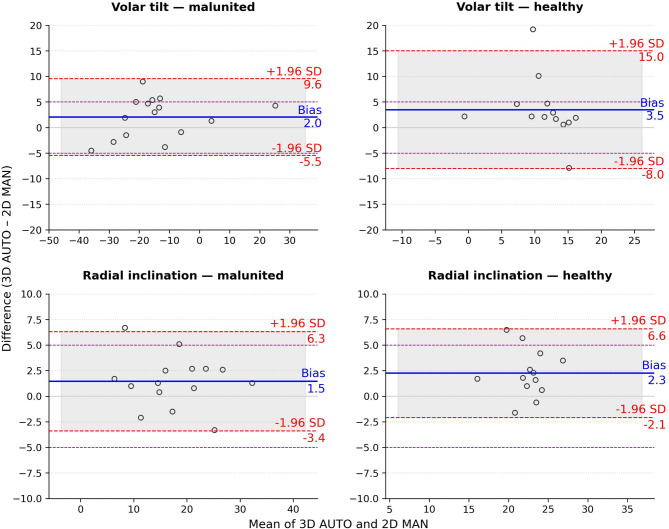 Figure 4
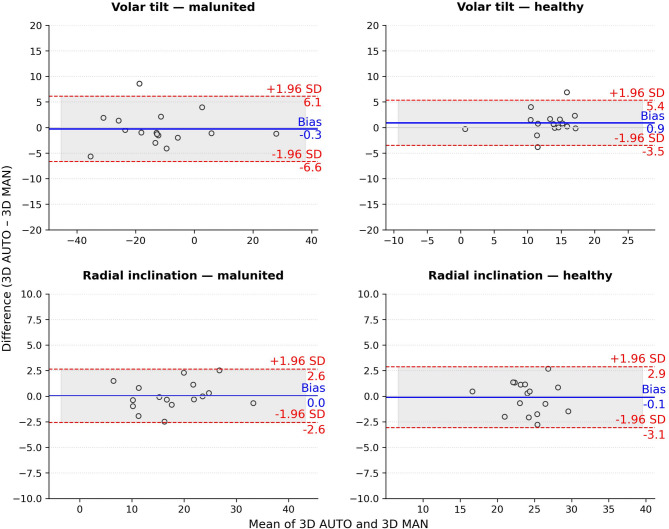 Figure 5
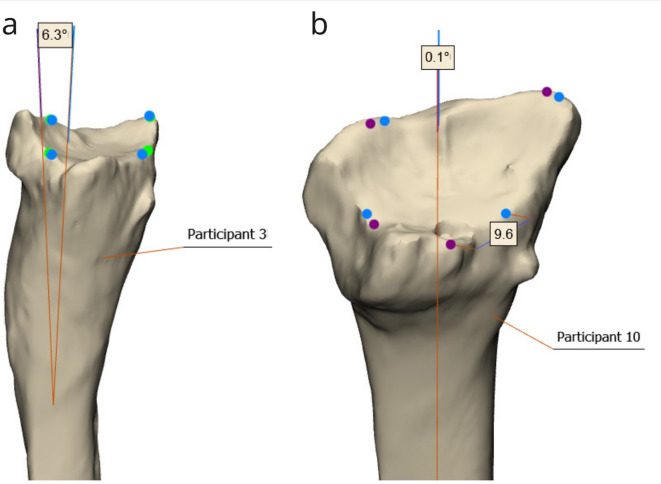 Figure 6
Peer Reviews
No public reviews on file for this paper yet. If you reviewed it on a platform where reviews are public (OpenReview, ICLR, NeurIPS, ICML), you can paste yours below so the community can read it here.
Videos
No videos yet. Explain this paper in a talk, walkthrough, or lecture? Add one.
Taxonomy
TopicsOphthalmology and Eye Disorders · Orthopedic Surgery and Rehabilitation · Nasal Surgery and Airway Studies