Afterglow ice formed by phosphorescent luminophore-protein conjugates and complexes in aqueous solution at freezing temperature
Xun Li, Jiuyang Li, Guangming Wang, Yuming Su, Minjian Wu, Kaka Zhang

TL;DR
The paper introduces a new method to create afterglow ice using luminophore-protein conjugates at freezing temperatures for potential bioassay applications.
Contribution
The study introduces organic afterglow luminophore-protein conjugates and complexes at freezing temperatures for bio-labeling and sensing.
Findings
Luminophore-protein conjugates exhibit afterglow at freezing temperatures due to hydrophobic and covalent interactions.
Specific recognition of streptavidin by biotinylated luminophores activates organic afterglow.
This work opens new possibilities for organic afterglow materials in bioassays and bio-labeling.
Abstract
Unlike the widely reported fluorophore-biomacromolecule systems in nucleic acid testing and immunoassay, organic afterglow luminophore-biomacromolecule conjugates and complexes remain rarely explored. Here we report the observation of organic afterglow from aqueous solutions of luminophore-protein conjugates and complexes at freezing temperature, named as afterglow ice for abbreviation. Reliable N-hydroxysuccinimide ester protocol, as well as β-diketone chemistry, are applied for protein labeling to form luminophore-protein conjugates, which exhibit intriguing afterglow at freezing temperature. Control experiments reveal that hydrophobic interaction and covalent linkage between luminophore and protein can protect organic triplet excited states from quenching. In the case of luminophore-protein complex, we observe the switching-on of organic afterglow after specific recognition of…
Genes, proteins, chemicals, diseases, species, mutations and cell lines named across the full text — each resolved to its canonical identifier and authoritative record.
Click any figure to enlarge with its caption.
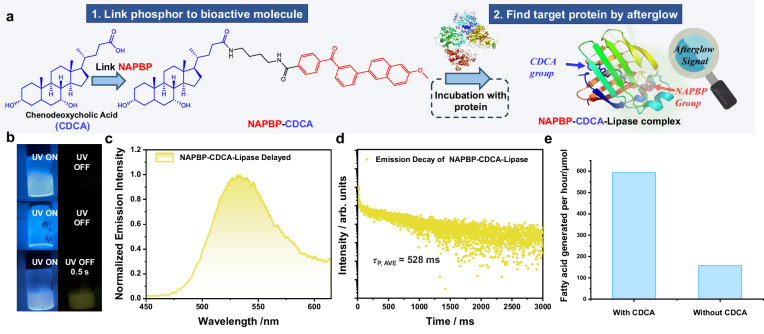 Figure 10
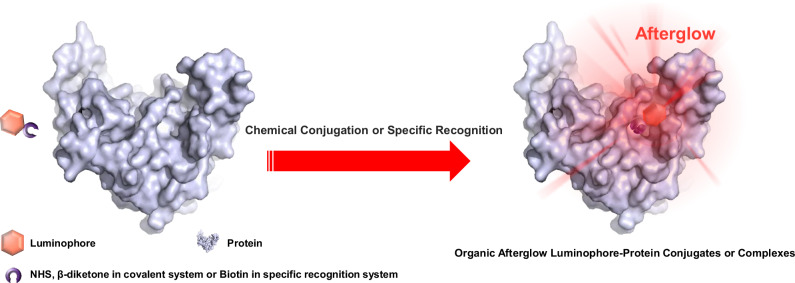 Figure 1
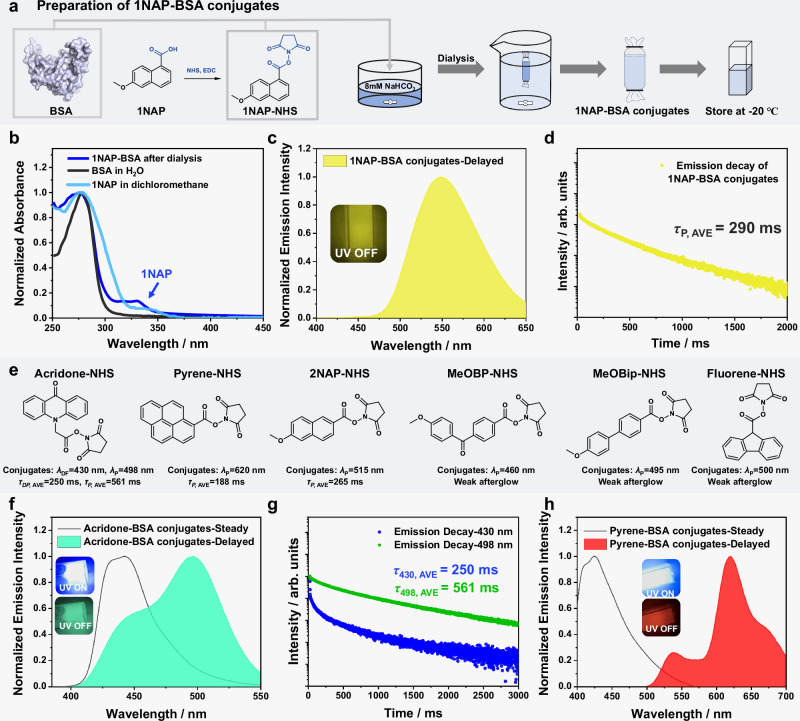 Figure 2
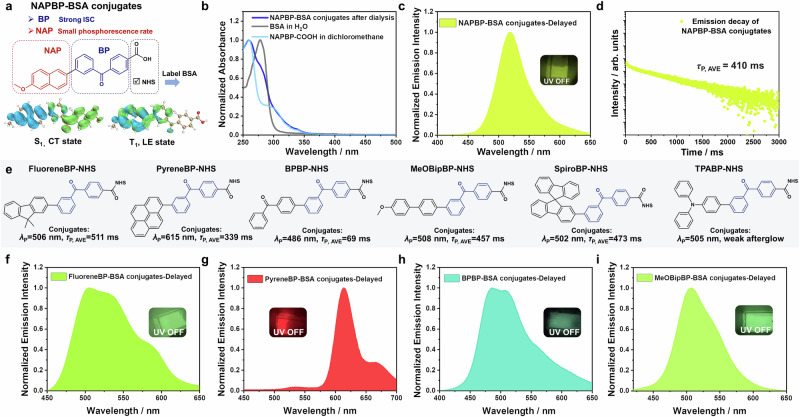 Figure 3
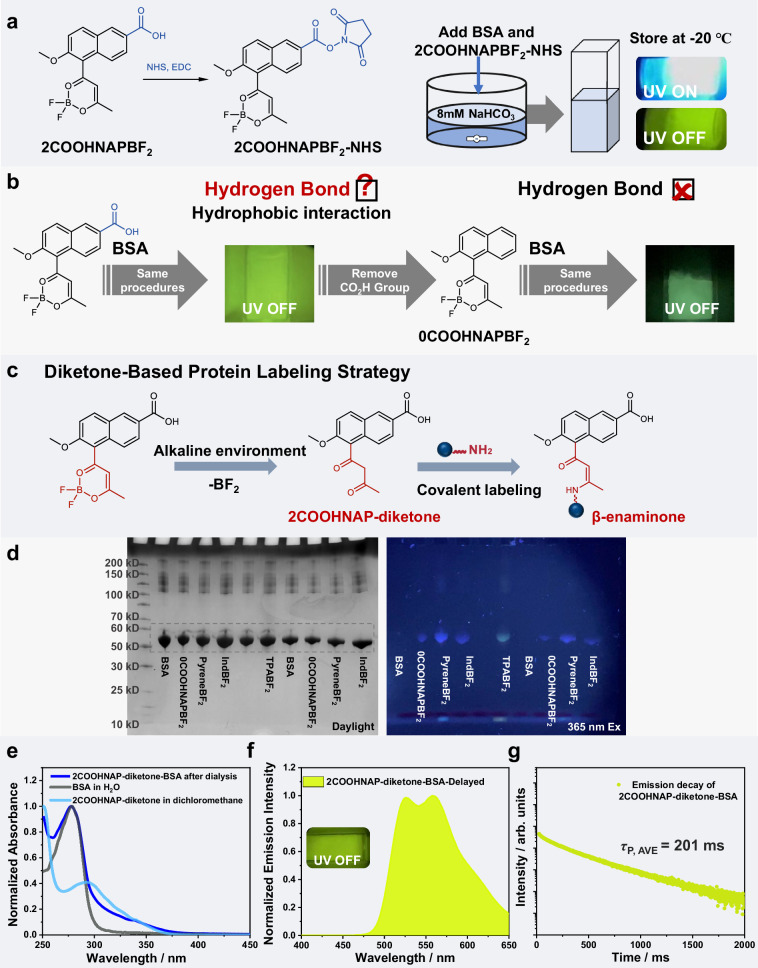 Figure 4
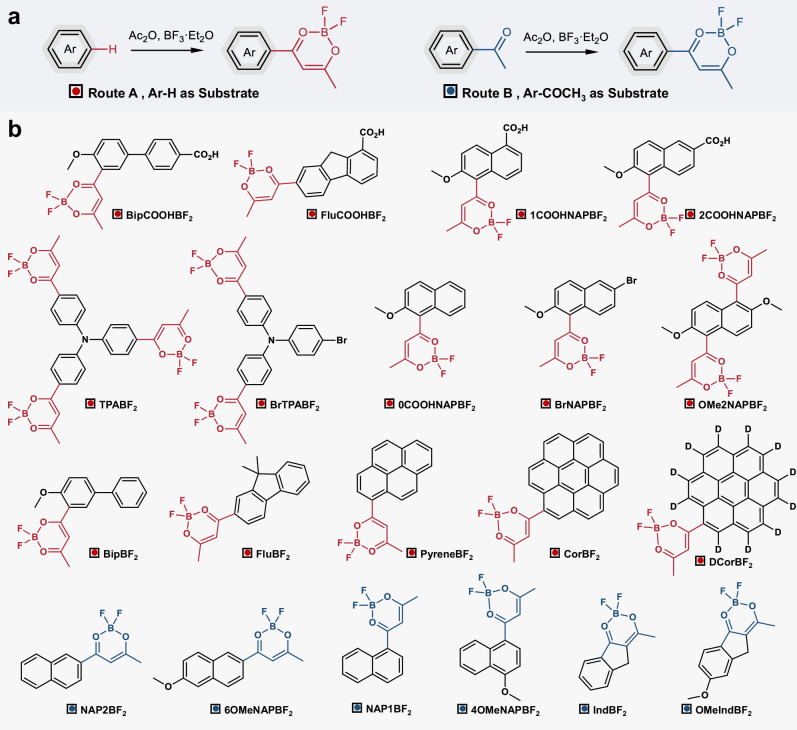 Figure 5
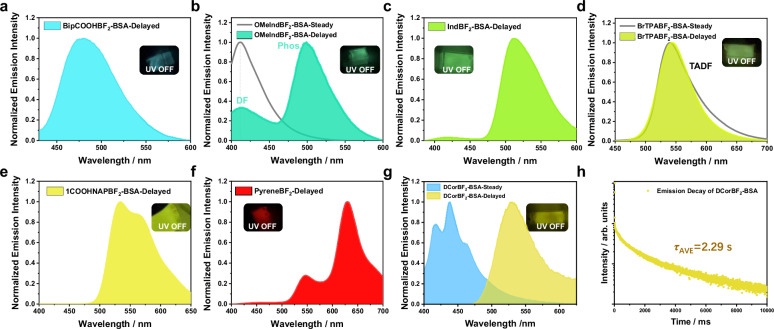 Figure 6
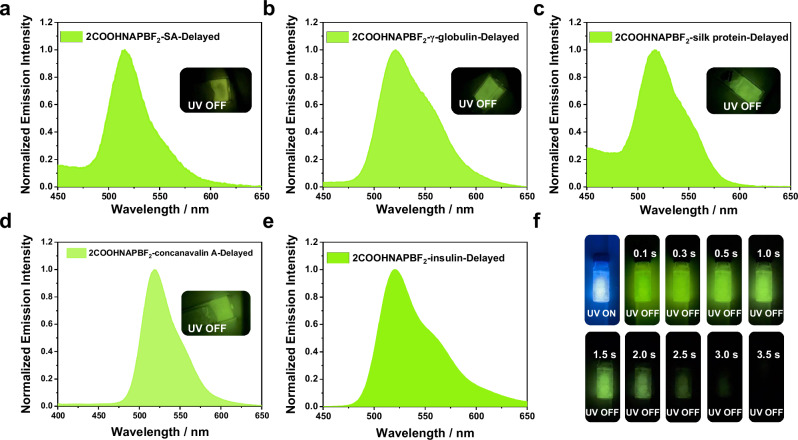 Figure 7
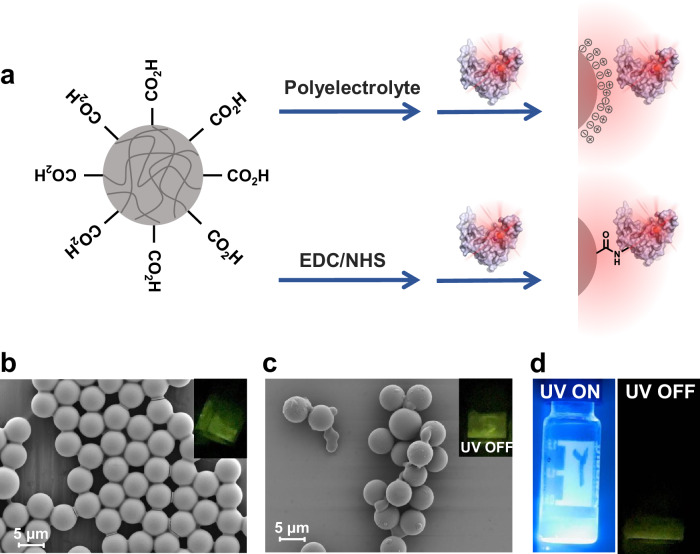 Figure 8
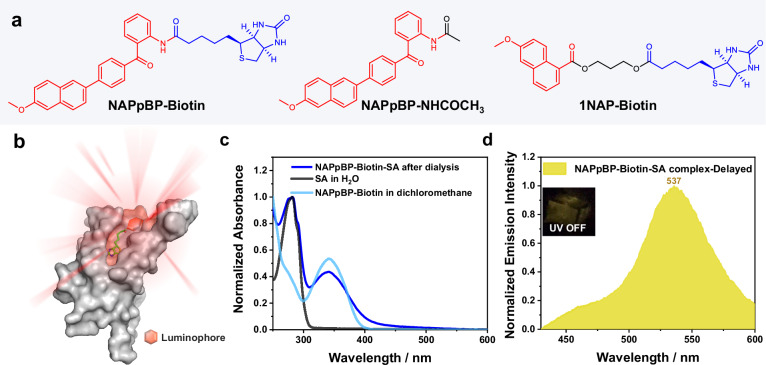 Figure 9
Peer Reviews
No public reviews on file for this paper yet. If you reviewed it on a platform where reviews are public (OpenReview, ICLR, NeurIPS, ICML), you can paste yours below so the community can read it here.
Videos
No videos yet. Explain this paper in a talk, walkthrough, or lecture? Add one.
Taxonomy
TopicsLuminescence and Fluorescent Materials · Molecular Sensors and Ion Detection · Carbon and Quantum Dots Applications