Predicting 1-year successful clinical use of an arteriovenous access for hemodialysis using machine learning
Ben Li, Naomi Eisenberg, Derek Beaton, Douglas S. Lee, Leen Al-Omran, Duminda N. Wijeysundera, Mohamad A. Hussain, Ori D. Rotstein, Elisa Greco, Charles de Mestral, Muhammad Mamdani, Graham Roche-Nagle, Mohammed Al-Omran

TL;DR
This study uses machine learning to predict whether an arteriovenous access for hemodialysis will be successfully used for one year, helping guide clinical decisions.
Contribution
A novel machine learning model (XGBoost) is developed to predict 1-year AV access success with higher accuracy than traditional logistic regression.
Findings
XGBoost achieved an AUROC of 0.90 in predicting 1-year successful AV access use.
Logistic regression had a lower performance with an AUROC of 0.70.
The model was trained on 111 pre-operative features from 59,674 patients.
Abstract
Arteriovenous (AV) access is important to support long-term hemodialysis; however, a significant proportion fail due to inadequate maturation or other complications. Tools that can predict long-term AV access success may guide clinical decision-making but remain limited. We developed machine learning (ML) algorithms that predict 1-year successful clinical use of an AV access using pre-operative data. The Vascular Quality Initiative (VQI) was used to identify patients who underwent surgical AV fistula/graft creation between 2011–2024. We identified 111 pre-operative demographic, clinical, and anatomic features. Six ML models were trained with 10-fold cross-validation. Overall, 59,674 patients underwent AV access creation and 28,304 (47.4%) had 1-year successful clinical use of their index AV access. The best prediction model was XGBoost, achieving an AUROC of 0.90. In comparison,…
Genes, proteins, chemicals, diseases, species, mutations and cell lines named across the full text — each resolved to its canonical identifier and authoritative record.
Click any figure to enlarge with its caption.
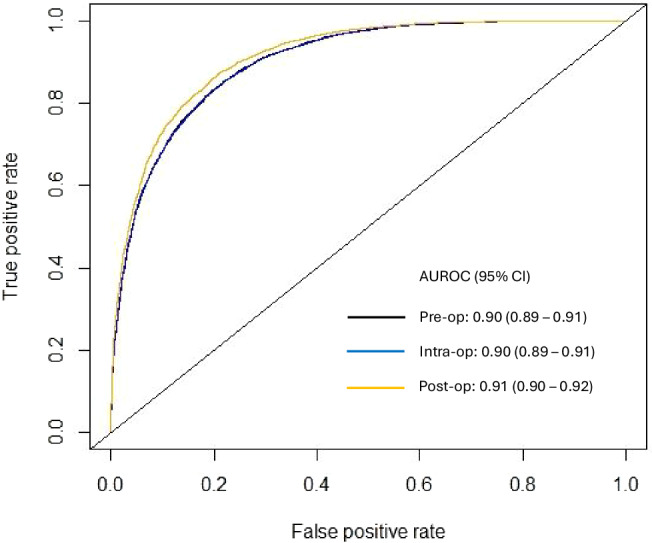 Figure 1
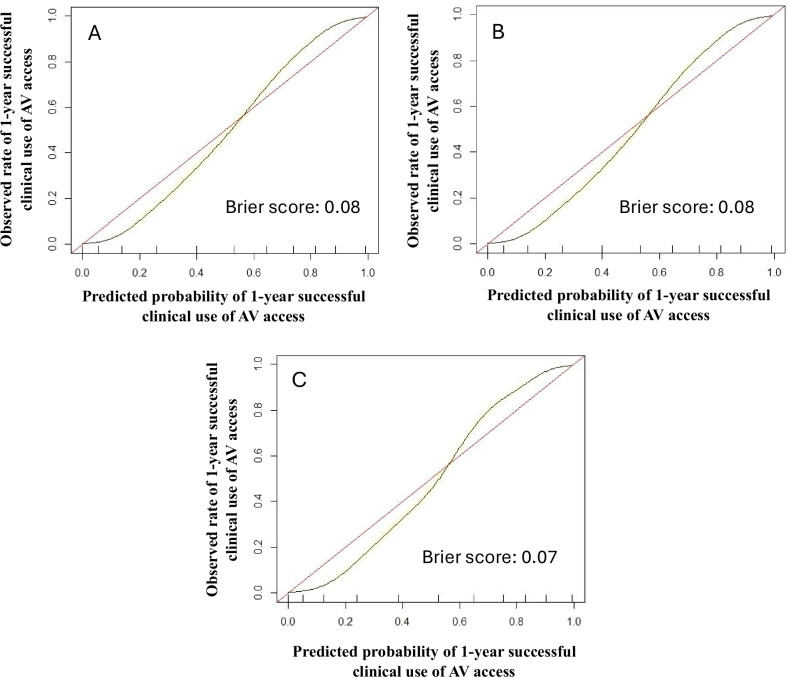 Figure 2
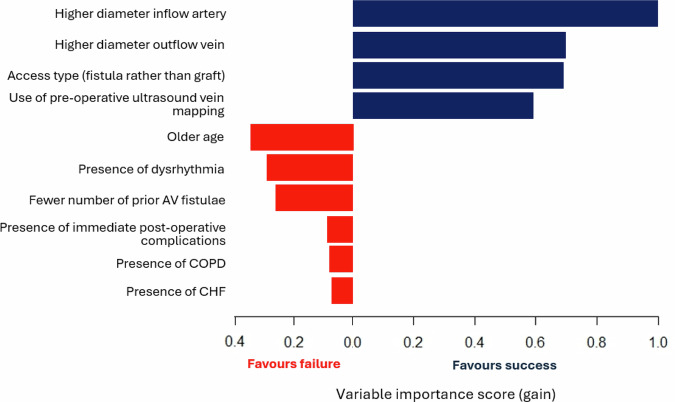 Figure 3
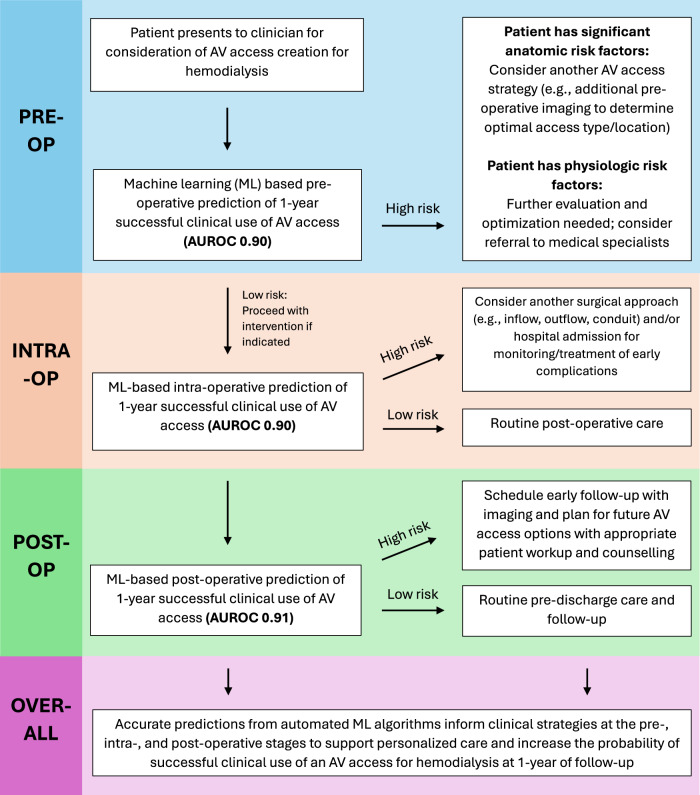 Figure 4
Peer Reviews
No public reviews on file for this paper yet. If you reviewed it on a platform where reviews are public (OpenReview, ICLR, NeurIPS, ICML), you can paste yours below so the community can read it here.
Videos
No videos yet. Explain this paper in a talk, walkthrough, or lecture? Add one.
Taxonomy
TopicsCentral Venous Catheters and Hemodialysis · Intravenous Infusion Technology and Safety · Dialysis and Renal Disease Management