Comparison of Longitudinal Plasma Assays in Relation to Longitudinal Amyloid Pathology in Alzheimer's Disease
Yara Yakoub, Ting Qiu, Sylvia Villeneuve, Alexa Pichet Binette

TL;DR
This study compares blood-based biomarkers for Alzheimer's disease, finding that changes in p-tau217 levels over time are more predictive of amyloid buildup than baseline levels or other biomarkers.
Contribution
The study introduces the importance of longitudinal changes in p-tau217 as a stronger predictor of amyloid progression compared to baseline values or Aβ42/40 assays.
Findings
All p-tau217 assays showed increasing levels over time, unlike Aβ42/40 assays.
Higher rate of change in p-tau217 was strongly associated with progression to Aβ-PET positivity in Aβ-negative individuals.
Baseline Aβ42/40 levels were linked to progression, but their rate of change was not.
Abstract
Blood‐based biomarkers of AD, especially p‐tau217, show high concordance with Aβ‐PET load and status. While many studies relied on cross‐sectional data, assessing dynamic changes in these assays is important for future clinical use and trial outcomes. We evaluated the longitudinal trajectories of multiple plasma biomarkers and their associations with subsequent changes in Aβ‐PET status. We used data from the ADNI FNIH consortium consisting of 386 participants (72.7 ± 7.1 years old, 52.3% cognitively unimpaired, 49.7% women) with on average three plasma samples and three Aβ‐PET scans collected over 11 years, in which multiple assays were tested (here focussing on 5 p‐tau217 and 4 Aβ42/40 assays). We first assessed changes over time for each assay in Aβ‐PET positive (n = 140, 36.3%) and negative participants. We then focused on progression from Aβ‐negativity to Aβ‐positivity over…
Genes, proteins, chemicals, diseases, species, mutations and cell lines named across the full text — each resolved to its canonical identifier and authoritative record.
Click any figure to enlarge with its caption.
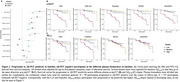 Figure 1
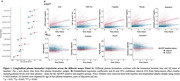 Figure 2
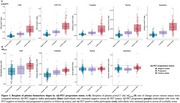 Figure 3
Peer Reviews
No public reviews on file for this paper yet. If you reviewed it on a platform where reviews are public (OpenReview, ICLR, NeurIPS, ICML), you can paste yours below so the community can read it here.
Videos
No videos yet. Explain this paper in a talk, walkthrough, or lecture? Add one.
Taxonomy
TopicsAlzheimer's disease research and treatments · Dementia and Cognitive Impairment Research · Intracerebral and Subarachnoid Hemorrhage Research