Mapping Plasma Biomarker Progression Against the Amyloid Clock
Marina Bluma, Konstantinos Chiotis, Marco Bucci, Irina Savitcheva, Ilaria Pola, Wiebke Traichel, Kübra Tan, Guglielmo Di Molfetta, Anna Matton, Miia Kivipelto, Andrea L. Benedet, Nicholas Ashton, Kaj Blennow, Henrik Zetterberg, Agneta K Nordberg

TL;DR
This study maps how plasma biomarkers like pTau and GFAP change over time in relation to amyloid accumulation in the brain, helping identify Alzheimer's risk earlier.
Contribution
The study introduces a novel method to estimate the time needed for plasma biomarkers to detect amyloid positivity with high sensitivity.
Findings
Plasma pTau217 detects Aβ+ individuals with 90% sensitivity 6.7 years after accelerated amyloid accumulation.
Young Aβ-accumulators have higher plasma pTau isoform levels, indicating more aggressive pathology.
GFAP does not show significant differences in young accumulators compared to other biomarkers.
Abstract
Plasma biomarkers are potential candidates for screening patients for anti‐amyloid therapies. Although early changes have been reported, the duration of Aβ‐accumulation afetr which these changes become abnormal enough to identify Aβ+ individuals has yet to be determined. Data were acquired from a cohort assessed at the Memory Clinic, Karolinska University Hospital, Stockholm, Sweden (N = 132). Plasma biomarkers (pTau‐isoforms, GFAP) were analysed with NULISAseq™ CNS. Buildong up on the parameters of a model of Aβ‐accumulation estimated by Schindler et al., 2021, we calculated the time required (AmyloidTime) to reach a specific brain amyloid load on PET. We then estimated AmyloidTime linked with a threshold of biomarker becoming significantly abnormal to detect Aβ‐positivity with 90% sensitivity. By subtracting AmyloidTime from each patient's age, we estimated their Aβ‐accumulation…
Genes, proteins, chemicals, diseases, species, mutations and cell lines named across the full text — each resolved to its canonical identifier and authoritative record.
Click any figure to enlarge with its caption.
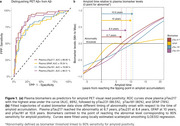 Figure 1
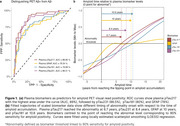 Figure 2
Peer Reviews
No public reviews on file for this paper yet. If you reviewed it on a platform where reviews are public (OpenReview, ICLR, NeurIPS, ICML), you can paste yours below so the community can read it here.
Videos
No videos yet. Explain this paper in a talk, walkthrough, or lecture? Add one.
Taxonomy
TopicsAlzheimer's disease research and treatments · Dementia and Cognitive Impairment Research · Amyloidosis: Diagnosis, Treatment, Outcomes