Mantis Leg-Inspired Smart Insole Integrating Closed-Loop Power Supply for Advanced Wearable Gait Diagnostics
Yingchun Li, Yarong Ding, Yuze Zhang, Xing Guo, Kaixin Lei, Jiachun Sun, Xing Hu, Xinyue Li, Wenguang Yang, Rui Liu, Zhenhua Lin, Wendong Zhang, Shaozhe Tan, Xu Yang, Yumeng Xu, Jin Tian, Bokun Zhang, Yue Hao, Xiangning Li, Yannan Liu, Feng Xu, Jingjing Chang

TL;DR
A smart insole inspired by mantis legs improves gait monitoring with precise sensors, sustainable power, and AI for diagnosing foot issues.
Contribution
A fully integrated smart insole with bioinspired sensors, solar-powered energy system, and AI for gait diagnostics.
Findings
Dual-microstructure capacitive sensors detect pressures from 0.10 Pa to 1.4 MPa with high stability over 12,000 cycles.
Nano-perovskite solar cells and lithium–sulfur nanobatteries achieve 11.21% photocharging and 72.15% energy storage efficiency.
AI algorithms detect foot arch abnormalities with 96.0% accuracy and classify 12 gait patterns with 97.6% accuracy.
Abstract
Precise diagnosis and management of lower extremity dysfunction disorders hinge on continuous gait monitoring. Nevertheless, the existing wearable devices fall short as they grapple with insufficient sensing precision, inadequate energy endurance, and ineffective intelligent data analysis. Here, we report a fully integrated, biomimetic smart insole that incorporates 3 synergistic innovations to overcome these challenges. First, inspired by the hierarchical mechanosensory apparatus of mantis legs, we design dual-microstructure capacitive sensors with a detection limit of 0.10 Pa and a maximum detection range of 1.4 MPa. This sensor can distinguish pressures across a wide range from subtle to substantial and exhibits robust mechanical stability over 12,000 cycles, making it highly suitable for insole applications and outperforming current flexible pressure sensors. Second, we realize…
Genes, proteins, chemicals, diseases, species, mutations and cell lines named across the full text — each resolved to its canonical identifier and authoritative record.
Click any figure to enlarge with its caption.
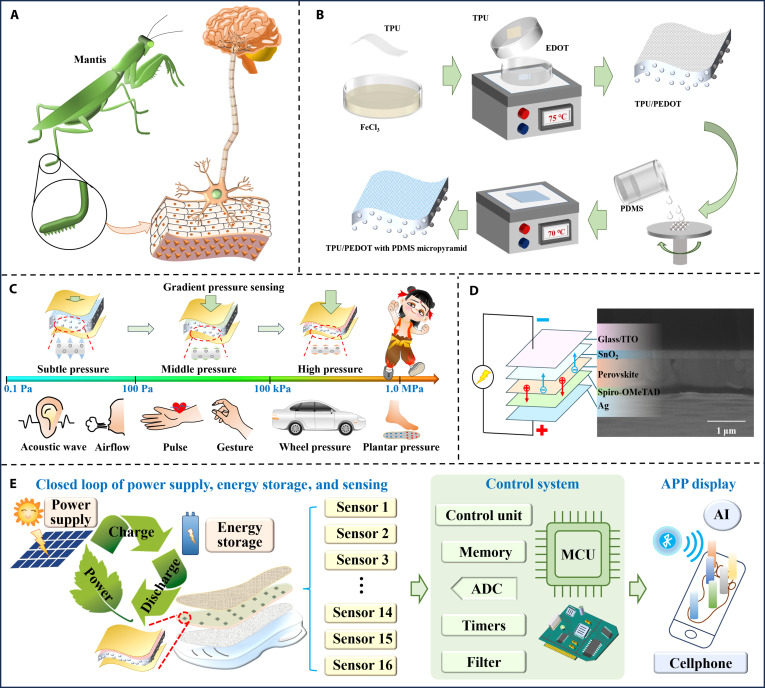 Figure 1
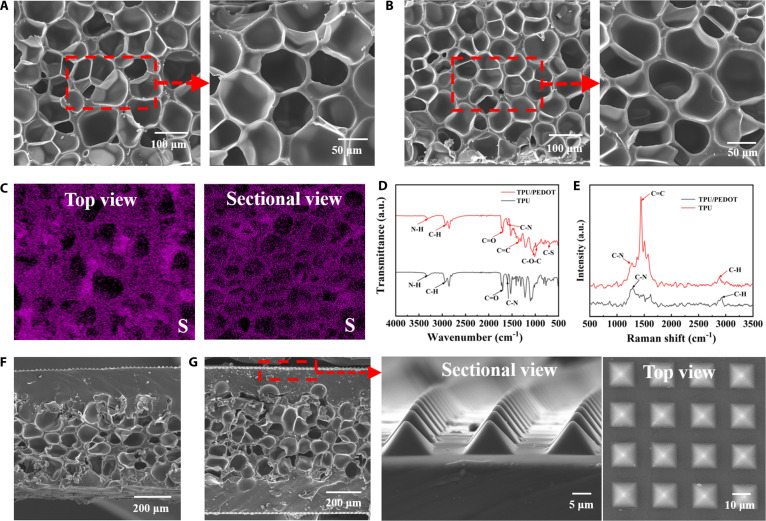 Figure 2
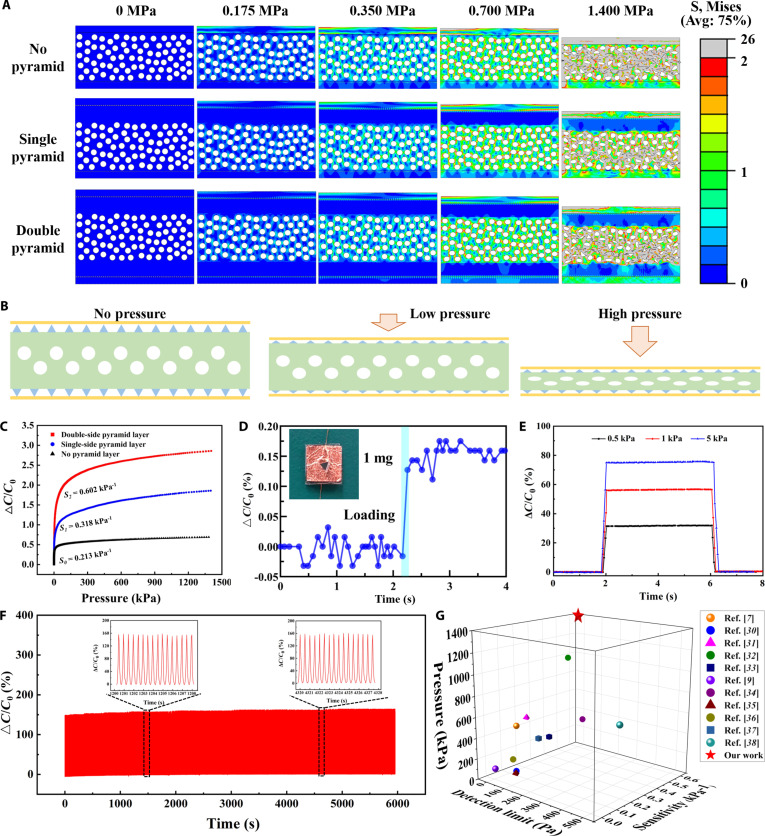 Figure 3
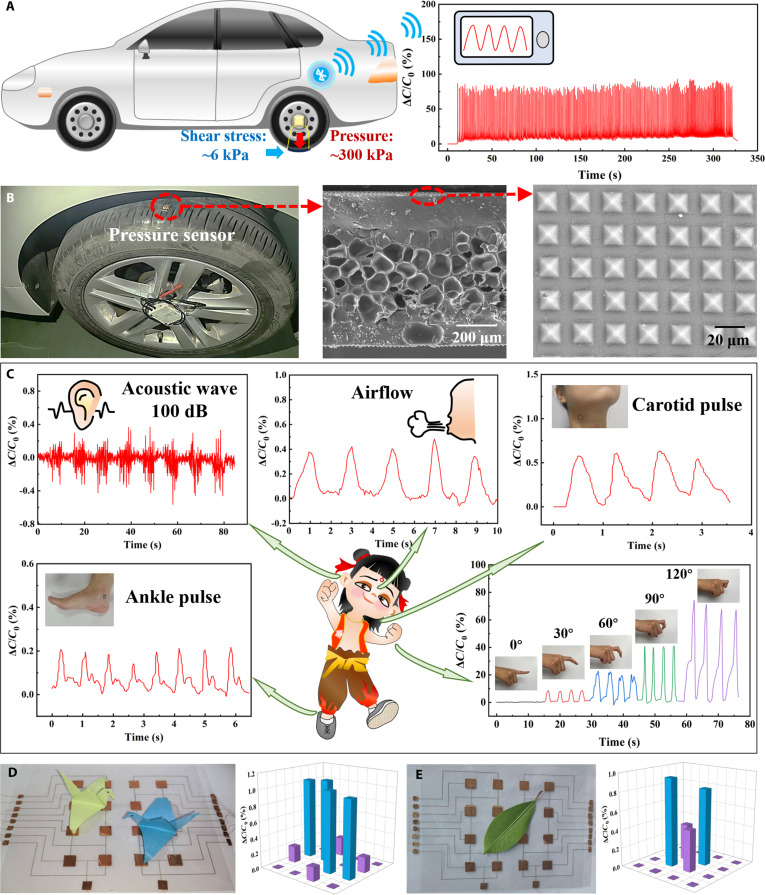 Figure 4
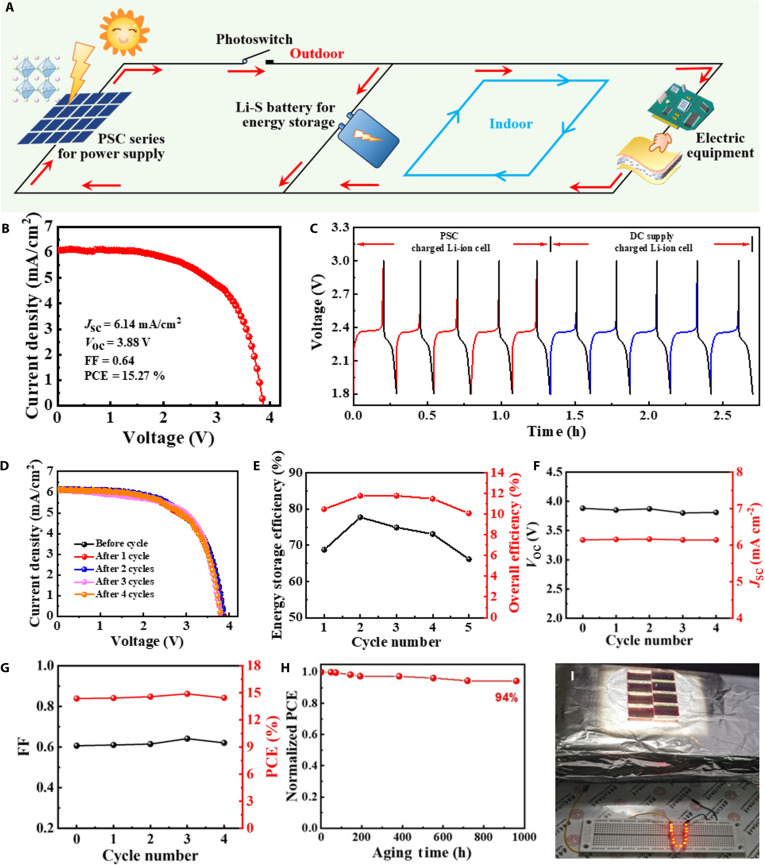 Figure 5
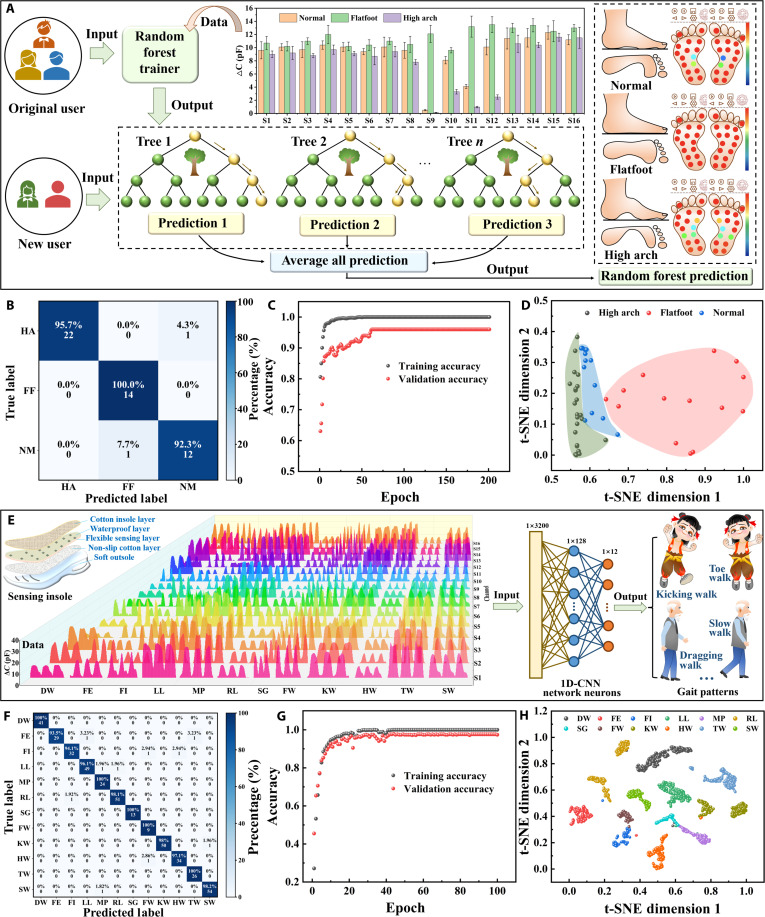 Figure 6
Peer Reviews
No public reviews on file for this paper yet. If you reviewed it on a platform where reviews are public (OpenReview, ICLR, NeurIPS, ICML), you can paste yours below so the community can read it here.
Videos
No videos yet. Explain this paper in a talk, walkthrough, or lecture? Add one.
Taxonomy
TopicsAdvanced Sensor and Energy Harvesting Materials · Prosthetics and Rehabilitation Robotics · Conducting polymers and applications