Diverse phloroglucinols with hAChE inhibitory and anti-VRE effects from Rhodomyrtus tomentosa fruits
Ling-Yun Chen, Mu-Yuan Yu, E-E Luo, Wen-Ying Zong, Shu-Mei Lei, Yu Pan, Ai-Chun Lu, Cheng-Qin Liang, Xu-Jie Qin

TL;DR
This study identifies new compounds in Rhodomyrtus tomentosa fruits that inhibit an enzyme linked to Alzheimer's and show strong antibacterial effects.
Contribution
The discovery of eight new phloroglucinol compounds with potent hAChE inhibition and anti-VRE activity is novel.
Findings
Compound 13 showed the highest hAChE inhibition with an IC50 of 1.04 μM.
Compounds 11 and 12 exhibited strong anti-VRE activity with MIC values as low as 1 μg/mL.
Molecular docking confirmed the binding interactions of compound 13 with hAChE.
Abstract
Rhodomyrtus tomentosa fruits serve as both functional food and medicinal resources due to their rich bioactive constituents and manifold pharmacological effects. Phytochemical exploration of the R. tomentosa fruits led to the identification of eight new polymethylated phloroglucinols, designated as rhodotomentodione F (1) and rhodotomentodimers H‒N (2‒8), along with six previously described congeners (9‒14). Based on the detailed inspection of comprehensive spectroscopic data, electronic circular dichroism (ECD) simulations, and nuclear magnetic resonance (NMR) calculations, and DP4+ analyses, the structures of phloroglucinols 1‒8 were determined. Heterodimeric phloroglucinols 3‒14 exhibited human acetylcholinesterase (hAChE) inhibitory activities, with 13 exhibiting the highest potency (IC50 = 1.04 μM). Moreover, molecular docking analysis clarified the potential binding interactions…
Genes, proteins, chemicals, diseases, species, mutations and cell lines named across the full text — each resolved to its canonical identifier and authoritative record.
Click any figure to enlarge with its caption.
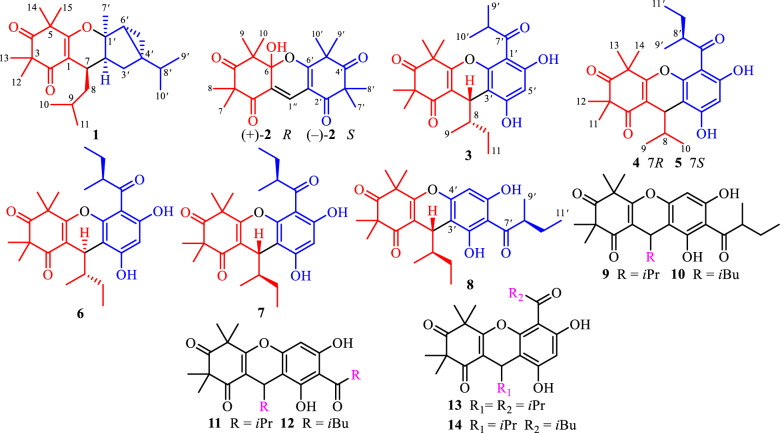 Figure 1
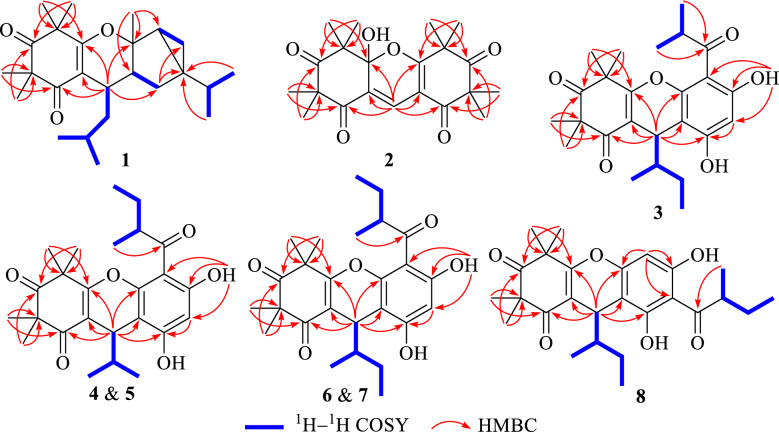 Figure 2
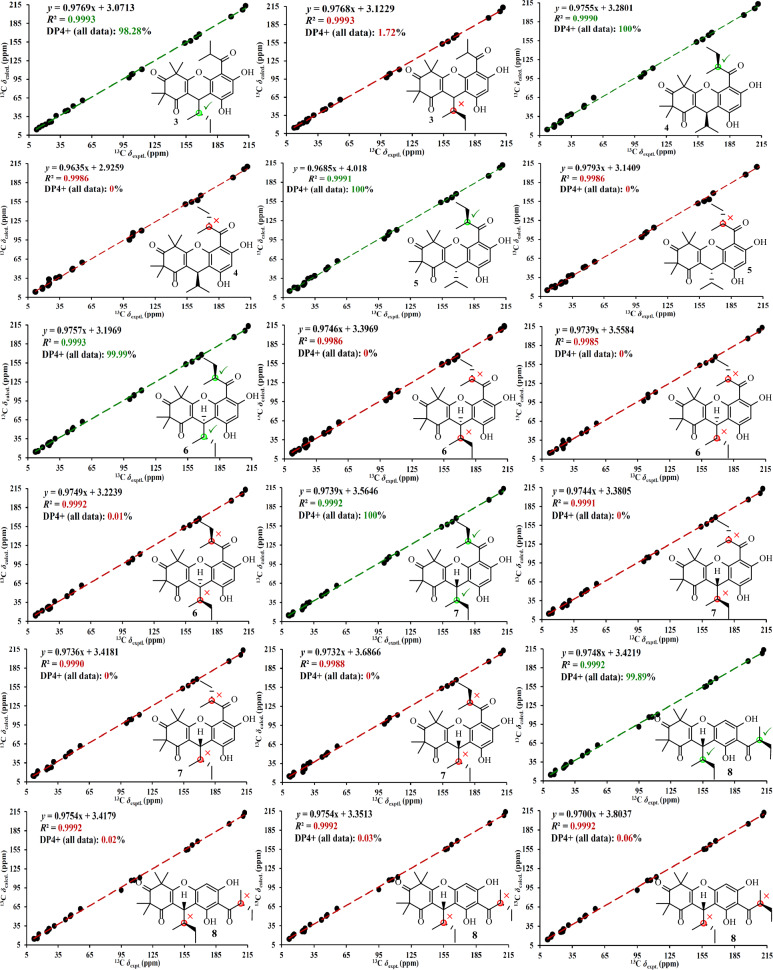 Figure 3
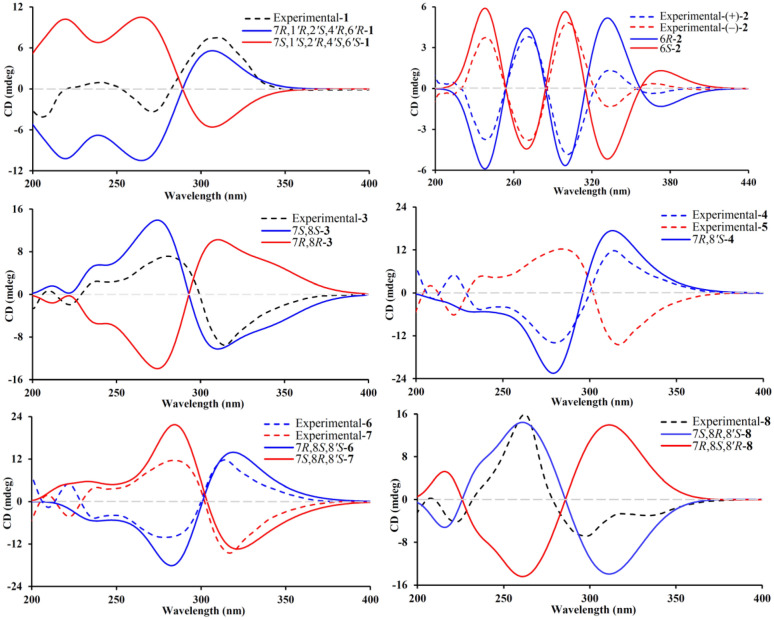 Figure 4
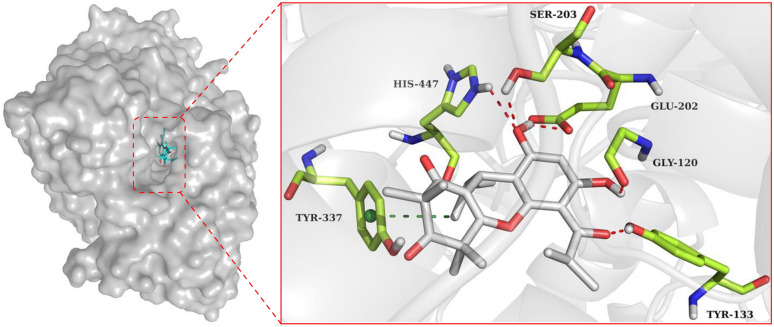 Figure 5
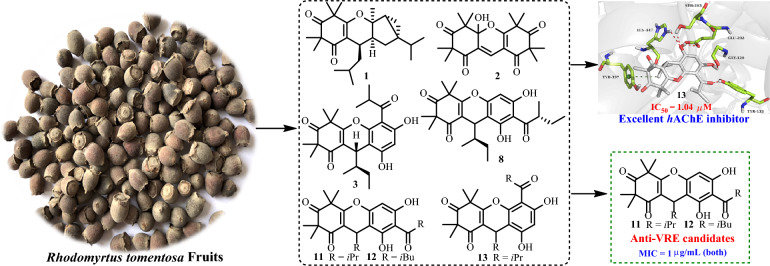 Figure 6
Peer Reviews
No public reviews on file for this paper yet. If you reviewed it on a platform where reviews are public (OpenReview, ICLR, NeurIPS, ICML), you can paste yours below so the community can read it here.
Videos
No videos yet. Explain this paper in a talk, walkthrough, or lecture? Add one.
Taxonomy
TopicsNatural Compound Pharmacology Studies · Free Radicals and Antioxidants · Phytochemicals and Antioxidant Activities