SARS‐CoV‐2 mRNA Vaccination Leads to Transient Humoral and B Cell Bystander Responses in Adults
Lisan H. Kuijper, Laura Y. L. Kummer, Laura Fernandez Blanco, Karlijn van der Straten, Mathieu A. F. Claireaux, Amélie V. Bos, Miranda C. Dieker‐Meijer, Tineke Jorritsma, Mariël C. Duurland, Maurice Steenhuis, Juan J. Garcia Vallejo, Koos P. J. van Dam, Eileen W. Stalman

TL;DR
SARS-CoV-2 mRNA vaccination temporarily boosts antibody levels and activates B cells against unrelated pathogens like influenza and tetanus.
Contribution
The study shows that SARS-CoV-2 mRNA vaccination transiently activates bystander B cell responses against non-related antigens.
Findings
Antibody concentrations against tetanus, RSV, and influenza increased six weeks after the first SARS-CoV-2 vaccination.
B cell differentiation stages, including IgG+ DN3 and CD11c+ B cells, showed short-term increases post-vaccination.
Bystander activation of B cells occurred independently of antigen exposure following vaccination.
Abstract
After antigen encounter, long‐lived antibody‐secreting cells (ASC) secrete high‐affinity circulating antibodies. In addition, memory B cells (MBC) are quickly reactivated upon antigen re‐exposure and predominantly generate shorter‐lived ASCs. Studies have suggested that MBC can differentiate into ASCs without recognizing their cognate antigen, a process known as “bystander activation”. This antigen‐independent reactivation of MBC could help maintain circulating antibody levels, thereby protecting against future infections. To elucidate whether SARS‐CoV‐2 mRNA vaccination leads to bystander activation of B cells, the dynamics of antibody concentrations against six pathogen‐specific antigens not encountered during the sampling period were analyzed over time. Deep profiling of antigen‐specific B cell responses was simultaneously performed using multiparameter high‐dimensional spectral flow…
Genes, proteins, chemicals, diseases, species, mutations and cell lines named across the full text — each resolved to its canonical identifier and authoritative record.
Click any figure to enlarge with its caption.
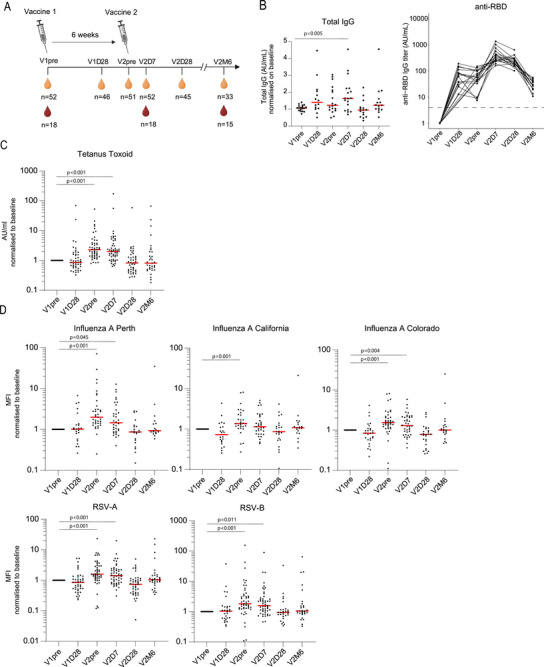 Figure 1
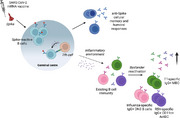 Figure 2
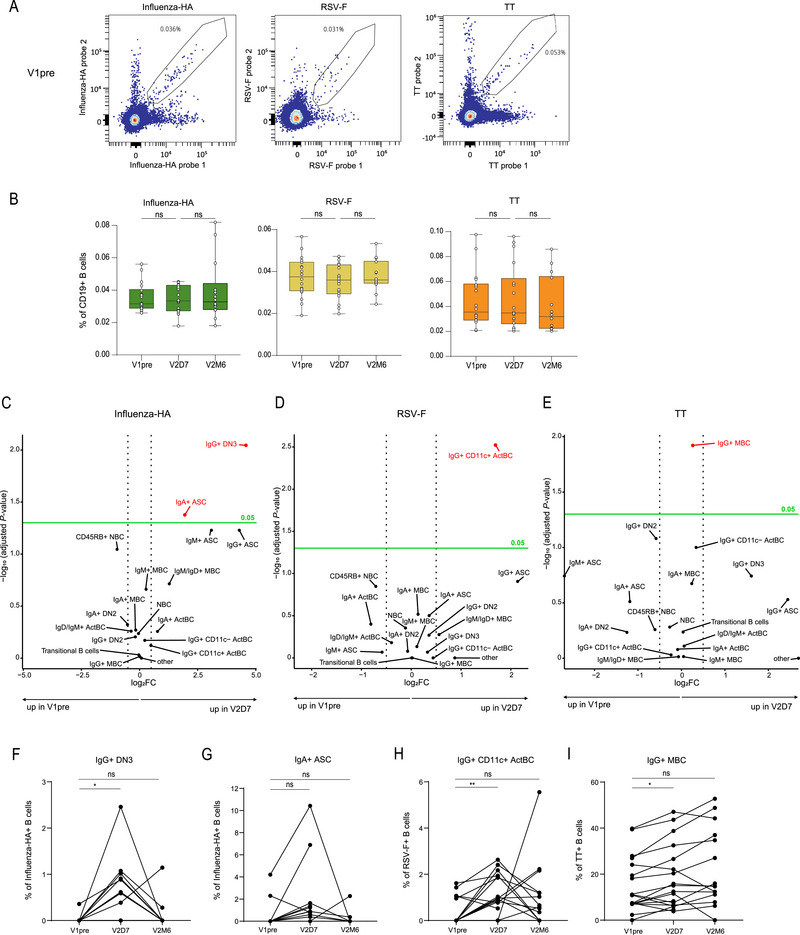 Figure 3
Peer Reviews
No public reviews on file for this paper yet. If you reviewed it on a platform where reviews are public (OpenReview, ICLR, NeurIPS, ICML), you can paste yours below so the community can read it here.
Videos
No videos yet. Explain this paper in a talk, walkthrough, or lecture? Add one.
Taxonomy
TopicsSARS-CoV-2 and COVID-19 Research · vaccines and immunoinformatics approaches · Immune responses and vaccinations