Decision-making regarding anticoagulant therapy in the last phase of life: In-depth interview study with healthcare professionals (the OPTIMA trial)
Marte A. M. van Hylckama Vlieg, Karlijn J. I. de Beukelaar, Romy H. L. Spreeuw, Marieke J. H. A. Kruip, P. Hugo M. van der Kuy, Agnes van der Heide, Carin C. D. van der Rijt, Eric C. T. Geijteman

TL;DR
Healthcare professionals struggle with deciding whether to continue or stop anticoagulant therapy for patients nearing the end of life due to uncertainty and lack of evidence.
Contribution
The study provides new insights into the challenges and decision-making processes of healthcare professionals regarding anticoagulant therapy in end-of-life care.
Findings
Healthcare professionals find decision-making difficult due to lack of evidence on risks and benefits of continuing or stopping anticoagulants.
Uncertainty leads to defensive and reactive decisions, often triggered by events like bleeding or patient preferences.
Decision-making is influenced by a range of factors including comorbidities, patient characteristics, and prognostic uncertainty.
Abstract
Many patients in the last phase of life use anticoagulants. There is little evidence on the benefits and risks of (dis)continuation of anticoagulant therapy in this phase, leaving healthcare professionals with a complex clinical dilemma. To gain an in-depth understanding of the experiences, perspectives, and preferences of healthcare professionals regarding decision-making about anticoagulant therapy in the last phase of life. Semi-structured in-depth interviews were conducted and analyzed using a thematic content analysis. This study was performed in the Dutch Federation of Anticoagulation Clinics, two hospitals, two hospices, and two palliative home care groups in the Netherlands. Thirty-two healthcare professionals regularly involved in care for patients in the last phase of life were interviewed. Healthcare professionals experienced decision-making regarding anticoagulant…
Genes, proteins, chemicals, diseases, species, mutations and cell lines named across the full text — each resolved to its canonical identifier and authoritative record.
Click any figure to enlarge with its caption.
 Figure 1
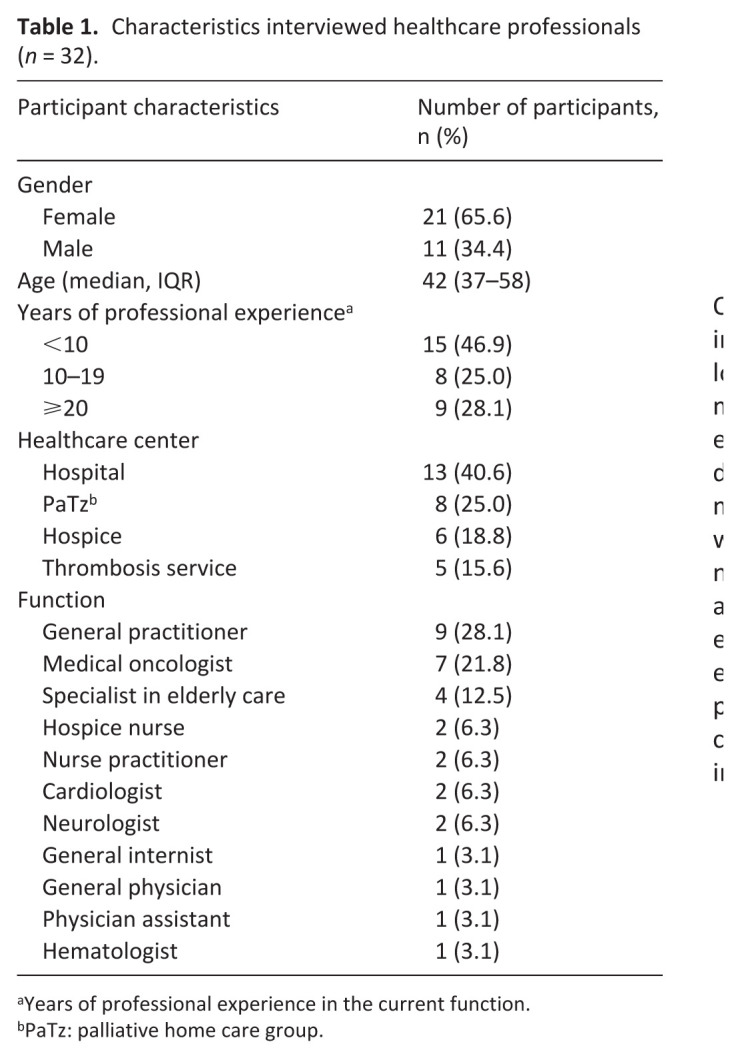 Figure 2
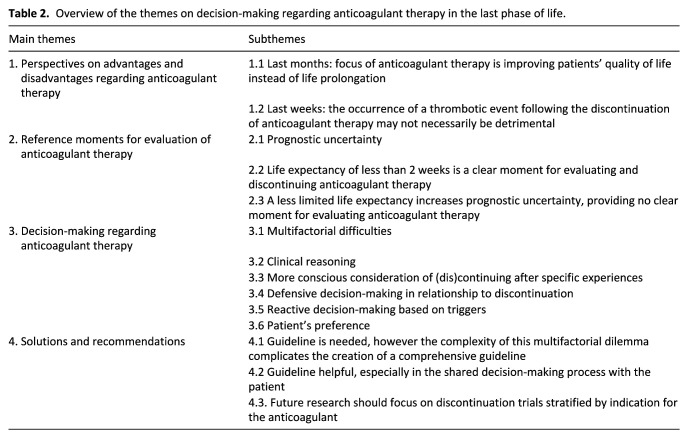 Figure 3
Peer Reviews
No public reviews on file for this paper yet. If you reviewed it on a platform where reviews are public (OpenReview, ICLR, NeurIPS, ICML), you can paste yours below so the community can read it here.
Videos
No videos yet. Explain this paper in a talk, walkthrough, or lecture? Add one.
Taxonomy
TopicsHealthcare cost, quality, practices · Health Systems, Economic Evaluations, Quality of Life · Atrial Fibrillation Management and Outcomes