Prevalence of lower second premolar agenesis and study of rhizolysis of primary second molars without permanent successor with 2 methods
María Lourdes García-Navas Fernández de la Puebla, Antonia María Caleya Zambrano, María Fe Riolobos González, Anabella Reyes Ortiz, Nuria Esther Gallardo López

TL;DR
This study examines how often lower second premolars are missing and how the roots of baby teeth before them break down using two methods.
Contribution
The study introduces two methods to assess root resorption in primary molars with no permanent successor.
Findings
The prevalence of lower second premolar agenesis was found to be 3.4%.
Root resorption in primary molars begins at age 9 and remains stable afterward.
Healthy primary molars with no infraocclusion experience less root resorption.
Abstract
The aims of this study were to estimate the prevalence of lower second premolar (2Pr) agenesis and to quantify rhizolysis of the preceding primary molars. A descriptive and cross-sectional study was carried out to quantify root resorption of lower primary second molar (p2m) with permanent successor agenesis in panoramic radiographs using 2 methods: Bjerklin–Bennett method (graphical method by fractions) and ratios’ method (proportions). 3206 panoramic radiographs were reviewed. The final sample consisted of 174 p2m. With the graphical method, it was found that half of the sample had both roots without resorption. With the numerical method, it was observed that root length decreased with age. Almost half of them have infraocclusion and greater infraocclusion led to greater resorption. Healthy p2m showed less resorption. The prevalence of 2Pr in the present study was 3.4%. The p2m with…
Genes, proteins, chemicals, diseases, species, mutations and cell lines named across the full text — each resolved to its canonical identifier and authoritative record.
Click any figure to enlarge with its caption.
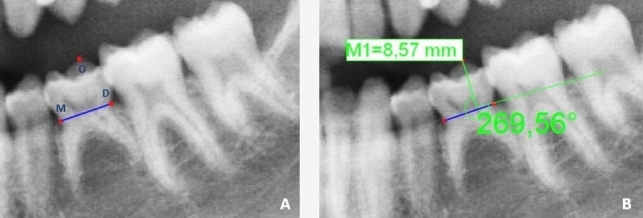 Figure 1
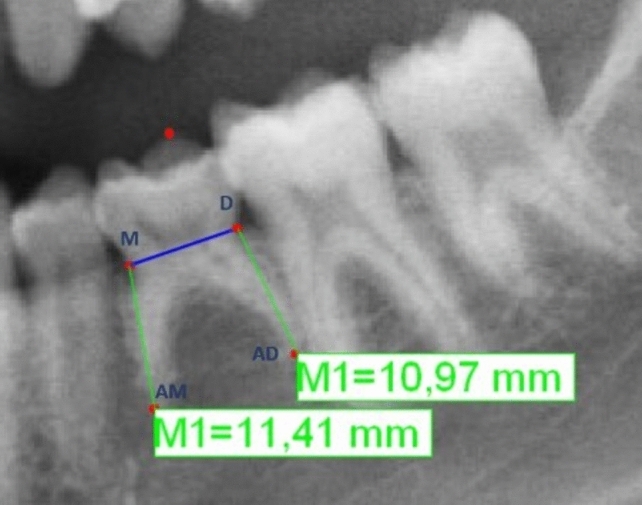 Figure 2
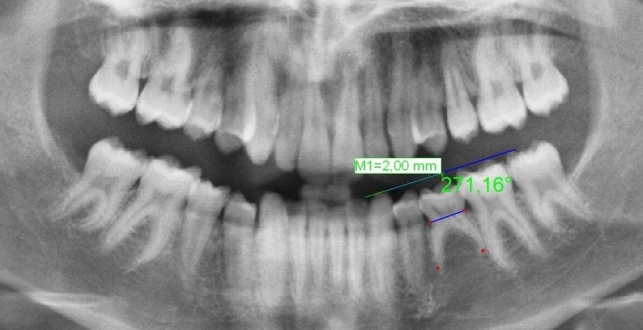 Figure 3
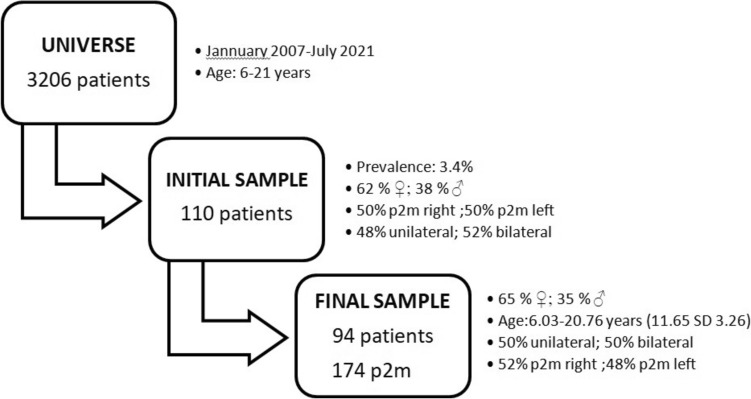 Figure 4
Peer Reviews
No public reviews on file for this paper yet. If you reviewed it on a platform where reviews are public (OpenReview, ICLR, NeurIPS, ICML), you can paste yours below so the community can read it here.
Videos
No videos yet. Explain this paper in a talk, walkthrough, or lecture? Add one.
Taxonomy
Topicsdental development and anomalies · Oral and Maxillofacial Pathology · Bone and Dental Protein Studies