Targeted analysis of whole exome sequencing in Thai patients with neonatal diabetes
Nattachet Plengvidhya, Thanida Tangjarusritaratorn, Nipaporn Teerawattanapong, Tassanee Narkdontri, Saranya Innang, Suavaluk Songlilitchuwong, Sarocha Suthon, Watip Tangjittipokin

TL;DR
This study identifies genetic causes of neonatal diabetes in Thai patients using whole exome sequencing, revealing new insights into the condition's genetic diversity in this population.
Contribution
The first genetic analysis of neonatal diabetes in Thai patients, highlighting novel pathogenic variants and successful precision therapy outcomes.
Findings
Eight out of 14 Thai NDM patients had variants in established NDM genes like KCNJ11, ABCC8, and INS.
Two patients with KCNJ11 variants achieved excellent glycemic control using sulfonylureas.
Six patients had pathogenic variants in genes linked to monogenic diabetes, including LRBA, EIF2AK3, and WFS1.
Abstract
Neonatal diabetes mellitus (NDM) typically presents within the first 6 months of life and generally lacks islet autoantibodies. Genetic elucidation of NDM is a prime example of precision medicine in diabetes. However, no published genetic data exist for NDM in Thailand. We aimed to assess the genetic etiology of Thai NDM using whole exome sequencing (WES). We enrolled 14 Thai patients with NDM and measured GAD65, IA-2, and ZnT8 autoantibodies. We then performed WES and analyzed 43 NDM-related genes to identify causative variants. All subjects tested negative for the three islet autoantibodies. Eight harbored variants in well-established NDM genes (KCNJ11 [n = 5], ABCC8 [n = 1], INS [n = 2 in identical twins]). Two patients with KCNJ11 variants (rs80356616: p.Val59Met and rs8035661: p.Arg50Gln) achieved excellent glycemic control on sulfonylureas, illustrating precision therapy. The…
Genes, proteins, chemicals, diseases, species, mutations and cell lines named across the full text — each resolved to its canonical identifier and authoritative record.
Click any figure to enlarge with its caption.
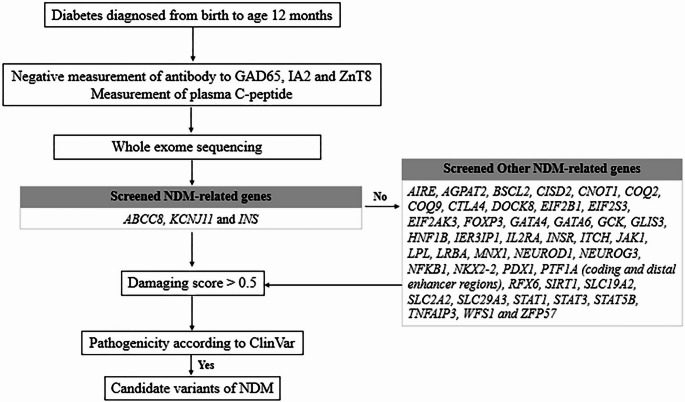 Figure 1
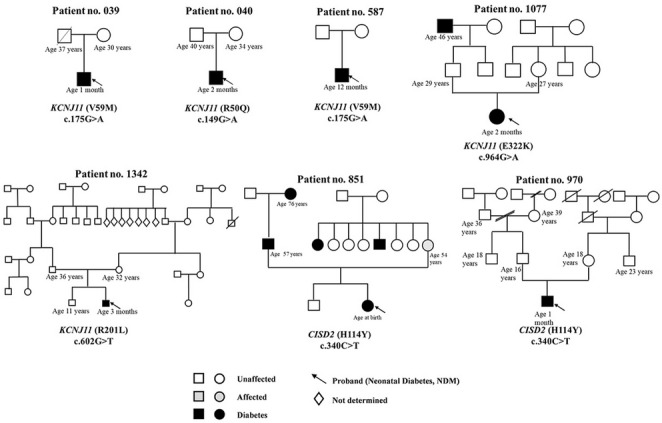 Figure 2
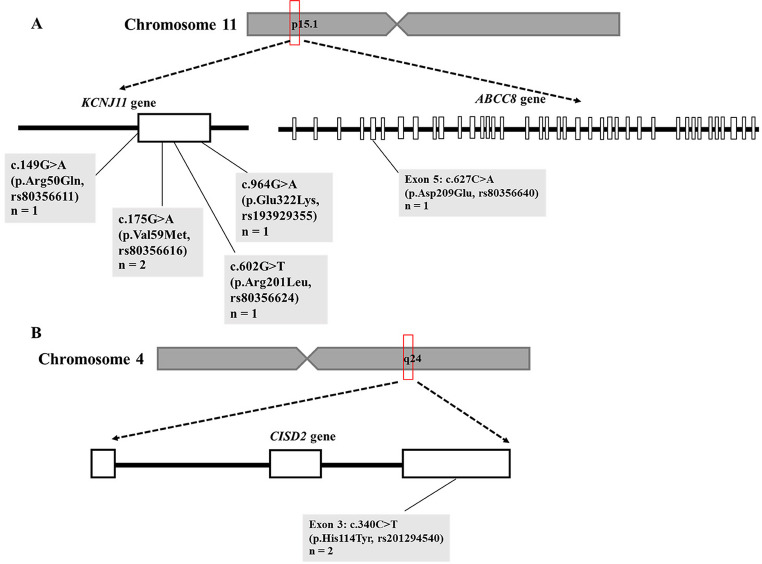 Figure 3
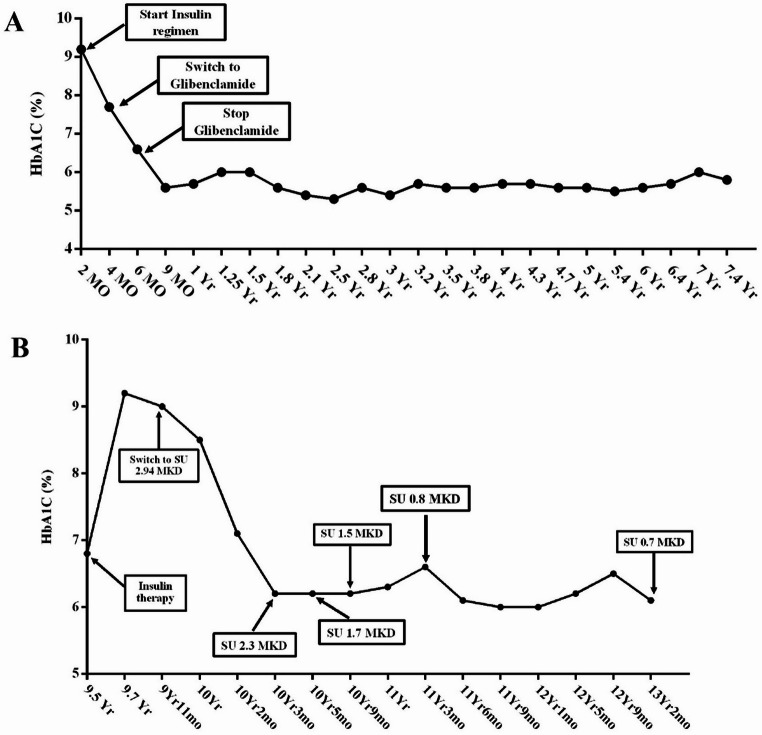 Figure 4
Peer Reviews
No public reviews on file for this paper yet. If you reviewed it on a platform where reviews are public (OpenReview, ICLR, NeurIPS, ICML), you can paste yours below so the community can read it here.
Videos
No videos yet. Explain this paper in a talk, walkthrough, or lecture? Add one.
Taxonomy
TopicsPancreatic function and diabetes · Diabetes and associated disorders · Genomics and Rare Diseases