Adherence to vitamin and dietary supplement intake in fertility and pregnancy care: insights into knowledge, information satisfaction, and formulation variability
Nele-Juliana Breuste, Cordula Schippert, Frauke von Versen-Höynck

TL;DR
This study explores how women in Germany follow vitamin and supplement advice during fertility and pregnancy, finding high adherence but limited knowledge and satisfaction with information.
Contribution
The study provides new insights into supplement adherence, knowledge gaps, and formulation variability among women in fertility and pregnancy care in Germany.
Findings
Most participants used supplements, primarily starting preconceptionally, with high adherence but low satisfaction with information.
Supplement formulations varied widely, with folic acid and iodine being the most consistently included nutrients.
Higher information satisfaction was linked to pregnancy status, younger age, and lower educational level.
Abstract
This study investigated adherence to vitamin and dietary supplement intake, satisfaction with healthcare-provided information, and knowledge of essential micronutrients among women seeking fertility treatment and pregnant women in Germany. An anonymous online survey (34 questions) assessed sociodemographics, supplement intake, knowledge and motivations. Adherence and satisfaction were measured by MARS-D (Medication Adherence Rating Scale) and SIMS-D (Satisfaction with Information about Medicines Scale). Among 254 participants, 93.7% reported supplement use, and 86.6% began intake preconceptionally. On average, participants consumed two (2.0 ± 1.36) supplements concurrently. Most multiple micronutrient supplements (MMS) contained folic acid (100%) and iodine (86.2%) at recommended doses, other nutrients varied considerably. Participants knew two (1.81 ± 1.43) out of six micronutrients…
Genes, proteins, chemicals, diseases, species, mutations and cell lines named across the full text — each resolved to its canonical identifier and authoritative record.
Click any figure to enlarge with its caption.
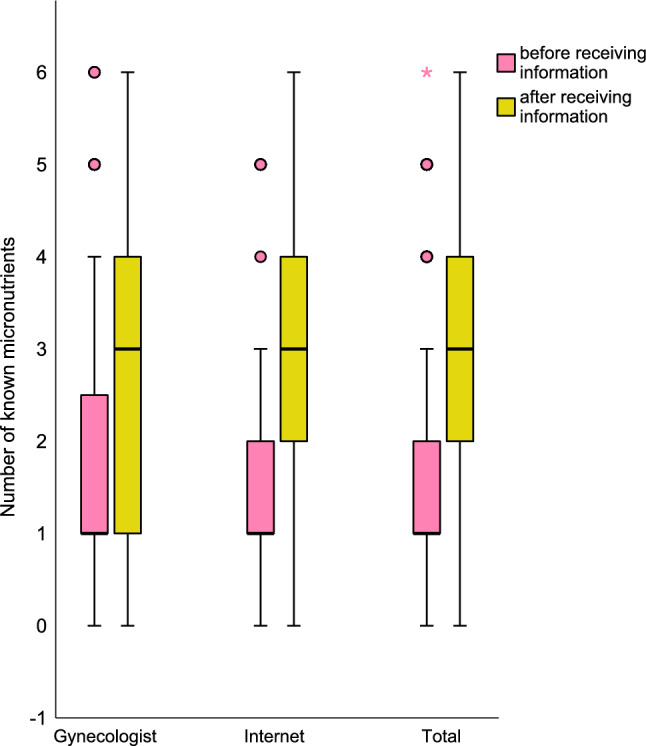 Figure 1
Peer Reviews
No public reviews on file for this paper yet. If you reviewed it on a platform where reviews are public (OpenReview, ICLR, NeurIPS, ICML), you can paste yours below so the community can read it here.
Videos
No videos yet. Explain this paper in a talk, walkthrough, or lecture? Add one.
Taxonomy
TopicsAntioxidant Activity and Oxidative Stress · Pregnancy and Medication Impact · Iron Metabolism and Disorders