Cortical candidates for self-other distinction based on visual and action cues: where do we stand?
Jakub Limanowski

TL;DR
This paper reviews brain regions involved in distinguishing self-generated actions from external sensations, focusing on how visual and action cues are compared.
Contribution
The paper highlights experimental biases and proposes ways to improve designs for studying visuomotor comparisons in the brain.
Findings
Three candidate brain regions (EBA, STS, AG) are involved in comparing sensory and action cues.
Differences in experimental design affect the interpretation of visuomotor comparisons.
Adaptation and factorial conflict designs offer new approaches but come with challenges.
Abstract
Distinguishing sensations that were generated by one’s actions (reafference) from those that were not may be grounded in the comparison of sensory and action cues; i.e., in evaluating sensory movement feedback against motor predictions by “comparator” modules in the brain. For the evaluation of visual movement feedback, brain imaging studies have converged on three candidate brain regions for such comparisons: the EBA, the STS, and the AG. Yet, the question whether the “action cues” received by those regions are motor or non-motor signals cannot conclusively be answered, partly due to the heterogeneity of the imaging results and differences in experimental methodology. Thus, there is an ongoing debate which of these regions implement visuomotor comparisons, rather than merely intersensory (e.g., visuoproprioceptive) comparisons blind to the cause of movement. In this mini review, I…
Genes, proteins, chemicals, diseases, species, mutations and cell lines named across the full text — each resolved to its canonical identifier and authoritative record.
Click any figure to enlarge with its caption.
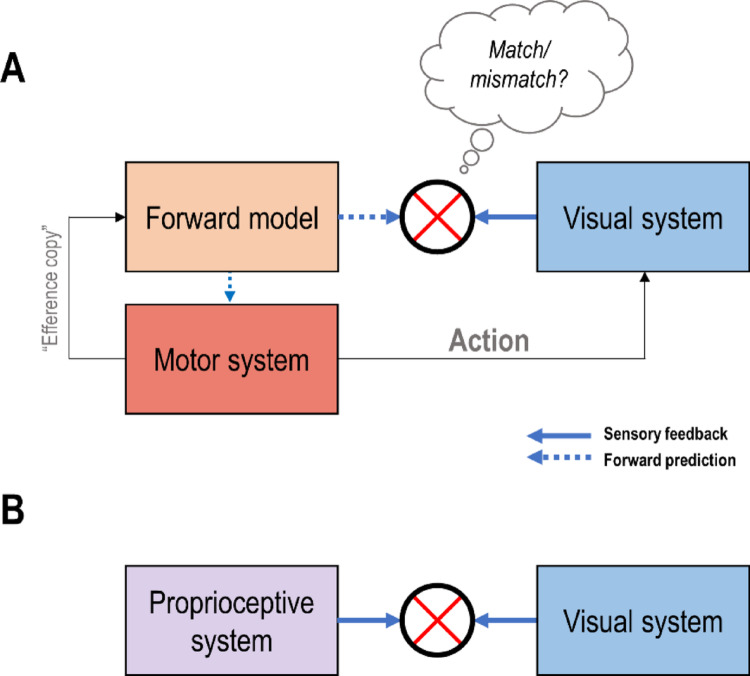 Figure 1
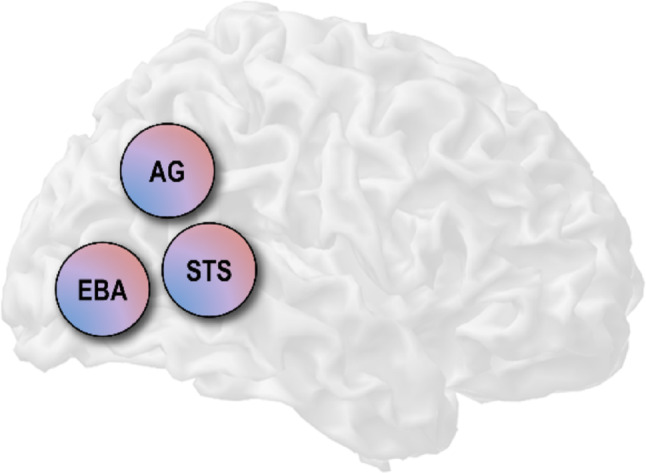 Figure 2
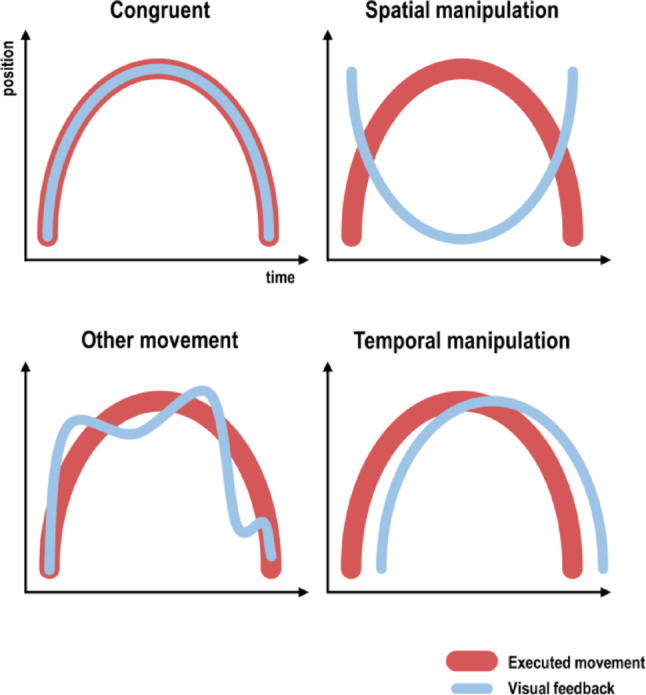 Figure 3
Peer Reviews
No public reviews on file for this paper yet. If you reviewed it on a platform where reviews are public (OpenReview, ICLR, NeurIPS, ICML), you can paste yours below so the community can read it here.
Videos
No videos yet. Explain this paper in a talk, walkthrough, or lecture? Add one.
Taxonomy
TopicsAction Observation and Synchronization · Motor Control and Adaptation · Free Will and Agency