The impact of AI correction on Centiloid in a same subject visual read comparison of 18F‐Florbetapir and 18F‐NAV4694 Aβ PET
Christopher C. Rowe, Ishara Paranawithana, Vincent Dore, Aurora Poon, H. B. Toh, Tanyaluck Thientunyakit, Tawika Kaewchur, Antony Sutherland, Kun Huang, Azadeh Feizpour, Jurgen Fripp, Victor L. Villemagne, Pierrick Bourgeat

TL;DR
This study compares the accuracy of visual reads of two amyloid PET tracers, NAV4694 and Florbetapir, using AI correction to improve agreement with Centiloid measurements.
Contribution
The study introduces an AI-based correction method (DeepSUVR) that improves the correlation between amyloid PET scans and Centiloid thresholds.
Findings
AI correction (DeepSUVR) improved the correlation between NAV and Florbetapir Centiloid values from R²=0.82 to R²=0.94.
NAV4694 showed higher sensitivity than Florbetapir at low amyloid levels, even after AI correction.
Visual read thresholds for amyloid positivity varied by tracer and correction method.
Abstract
Visual read of Aβ PET remains standard clinical practice. 18F‐NAV4694 (NAV) has high affinity for Aβ and low non‐specific binding so may be more accurate than older Aβ tracers. We compared visual read of NAV to 18F‐Florbetapir (FBP) PET using standard and AI corrected Centiloid (CL) thresholds as gold standard. 150 participants (71.3±6.0 years) in the AIBL study underwent both scans within 2 years. Scans were read by 6 nuclear medicine physicians blinded to CL. Reader performance was compared against various CL thresholds. CL was measured with CapAIBL using a) the standard method, b) a composite cerebellum plus hemispheric white matter reference region for FBP and c) with an AI correction method for the CL SUVR (DeepSUVR). The DeepSUVR correction was learnt from a separate dataset of longitudinal scans where unexpected temporal changes were penalized and a tracer specific SUVR…
Genes, proteins, chemicals, diseases, species, mutations and cell lines named across the full text — each resolved to its canonical identifier and authoritative record.
Click any figure to enlarge with its caption.
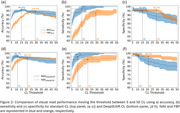 Figure 1
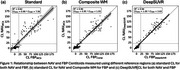 Figure 2
Peer Reviews
No public reviews on file for this paper yet. If you reviewed it on a platform where reviews are public (OpenReview, ICLR, NeurIPS, ICML), you can paste yours below so the community can read it here.
Videos
No videos yet. Explain this paper in a talk, walkthrough, or lecture? Add one.
Taxonomy
TopicsMedical Imaging Techniques and Applications · Radiopharmaceutical Chemistry and Applications · Advanced MRI Techniques and Applications